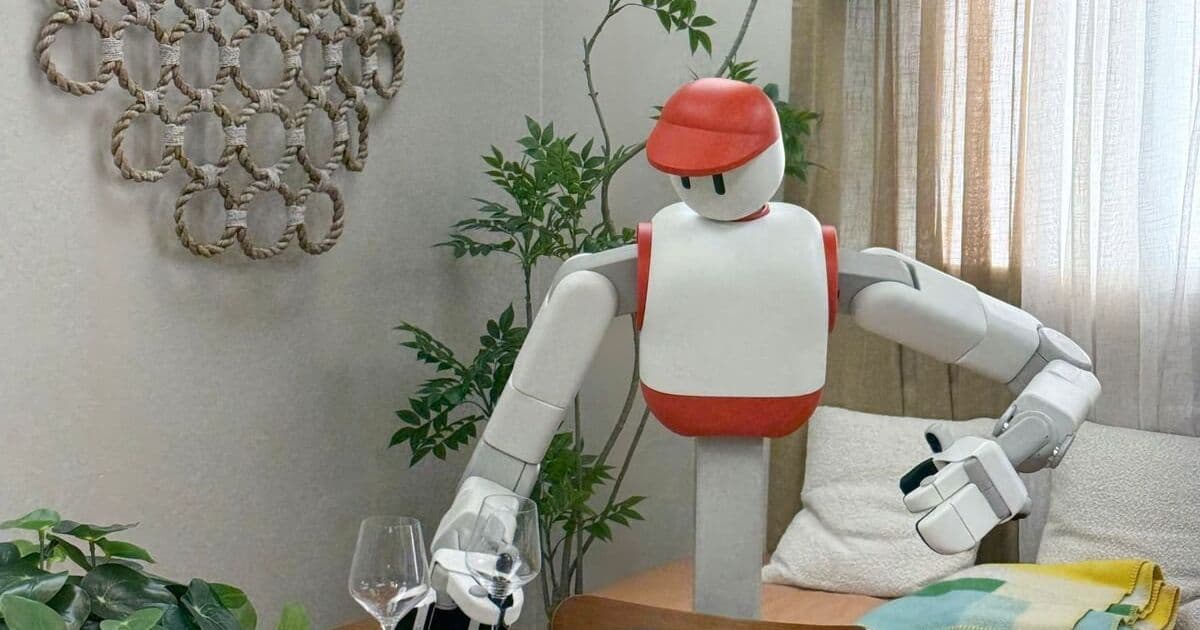
Sunday Inc. has raised $165 million in Series B funding led by Coatue at a $1.15 billion valuation to develop autonomous home robots that can perform household tasks, with plans to begin testing in homes later this year.
The autonomous robotics race is heating up with Sunday Inc.'s announcement of a $165 million Series B funding round led by Coatue at a $1.15 billion valuation. The company, which is building what it calls "friendly looking machines capable of performing tasks" in homes, aims to begin testing its robots in households later this year.
This substantial investment comes amid a broader surge in AI hardware development, where companies are racing to create physical embodiments of artificial intelligence that can interact with the real world. Sunday's approach focuses on household assistance, positioning itself in what could become a massive consumer market if the technology proves reliable and affordable.
The Investment Landscape
The funding round attracted significant attention in the tech community, with Coatue leading the investment alongside other notable backers. This follows a pattern we've seen across the industry where major investors are pouring capital into AI hardware startups, betting that the next wave of AI innovation will require physical interfaces beyond smartphones and computers.
Sunday's $1.15 billion valuation puts it in rarefied air for a company that hasn't yet deployed its technology at scale. This reflects investor confidence in the long-term potential of household robotics, similar to how autonomous vehicle companies commanded high valuations before commercial deployment.
What Sunday Is Building
While specific technical details remain under wraps, Sunday describes its robots as "friendly looking machines" designed for household tasks. The company appears to be taking a consumer-friendly approach, emphasizing approachability and integration into home environments rather than industrial or specialized applications.
This strategy contrasts with other robotics companies focusing on warehouses, manufacturing, or specific vertical markets. By targeting the home market, Sunday is aiming at what could be the largest potential user base if the technology can overcome current limitations around cost, reliability, and practical utility.
The Testing Timeline
Sunday's plan to begin testing in homes this year represents a significant milestone. Moving from laboratory or controlled environments to real-world household testing is where many robotics companies have historically faced their biggest challenges. Homes present unpredictable environments with varying layouts, obstacles, and user behaviors that can be difficult for autonomous systems to navigate.
Industry Context
The funding comes as other major tech companies are also investing heavily in AI hardware. Microsoft and Meta recently committed nearly $50 billion in additional data center leases, while Nvidia debuted Nemotron 3 Super, a 120B-parameter hybrid MoE open-weight model. These investments suggest a broader industry belief that AI capabilities will continue expanding, creating demand for new hardware form factors.
The Competitive Landscape
Sunday enters a competitive field that includes established players like iRobot (Roomba), emerging startups, and tech giants exploring various robotics applications. The company's focus on autonomous, multi-purpose household robots differentiates it from single-purpose devices, but also presents greater technical challenges.
What Success Looks Like
For Sunday to justify its valuation, it will need to demonstrate that its robots can handle a wide range of household tasks reliably and at a price point that makes them accessible to consumers. The company's success will likely depend on advances in AI perception, manipulation, and navigation that have been slower to mature than many predicted.
The Broader Implications
If successful, Sunday's technology could represent a significant shift in how households operate, potentially automating routine tasks and changing domestic labor patterns. However, the company will need to navigate challenges around privacy, safety, and consumer acceptance of autonomous machines in personal spaces.
The substantial investment in Sunday suggests that investors see household robotics as a viable market rather than a science fiction concept. Whether Sunday can deliver on this promise remains to be seen, but the funding provides the resources needed to attempt large-scale deployment and testing.
As the AI hardware race continues, Sunday's progress will be closely watched as an indicator of whether autonomous household robots are ready for prime time or still a technology looking for practical application.
Comments
Please log in or register to join the discussion