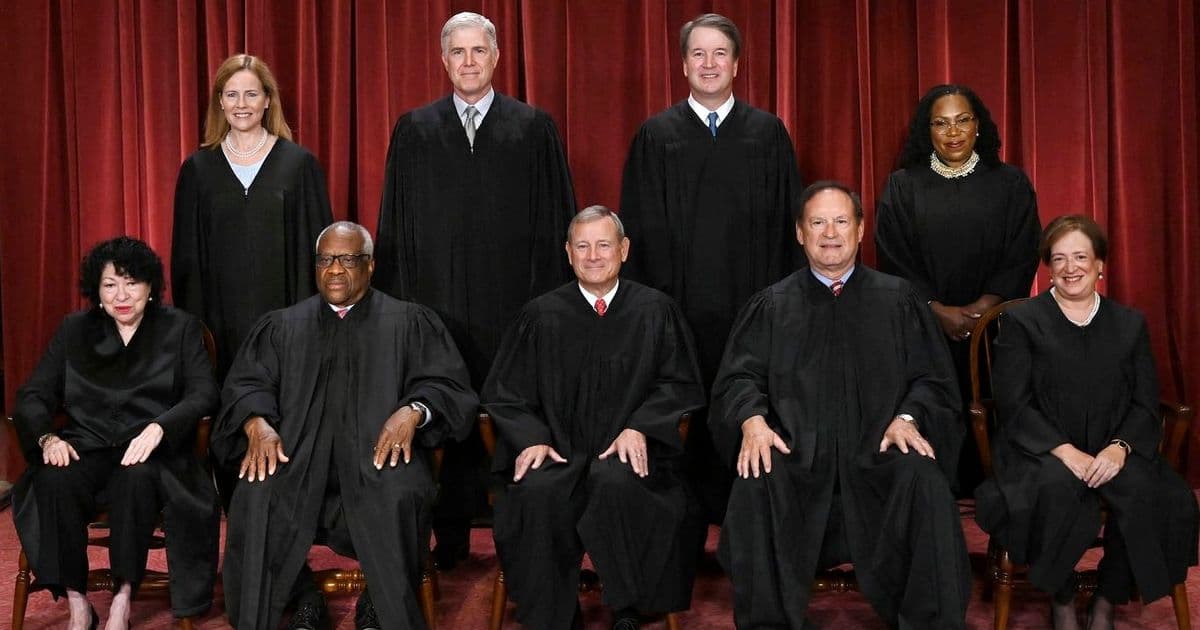
The Supreme Court is experiencing unprecedented public discord as justices openly criticize each other's rulings, signaling deeper institutional fractures that could reshape American jurisprudence.
The Supreme Court is experiencing an unusual period of public discord, with justices increasingly clashing openly over recent rulings and their implications for American law. This breakdown in collegiality marks a significant departure from the Court's traditionally reserved approach to internal disagreements.
The tensions have become particularly visible in recent weeks, as justices have taken to writing pointed dissents and public statements that go beyond typical legal disagreements. These public displays of friction suggest deeper institutional challenges that could affect the Court's ability to function effectively.
Legal experts note that while disagreement is inherent to the judicial process, the current level of public rancor is concerning. The Court's legitimacy partly depends on its appearance of impartiality and unity, even when justices disagree on specific outcomes.
Several factors appear to be contributing to this heightened tension:
- Ideological polarization: The Court's composition has shifted significantly in recent years, with a clear conservative majority that has led to major policy shifts
- High-stakes decisions: Recent rulings on issues like abortion rights, presidential immunity, and regulatory authority have intensified disagreements
- Public scrutiny: Increased media attention and public criticism of the Court may be exacerbating internal tensions
- Procedural disputes: Disagreements over how the Court handles emergency cases and shadow docket decisions have created additional friction
The impact of these tensions extends beyond the Court itself. When justices openly criticize each other's reasoning, it can undermine public confidence in the institution and create uncertainty about the stability of legal precedents.
Some observers worry that this level of discord could affect the Court's ability to reach consensus on future cases, potentially leading to more 6-3 splits along ideological lines. This could further politicize the Court and reduce its effectiveness as an arbiter of constitutional disputes.
Legal scholars are divided on whether this period of tension represents a temporary phase or a more permanent shift in the Court's dynamics. Some argue that the current composition and the weight of recent decisions have created unique pressures that may eventually subside.
Others suggest that the Court may need to develop new norms for managing internal disagreements while maintaining its public credibility. This could include more careful attention to the tone of opinions and dissents, or potentially reforms to how the Court operates.
The coming months will be crucial in determining whether the Supreme Court can navigate this period of tension while preserving its institutional integrity. How the justices manage their disagreements and present a unified front on procedural matters could significantly impact the Court's role in American governance.
The public nature of these tensions also raises questions about transparency and accountability in the judicial branch. While the Court has traditionally valued privacy in its deliberations, the current situation may prompt discussions about whether more openness could help rebuild public trust.
As the Court prepares for its next term, all eyes will be on how the justices interact and whether they can find ways to disagree without the kind of public rancor that has characterized recent months. The stakes are high, as the Court's ability to function effectively depends not just on legal reasoning but on the relationships between its members.
Comments
Please log in or register to join the discussion