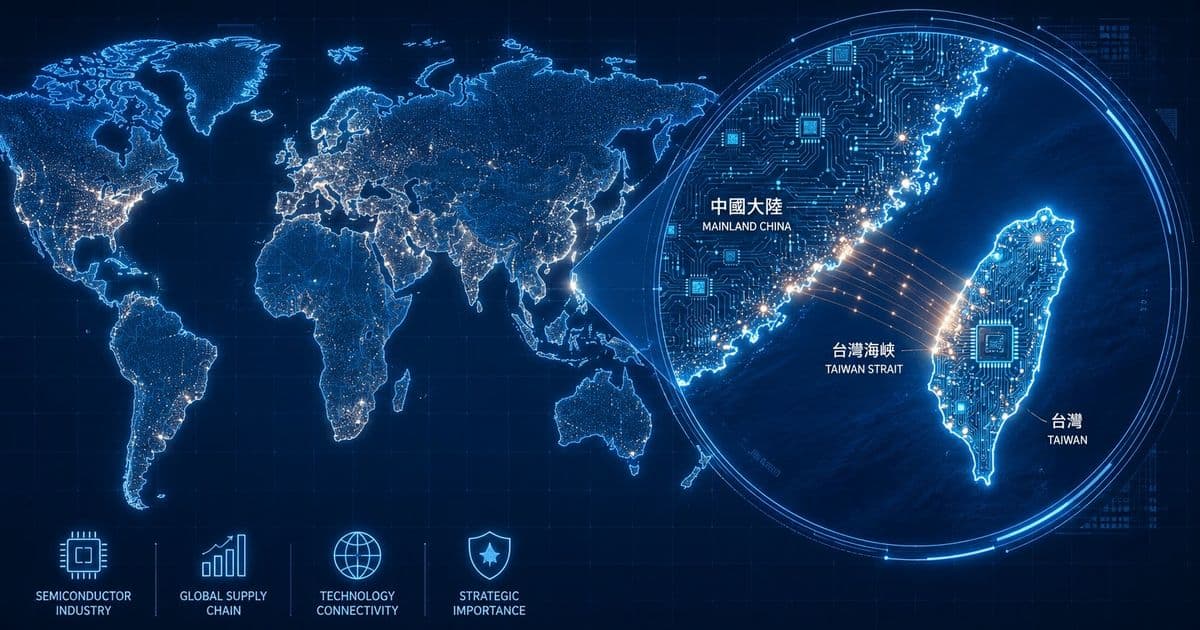
Taiwan is preparing to treat unauthorized AI chip shipments to mainland China as a criminal offense, a sharp break from its narrow blacklist approach. The trigger was a Keelung smuggling bust involving 50 NVIDIA-equipped servers, and the fallout already includes a 5% TSMC drop and Chinese retaliation against eight Taiwanese firms.
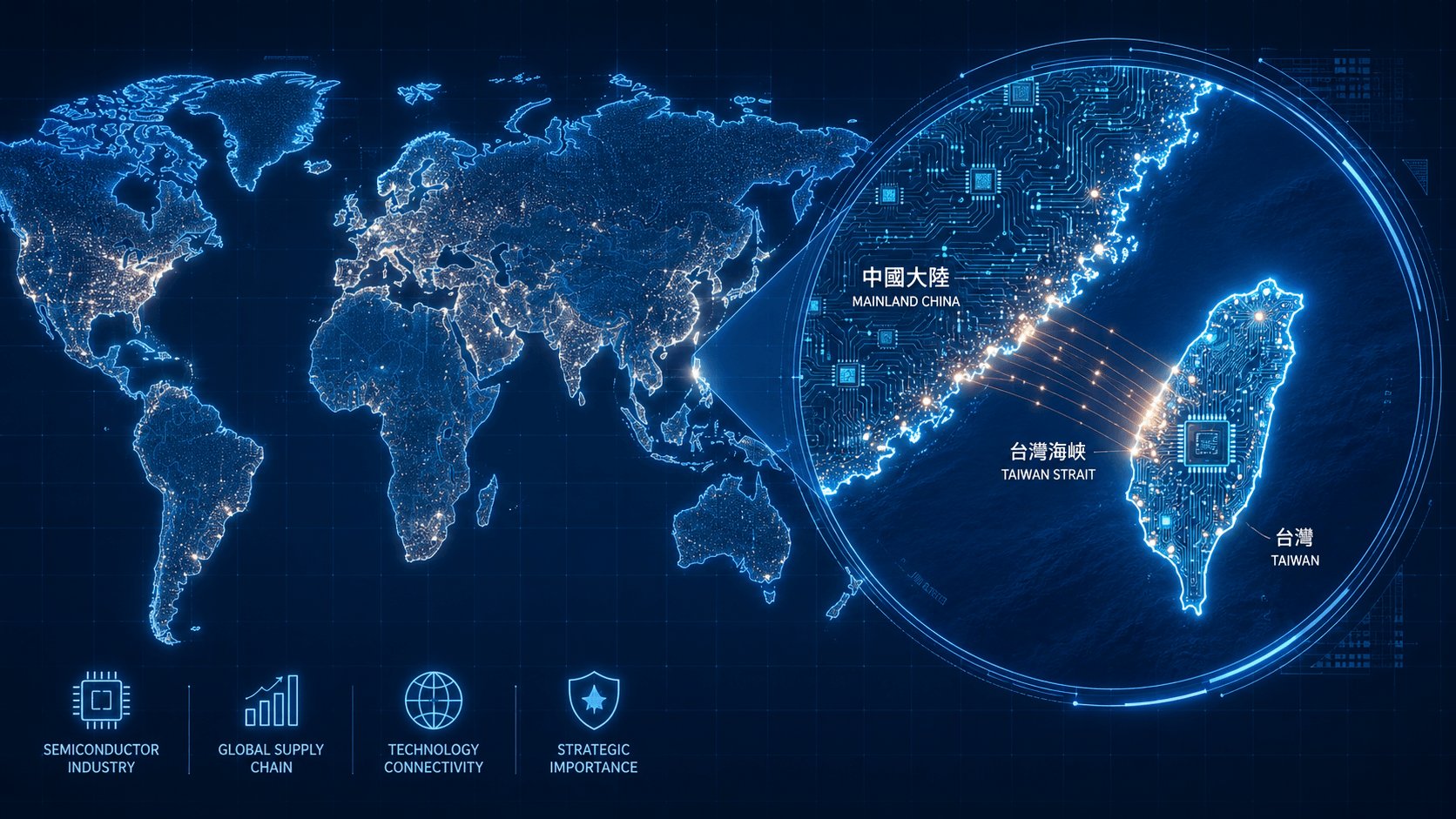
Taiwan's government is drafting rules that would make unauthorized exports of AI chips to mainland China a criminal offense, according to a Bloomberg report published June 9. If the measures are enacted, the change would move Taiwan from a targeted enforcement model to a blanket prohibition, and it would do so at a moment when advanced semiconductors have become a primary instrument of trade pressure between Washington, Taipei, and Beijing.
What's being claimed
The headline claim is straightforward: Taiwan wants to criminalize shipments of high-end AI accelerators to mainland customers that lack proper authorization. The reporting frames this as a deliberate escalation, timed to coincide with trade negotiations between Taipei and Washington and positioned as a gesture of alignment with U.S. export policy.
The reported trigger is a specific enforcement failure. Customs officials in Keelung seized roughly 50 AI servers built around high-end NVIDIA chips. The shipment was allegedly routed through Japan and Hong Kong before its intended final destination in mainland China. That transshipment path is the detail worth paying attention to, because it is exactly the kind of indirect routing that defeats entity-based controls.
What's actually new
The substantive change is the scope of who gets regulated, not the existence of regulation itself. Taiwan already operates an export control regime. What it has used until now is closer to a blacklist: specific named companies, most prominently Huawei, are cut off, while the broader market of mainland buyers remains accessible through normal licensing.
A blacklist has a structural weakness. It targets identities, and identities are cheap to create. A sanctioned company can order through an overseas subsidiary, a shell distributor, or a third-party integrator that is not itself on any list. The chips get assembled into servers, the servers get shipped to an intermediate jurisdiction, and the paper trail launders the final destination. The Keelung case is a textbook example of that pattern in action.
Moving from an entity-based rule to a destination-based rule closes that gap in principle. Instead of asking "is this specific buyer banned," the regime asks "is this shipment ultimately bound for mainland China." Adding criminal liability raises the personal stakes for the brokers, freight forwarders, and corporate officers who currently treat a denied license as a commercial inconvenience rather than a legal hazard. That combination, broad scope plus criminal exposure, is what makes this more than an incremental tightening.
U.S. lawmakers are pushing in the same direction from the other side. A group of senators has written to the Department of Commerce urging tighter controls on TSMC and other contract foundries, citing concern that mainland firms commission custom AI silicon through foreign subsidiaries. That is the foundry-level version of the same evasion problem: if a design house in a permitted jurisdiction places the order, the chip can be fabricated and delivered without any sanctioned name appearing on the work order.
The limitations and the costs
Destination-based enforcement is harder than it sounds. Knowing the true end destination of a server that passes through two intermediate ports requires intelligence, auditing, and cooperation from transit jurisdictions. Criminalizing the act does not automatically give customs the visibility to detect it. The Keelung seizure happened, but it is unclear how many comparable shipments cleared without incident. A law that is difficult to enforce mostly shifts smuggling toward more sophisticated operators rather than stopping the flow.
There is also a direct economic cost to Taiwan, and the market priced it immediately. TSMC, the largest advanced foundry in the world, fell roughly 5% on the news. The concern analysts raised is not abstract. Mainland China is a substantial customer base, and a blanket restriction severs commercial relationships that competitors in other jurisdictions may be happy to absorb. A foundry that cannot sell to a large market loses both revenue and the volume that helps amortize the enormous cost of leading-edge fabrication.
Beijing has already responded. China's Ministry of Commerce placed eight Taiwanese entities on its own export control lists, restricting their access to Chinese markets and inputs. The measure reads as calibrated rather than maximal, a signal that further escalation is available if Taipei proceeds. Cross-strait supply chains are deeply entangled, which means retaliation cuts in both directions and neither side can act without absorbing some of the damage.
The broader pattern
This fits a trajectory that has been building for several years: advanced compute hardware is being treated less like a traded good and more like a controlled strategic material. The United States started with restrictions on the most capable NVIDIA accelerators, then expanded to manufacturing equipment, then to the foundries themselves. Taiwan criminalizing unauthorized exports is the next node in that chain, and the senators' letter suggests pressure to extend controls deeper into the manufacturing layer.
The recurring theme across all of these moves is the gap between a control's stated scope and its enforceable scope. Each tightening closes one evasion route and pushes activity toward the next. Entity lists pushed buyers toward subsidiaries. Subsidiary scrutiny pushes orders toward foundry-level custom designs. Destination rules push shipments toward more elaborate transshipment. The policy keeps escalating because the underlying demand for compute does not go away, and a chip is small, valuable, and easy to move.
Whether Taiwan's criminal penalties meaningfully reduce that flow or simply raise its cost and sophistication is the open question. The law, if enacted, would be among the most aggressive measures any government has applied to the movement of AI hardware. Its real test will be enforcement, not the statute itself.
Comments
Please log in or register to join the discussion