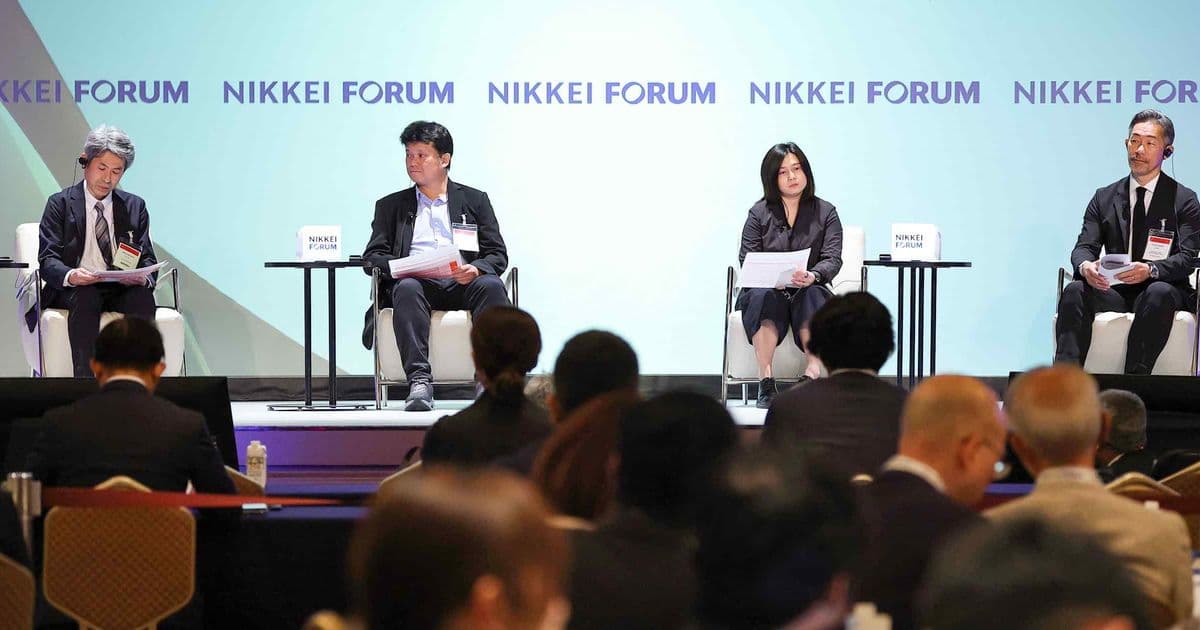
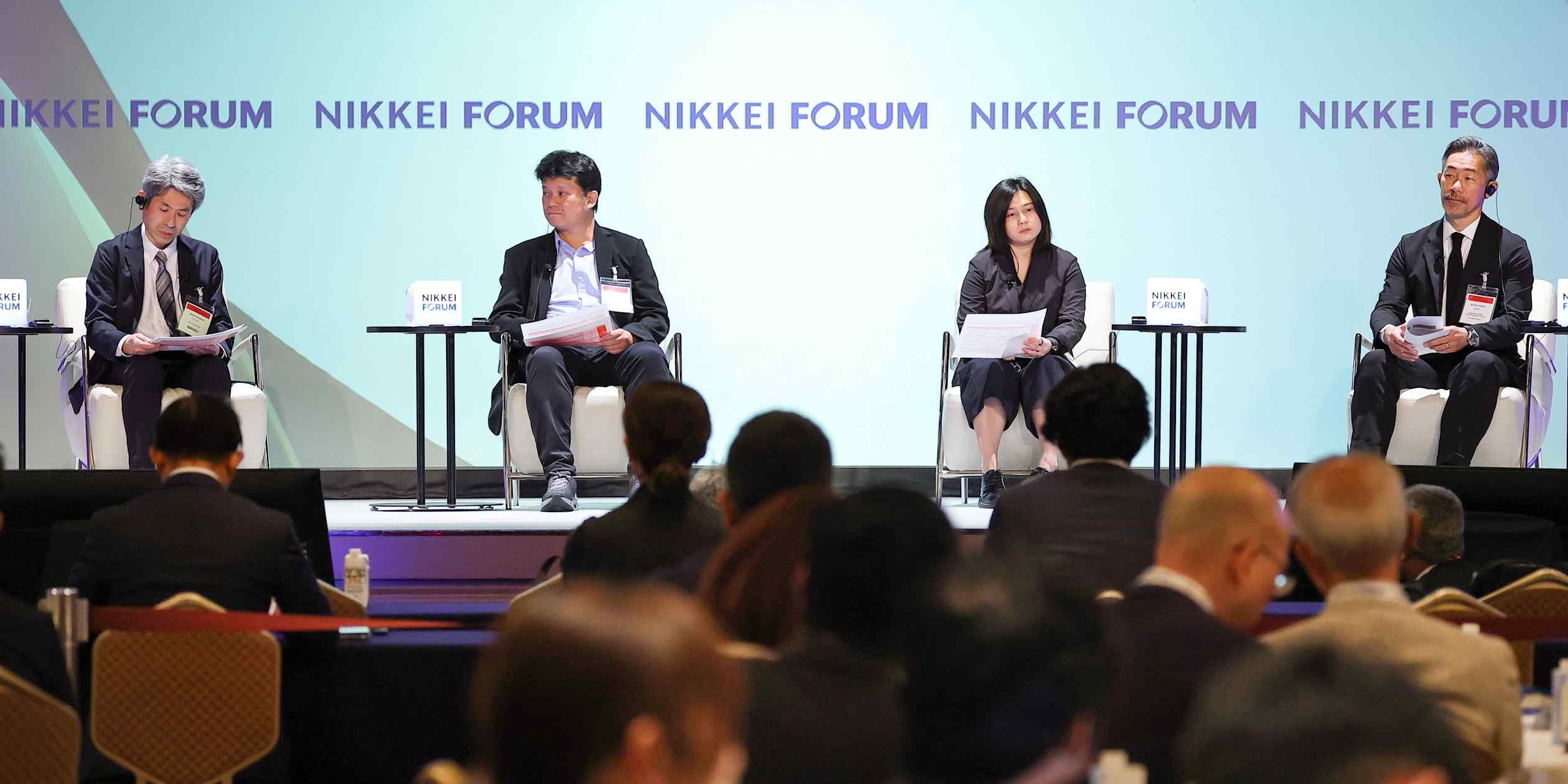
At Nikkei's Future of Asia forum in Tokyo, security experts warned that generative AI is lowering the cost of sophisticated attacks while raising the cost of defense, a shift that is already changing how Asian banks and corporations budget for risk.
Speaking at Nikkei's annual Future of Asia forum in Tokyo on June 11, a panel of industry experts delivered a blunt assessment: the same generative AI tools driving productivity gains across Asian enterprises are arming cybercriminals with cheaper, faster, and harder-to-detect methods. The warning, reported by Nikkei Asia, framed cybersecurity not as a technical footnote but as a line item that is climbing fast on corporate balance sheets across the region.
The core argument is an economic one. For most of the past decade, the labor-intensive nature of cybercrime acted as a natural ceiling on its scale. Crafting a convincing phishing email in fluent Japanese or Mandarin, cloning an executive's voice, or building a believable fake video required time, skill, and money. Generative AI collapses all three. A scam that once took a skilled operator hours to assemble can now be produced in minutes, localized into dozens of languages, and deployed at volume. When the marginal cost of an attack approaches zero, the volume of attacks rises to meet it.
Market context
The timing matters because Asia has become one of the fastest-growing markets for AI adoption, and attackers tend to follow the money and the infrastructure. Deepfake-enabled fraud has already produced headline losses in the region, including a widely cited 2024 case in Hong Kong where a finance employee transferred roughly $25 million after a video call populated entirely by AI-generated impersonations of company executives. That single incident reset expectations for what voice and video verification can be trusted to prove.
The defensive response is now visible in procurement decisions. Top Japanese banks have begun adopting frontier AI models specifically to counter automated attacks, and reporting around the forum points to financial institutions bracing for elevated threat activity later this year. When the country's largest lenders move from pilot projects to production deployments of defensive AI, it signals that the threat has crossed from theoretical to budgeted.
There is also a regulatory layer forming. The reported move by the United States to ask domestic AI firms to submit models for cybersecurity testing reflects a broader recognition that the models themselves are dual-use infrastructure. For Asian enterprises that depend on US-developed foundation models, any tightening of how those models are tested, released, or restricted becomes a supply-side variable in their own security planning.
What it means
For businesses operating across Asia, the strategic implication is that cybersecurity spending is shifting from a fixed compliance cost to a variable arms-race expense. Defending against AI-generated attacks increasingly requires AI-based detection, which means recurring spend on models, compute, and specialized talent rather than a one-time investment in firewalls and training sessions. The vendors positioned to capture that spend are the cloud providers and security firms that can bundle detection capabilities into existing enterprise contracts.
The forum's framing of attacks having a "bigger impact on business" is the part executives should read carefully. The danger is not only direct theft through fraudulent transfers. It is the erosion of the trust mechanisms that commerce runs on. If a voice on the phone, a face on a video call, or a message from a known supplier can no longer be taken at face value, companies must rebuild verification into every transaction, which adds friction and cost to ordinary operations. That overhead, spread across thousands of daily interactions, may ultimately outweigh the losses from any single breach.
The panel's underlying message connects to a pattern playing out globally. The same capabilities that make AI valuable to legitimate enterprises, scale, speed, and the ability to mimic human communication, make it equally valuable to those attacking them. Asia, with its dense concentration of manufacturing supply chains, cross-border financial flows, and rapid digital adoption, sits at the center of where that dynamic gets tested first. The institutions that treat AI-driven defense as an operating expense rather than a project, and that rebuild verification around the assumption that media can be faked, will be the ones least surprised by what comes next.
Comments
Please log in or register to join the discussion