FEX-Emu translation layer shows promise for running x86 games on ARM devices, but driver support and engine compatibility issues limit practical use.
As PC gaming hardware prices remain stubbornly high, gamers are increasingly exploring alternative platforms. Valve's Steam Deck has proven particularly successful, spawning a wave of x86-based handheld devices. Now, the company is pushing further into ARM territory with its upcoming Steam Frame headset using a Snapdragon 8 Gen 3 chip, while simultaneously funding development of FEX-Emu—a translation layer that could bring PC gaming to mobile devices.
What is FEX and how does it work?
FEX-Emu (or simply FEX) translates raw x86 instructions into ARM64 instructions, while Proton handles the software and OS-level translations from Windows into Linux-compatible formats. When these two technologies work together, ARM-based chips could theoretically run many "full-fat" games from your Steam Library.
The technology has been in development for years as an open-source project, but recent efforts have focused on bringing it to Android devices. Apps like GameNative provide a user-friendly interface to access your Steam Library and run games through FEX and Proton, though closed-source alternatives like GameSir's Gamehub have faced criticism for collecting sensitive user telemetry data.
Testing on high-end Android hardware
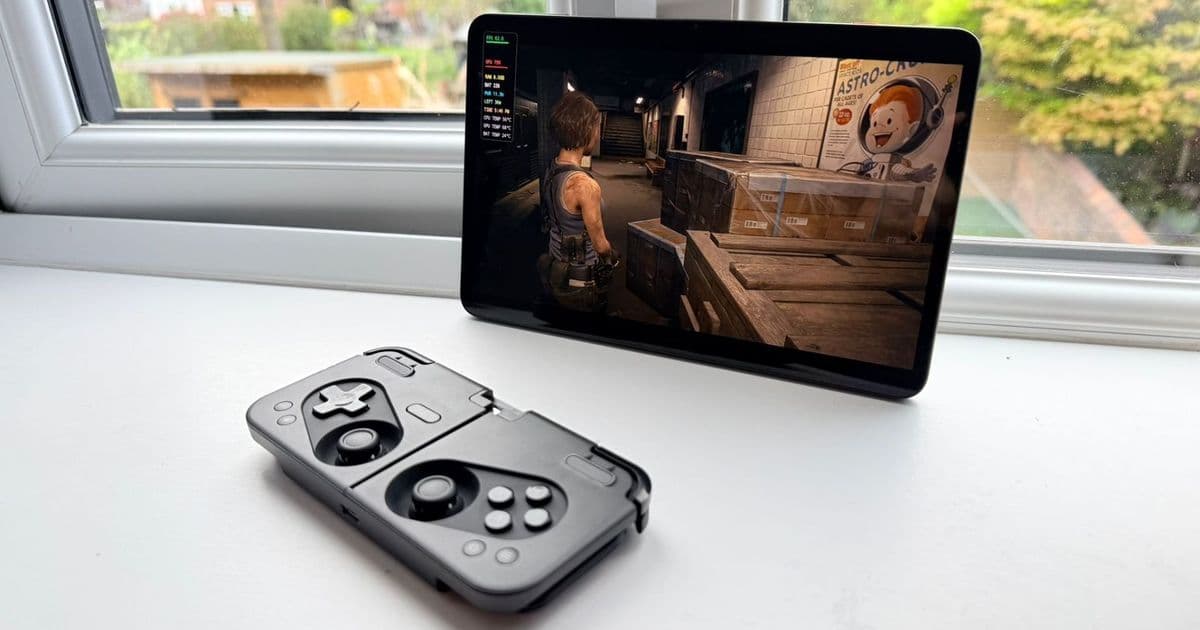
To evaluate FEX's current capabilities, I tested it on a RedMagic Astra Gaming tablet—a high-end Android device featuring a Qualcomm Snapdragon 8 Elite Gen 4 SoC, Adreno 830 GPU, and 24GB of LPDDR5T RAM. The tablet's active cooling system is particularly noteworthy, as it's rare in smaller Android devices.
After installing GameNative from its GitHub repository and logging into Steam, I had access to my entire game library. The app's gamepad-friendly interface allows filtering by "Compatible" titles, making it easier to identify which games might work well.
Performance results: A mixed bag
Cyberpunk 2077: Unplayable
Despite being designed to scale well on devices like the Steam Deck, Cyberpunk 2077 refused to run properly. After extensive tinkering with graphics drivers and Proton versions, the game would load but then hang in dense urban areas, even with all settings on low and FSR 2 disabled.
Resident Evil 3: Surprisingly playable
Capcom's RE Engine proved much more accommodating. At 720p resolution with performance-focused settings, the game ran at a steady 40-60 FPS during most of the introductory segment. Only during scenes with multiple light sources and particle effects did frame rates drop to around 27 FPS. Even with graphics settings favoring quality over performance, the game remained playable at 25-42 FPS.
Clair Obscur: Expedition 33: A complete failure
This Unreal Engine 5 title proved impossible to run properly. Despite configuring the lowest possible internal resolution and trying various driver combinations, the game suffered from severe texture corruption and missing geometry. The complex shader pipelines of UE5, combined with DirectX 12's VKD3D translation requirements, proved too much for the current implementation.
Why performance varies so dramatically
The inconsistent results stem from the complex stack of operations required to run games on ARM devices. Each game engine presents unique challenges:
- RED Engine (Cyberpunk 2077): Scales well to handheld devices but still struggles with the translation overhead
- RE Engine (Resident Evil 3): Uses a lighter, cleaner DirectX 12 implementation that's easier to translate
- Unreal Engine 5 (Clair Obscur): Complex shader pipelines and advanced features like mesh shaders create translation bottlenecks
Additionally, much of the support relies on community-developed graphics drivers, particularly custom "Turnip" drivers based on the open-source Linux Mesa project. These drivers patch Vulkan extensions that are still being reverse-engineered, and optimizations often get missed by Qualcomm's closed-source system drivers.
The road ahead for FEX
While FEX-Emu's achievements are impressive, several obstacles prevent it from being a mainstream solution:
- Driver support: Qualcomm's mobile chips were designed for mobile apps, not desktop-level Vulkan instructions
- Engine compatibility: Complex modern engines like Unreal Engine 5 push the translation layer beyond its current limits
- Community dependency: Reliance on volunteer-developed drivers means inconsistent support across titles
- Hardware limitations: Even high-end mobile chips struggle with the overhead of instruction translation
Some titles that don't require demanding graphical pipelines work demonstrably well, including games like Slay the Spire or Hollow Knight: Silksong. However, for modern "big-budget" experiences, the technology remains too rough around the edges.
Conclusion
FEX-Emu represents an exciting proof of concept for bringing PC gaming to ARM devices, but it's not ready for prime time. The technology shows particular promise for games with simpler graphics requirements or engines that translate more efficiently. Until there's better driver support—potentially with help from companies like Valve—and more maturation of the software pipeline, FEX will remain a niche solution for enthusiasts rather than a mainstream gaming platform.
For now, my RedMagic Astra has returned to its primary function as a very fancy comic-book reader, waiting for the day when the entire software ecosystem matures enough to make PC gaming on Android a practical reality.
Comments
Please log in or register to join the discussion