
The AI industry's collapse reveals a deeper crisis of truth where tech giants, media outlets, and investors perpetuate a shared fiction about artificial intelligence's capabilities and market potential.
The AI bubble is collapsing, and with it comes a reckoning about how we've been lied to about what artificial intelligence actually is and what it can do. What we're witnessing isn't just a market correction—it's an information war where tech companies, investors, and media outlets have created a shared fiction that's now crumbling under its own weight.
The Numbers Don't Add Up
The collapse started with NVIDIA's earnings report, which beat expectations but failed to inspire confidence. The company revealed $27 billion in cloud commitments—essentially paying customers to rent the chips it sells. This suggests there isn't enough underlying demand to justify the massive infrastructure buildout.
CoreWeave's earnings painted an even grimmer picture. The company lost 89 cents per share on $1.57 billion in revenue, with an operating margin of negative 6%. More tellingly, as CoreWeive added capacity—growing from 590MW to 850MW—its revenue per megawatt dropped from $2.3 million to $1.847 million. The business is getting less efficient as it scales, which is the opposite of how technology companies are supposed to work.
The Revenue Fantasy
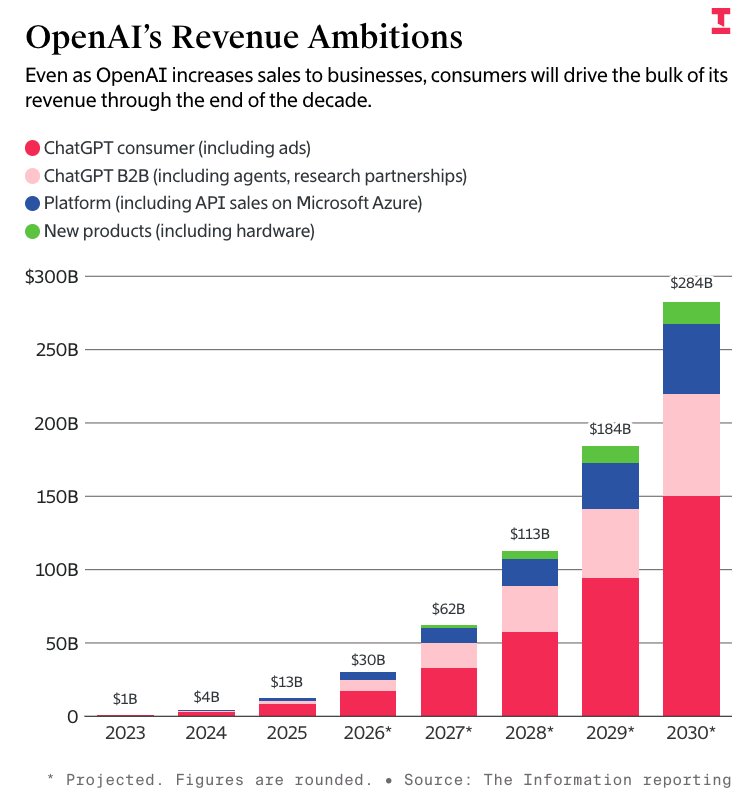
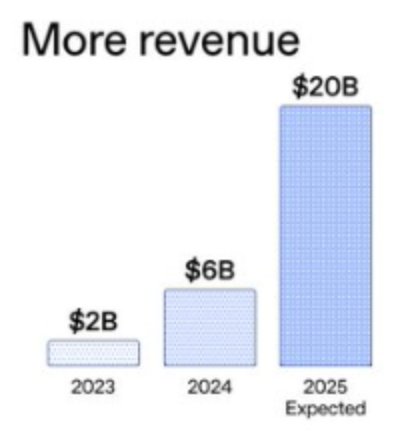
OpenAI's financial projections read like science fiction. The company claims it will generate as much revenue as PayPal by 2026, surpass SAP, Visa, and Salesforce combined by 2027, and nearly match Microsoft's entire annual revenue by 2030. These aren't conservative estimates—they're hallucinations dressed up as business plans.
The math doesn't work. If OpenAI spent $2.5 billion on inference to generate $4.3 billion in revenue in the first half of 2025, that's already a 58-cent loss per dollar earned. Add in training costs, salaries, marketing, and other expenses, and the losses balloon to unsustainable levels.
The Media's Role
What's most disturbing is how the media has enabled this fiction. Major outlets have repeatedly published OpenAI's revenue projections without questioning their plausibility. When OpenAI claims it will burn $230 billion through 2030, nobody asks how that's possible or what it means for the company's viability.
The pattern is clear: OpenAI leaks ambitious projections to the press, which publishes them uncritically. When the numbers inevitably don't materialize, the company just leaks new, even more ambitious projections. It's a cycle of deception that the media has been happy to facilitate.
The Military Connection
Both OpenAI and Anthropic have eagerly partnered with the military, despite their public posturing about ethics and safety. Anthropic's "red lines" around domestic surveillance and autonomous weapons were more PR than principle—the company was ready to work with the Pentagon on "more accurate" killer drones.
OpenAI's Sam Altman went further, signing a deal with the Department of Defense that he claimed included similar restrictions. But the fine print revealed "any lawful use" language that essentially allows the military to do whatever it wants, as long as it can find a legal justification.
The Information War
The real damage isn't just financial—it's informational. By constantly overstating what AI can do, Altman, Anthropic's Dario Amodei, and others have convinced the military and government that these systems are far more capable than they actually are. This has real consequences: people are being killed based on decisions made by software that hallucinates and makes things up.
When Claude or ChatGPT is used to analyze intelligence or plan military operations, it's not providing superior analysis—it's just processing data through a system designed to sound confident regardless of accuracy. The military's trust in these systems is based entirely on the hype generated by their creators.
The Coming Reckoning
We're approaching a moment where the gap between AI's marketing and reality becomes impossible to ignore. The financial losses, the lack of genuine use cases, and the growing awareness that these systems don't actually work as advertised will force a reckoning.
When that happens, we need to remember who enabled this deception. It wasn't just the tech companies—it was the investors who poured billions into unprofitable ventures, the media that published impossible projections without skepticism, and the executives who chose to believe the hype rather than demand evidence.
The AI bubble isn't just about bad business decisions. It's about how easily we can be convinced to believe in something that doesn't exist, and how much damage that belief can cause when it's finally exposed as a lie.

The information war around AI has real casualties—not just financial, but human. And we're all complicit in letting it continue for as long as it has.
Comments
Please log in or register to join the discussion