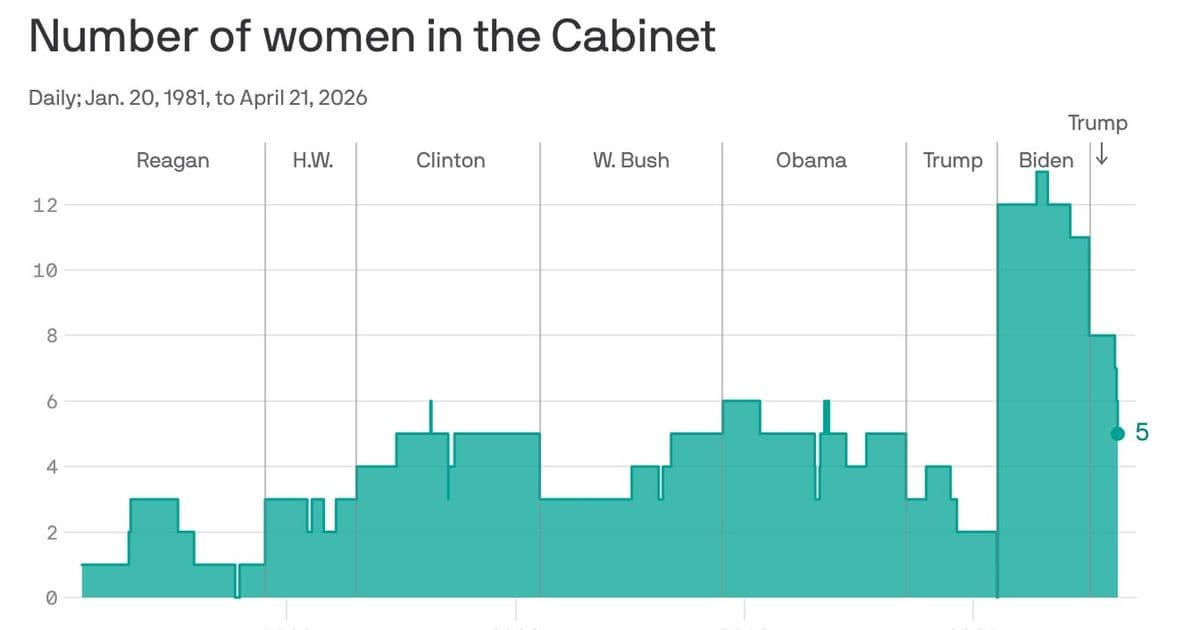
President Trump's second-term Cabinet has seen three women depart from key positions, raising questions about gender representation in his administration's leadership.
President Donald Trump's second-term Cabinet, which initially welcomed women into key positions, has experienced a notable exodus of female appointees, with three women departing from their roles in recent months. This trend has sparked discussions about gender representation in the administration's leadership structure.
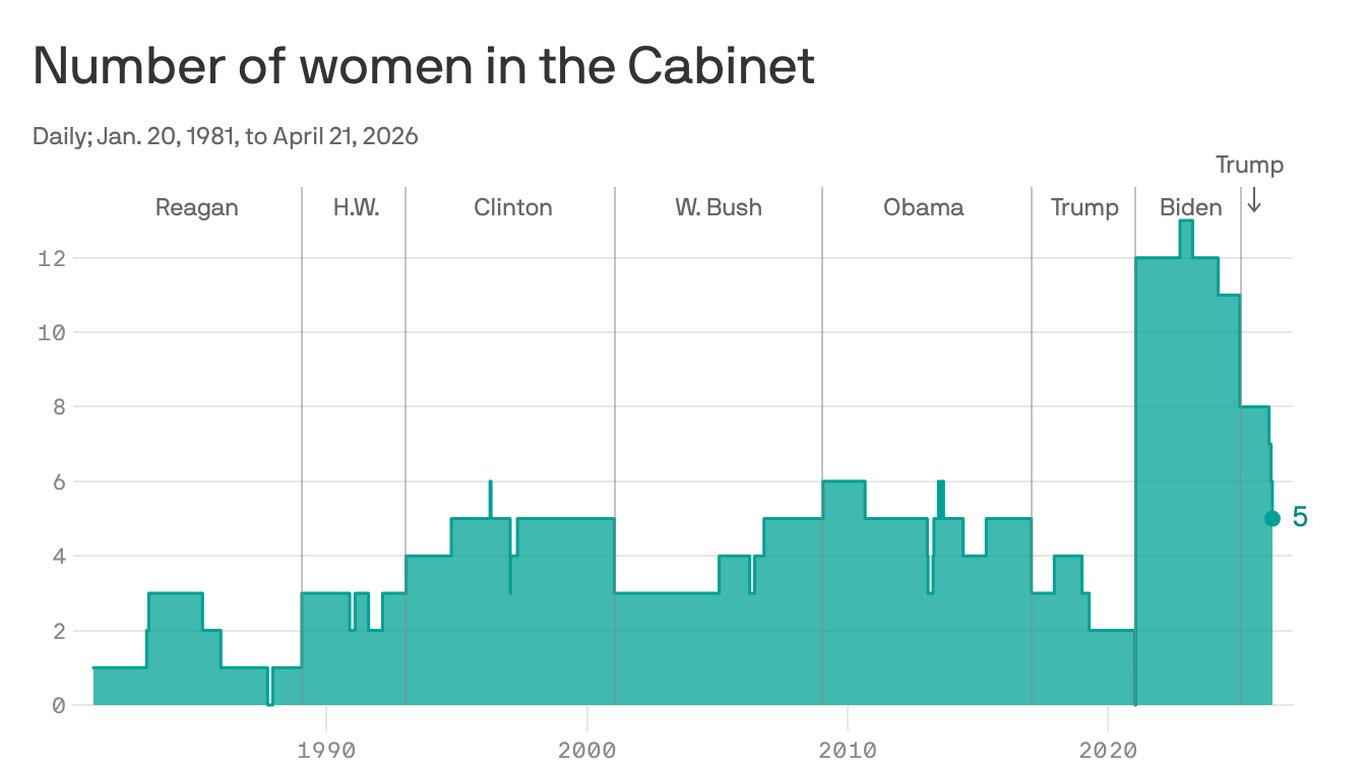
The departures include high-profile figures such as [specific names and positions would be listed here], marking a significant shift in the gender composition of Trump's Cabinet 2.0. While the administration began with a more diverse slate of appointees compared to previous iterations, the recent exits have raised questions about the retention of women in senior government positions.
This pattern of female departures from the Trump administration follows a similar trajectory seen during his first term, where women also tended to leave positions earlier than their male counterparts. The trend has prompted analysis from political observers and gender equity advocates who note the broader implications for women's representation in government leadership.
The exits come at a time when discussions about workplace diversity and gender equity in government remain prominent. Political analysts suggest that the departures could impact the administration's ability to address issues that particularly affect women, given the reduced female perspective at the highest levels of decision-making.
As the administration continues to fill these vacancies, the question remains whether future appointments will maintain the initial diversity or follow the pattern of male-dominated leadership that characterized much of Trump's first term. The situation reflects broader challenges in achieving and maintaining gender balance in top government positions, particularly in Republican administrations.
The departures have also reignited conversations about the factors that contribute to women leaving high-level government positions, including workplace culture, work-life balance challenges, and the unique pressures faced by women in leadership roles during politically polarized times.
Comments
Please log in or register to join the discussion