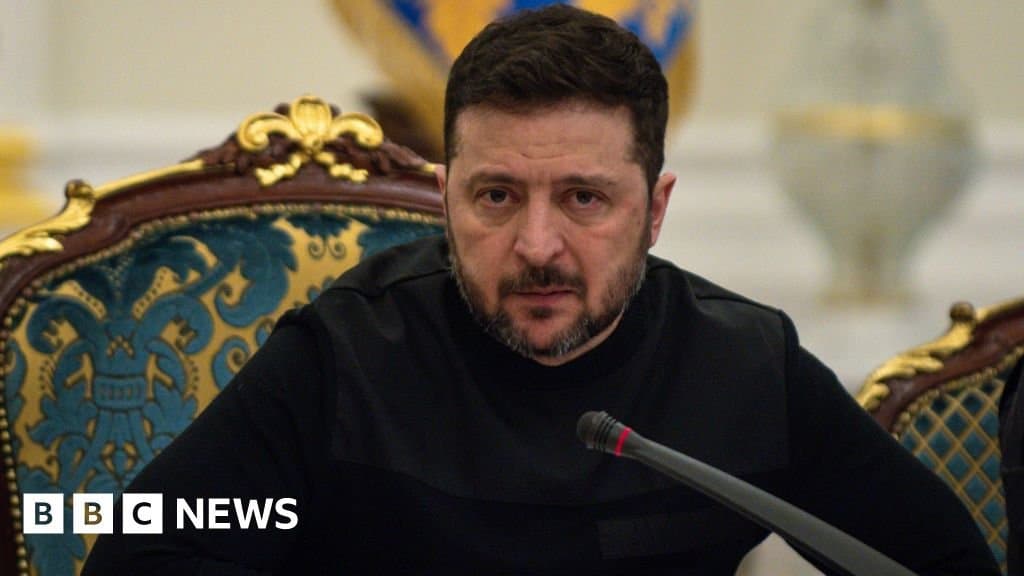
President Zelensky reveals Ukraine has received requests from the US and Gulf allies for help defending against Iranian drones, proposing a swap of interceptor drones for Patriot missiles.
Ukraine has positioned itself as a key player in the escalating Middle East conflict by offering its expertise in defending against Iranian drones to US allies in the Gulf region, President Volodymyr Zelensky announced Thursday.
Speaking from Kyiv, Zelensky revealed that Ukraine has received multiple requests for assistance, including direct appeals from the American side. "Partners are reaching out to Ukraine for assistance in defending against Shaheds - for expertise and practical support," he said in a social media post. "There have also been requests from the American side."
Ukraine's Unique Position
The offer represents a significant diplomatic opportunity for Ukraine, which has faced years of Russian drone attacks using Shahed-136 unmanned aerial vehicles based on Iranian designs. These one-way attack drones have become a persistent threat to Ukrainian infrastructure and civilian areas.
Zelensky emphasized that Ukraine's experience makes it uniquely qualified to help: "Anyone who has faced Iranian strikes encounters a serious challenge - Shaheds, which are difficult to intercept without the proper expertise and adequate weapons."
The Patriot Missile Dilemma
A central element of Ukraine's proposal involves addressing the critical shortage of Patriot air defense missiles. Zelensky suggested a potential swap arrangement, offering Gulf partners Ukrainian-made interceptor drones in exchange for Patriot missiles to protect against Russian ballistic missile attacks.
"We would like to quietly work with countries - both those we can name and those we cannot - to obtain for ourselves some of the deficit missiles for Patriot systems and transfer the appropriate number of interceptors," Zelensky explained.
The timing is particularly sensitive. Zelensky noted that approximately 800 Patriot PAC-3 missiles had been used in recent days - more than Ukraine has received during the entire war. This shortage has forced difficult decisions about resource allocation.
Strategic Calculations
Ukraine's offer comes with clear conditions. Zelensky stated unequivocally that "any assistance we provide will only be on the condition that it does not weaken our own defence in Ukraine and that it serves as an investment in our diplomatic capabilities."
This approach reflects Ukraine's broader strategy of leveraging its unique position as both a victim of Russian aggression and now a potential solution to Iranian drone threats. The move could help Ukraine build relationships with Gulf nations that have traditionally maintained close ties with Russia while avoiding taking sides in the Ukraine conflict.
Production and Training Challenges
Ihor Fedirko, head of the Ukrainian Council of Defence Industry, told the BBC that Ukraine could scale up interceptor-drone production to up to 10,000 units per month. However, he cautioned that transferring expertise presents significant challenges.
"The weapons are just plastic and metal, without teaching and training," Fedirko explained. "We can send you these goods. But what will you do with them? How will you apply the weaponry? Who will teach you?"
He noted that Ukraine's training centers are currently fully booked by Ukrainian armed forces and civilians, highlighting the resource constraints facing the country even as it seeks to position itself as a defense partner.
Regional Implications
The conflict has raised concerns about potential spillover effects on Ukraine's own defense capabilities. There are fears that Ukraine could suffer if its allies become distracted by Middle East tensions, potentially leading to shortages of critical interceptor missiles.
Additionally, Russia could benefit from rising oil prices, which provide crucial funding for its war effort. Ukraine must navigate these complex dynamics while seeking to advance its own strategic interests.
Diplomatic Momentum
Delegations from Gulf countries have already arrived in Kyiv for discussions, with some reportedly told to remain until agreements are reached. The UK is also exploring ways to assist Qatar in bolstering its air defenses.
For Ukraine, the crisis represents both a challenge and an opportunity. By helping Gulf partners secure adequate air defenses, Zelensky may hope to discourage wasteful use of expensive Patriot missiles against cheap drones, preserving resources for more critical threats.
The irony of the situation is not lost on Ukrainians - after years of requesting assistance from the United States, they now find themselves in a position to offer help. As Zelensky noted, President Trump responded to the offer by saying, "I'll take any assistance from any country."
This reversal of roles could prove strategically valuable for Ukraine as it seeks to strengthen its position on the global stage while managing the ongoing threat from Russia. The coming weeks will reveal whether these diplomatic overtures translate into concrete military and economic benefits for a country still fighting for its survival.
Comments
Please log in or register to join the discussion