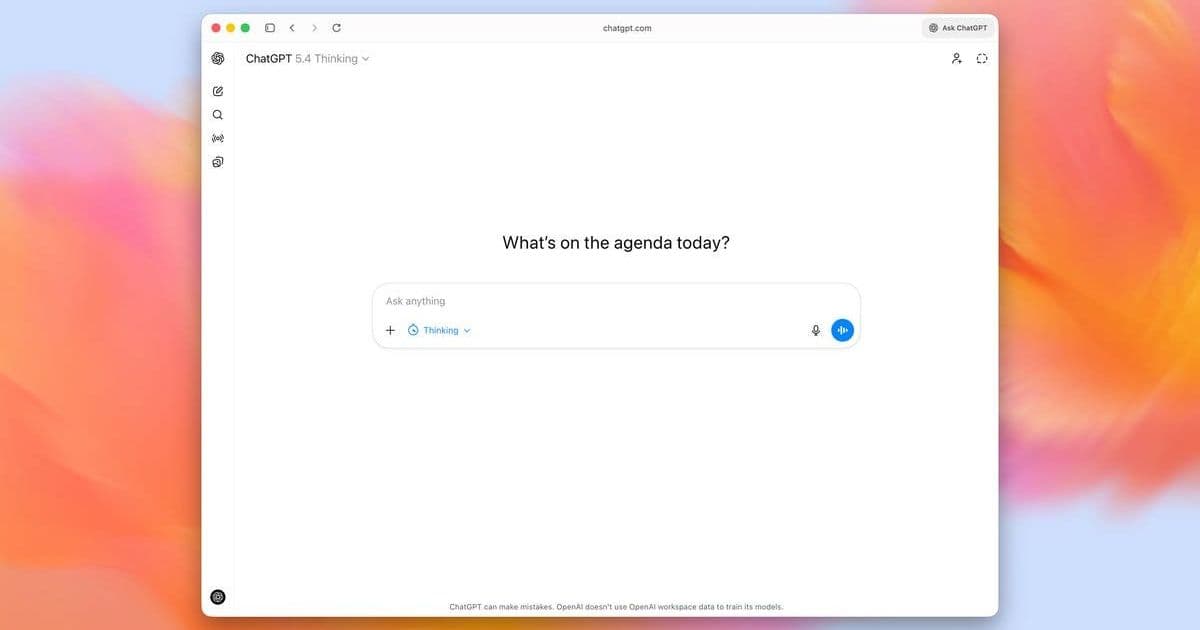
OpenAI launches GPT-5.4 with native computer use capabilities, claiming significant improvements in accuracy and error reduction over previous versions.
OpenAI has unveiled GPT-5.4, positioning it as its "most capable and efficient frontier model for professional work" and the company's first model with native computer use capabilities. The latest release comes with bold accuracy claims, stating that individual claims are 33% less likely to be false and full responses are 18% less likely to contain any errors compared to GPT-5.2.
The new model represents OpenAI's continued push into professional productivity tools, with enhanced capabilities across multiple domains. According to reports, GPT-5.4 produces presentations with stronger, more varied aesthetics and makes more effective use of image generation tools. The model is available in both Pro and Thinking versions, with the API version featuring improved tool calling and context windows of up to 1 million tokens.
Enhanced Professional Capabilities
GPT-5.4 introduces native computer use capabilities, allowing it to take on jobs across devices and applications. This marks a significant expansion of the model's utility beyond traditional text-based interactions. The model can now directly interface with operating systems and applications, potentially automating complex workflows that previously required human intervention.
OpenAI has also integrated ChatGPT directly into Microsoft Excel and Google Sheets, expanding its office productivity footprint. The company debuted a suite of financial services tools designed to better handle office work, suggesting a targeted approach toward enterprise adoption.
Pricing and Availability
The pricing structure for GPT-5.4 reflects its positioning as a premium offering. The standard model costs $2.50 per million input tokens and $15 per million output tokens, while the Pro version is priced at $30 per million input tokens and $180 per million output tokens. These rates are higher than GPT-5.2 and GPT-5.2 Pro, indicating OpenAI's confidence in the model's enhanced capabilities.
Industry Context and Competition
The launch comes amid intensifying competition in the AI space. Anthropic, OpenAI's primary competitor, recently faced scrutiny when the Pentagon formally notified the company that it and its products pose a supply chain risk. This development highlights the growing tensions between AI companies and government entities over security and ethical concerns.
OpenAI CEO Sam Altman has taken subtle swipes at Anthropic, stating that "government is supposed to be more powerful than private companies." This comment reflects the broader industry dynamics as AI companies navigate relationships with government agencies and military organizations.
Technical Improvements
The 33% reduction in false claims and 18% decrease in overall errors represent significant quality improvements. These metrics suggest OpenAI has made substantial progress in reducing hallucinations and improving factual accuracy, which have been persistent challenges for large language models.
The model's enhanced image generation capabilities and improved tool calling in the API version indicate a focus on practical applications rather than purely conversational abilities. This shift aligns with OpenAI's strategy of targeting professional and enterprise users who require reliable, accurate outputs for business-critical tasks.
Market Impact and Adoption
OpenAI's continued revenue growth supports its aggressive development cycle. The company reportedly hit $25 billion in annualized revenue by February's end, up from $21.4 billion at the end of 2025. This growth trajectory suggests strong market demand for increasingly capable AI models.
The integration with popular office applications like Excel and Google Sheets could drive significant adoption among knowledge workers and enterprise customers. By embedding AI capabilities directly into tools people already use daily, OpenAI reduces friction for adoption and increases the potential for workflow automation.
Looking Ahead
GPT-5.4's launch represents another step in the rapid evolution of AI capabilities. The combination of improved accuracy, native computer use, and deeper integration with professional tools suggests OpenAI is focused on making AI an indispensable part of knowledge work.
However, the higher pricing and the model's positioning as a professional tool rather than a general-purpose assistant may limit its appeal to casual users. The success of GPT-5.4 will likely depend on whether the claimed improvements in accuracy and functionality justify the premium pricing for enterprise customers and power users.
As the AI landscape continues to evolve, the competition between OpenAI, Anthropic, and other players will likely drive further innovations in accuracy, capability, and practical applications. The industry's ability to deliver on promises of reduced errors and improved reliability remains a critical factor in building trust and driving widespread adoption.
Comments
Please log in or register to join the discussion