
A United Airlines Boeing 767‑400ER bound for Palma de Mallorca was forced to turn back to Newark when a passenger’s Bluetooth speaker was named with a four‑letter threat word. The aircraft was inspected, passengers re‑screened, and a replacement flight departed early the next morning.
United 767 Returns to Newark After Bluetooth Device Name Triggers Security Alert
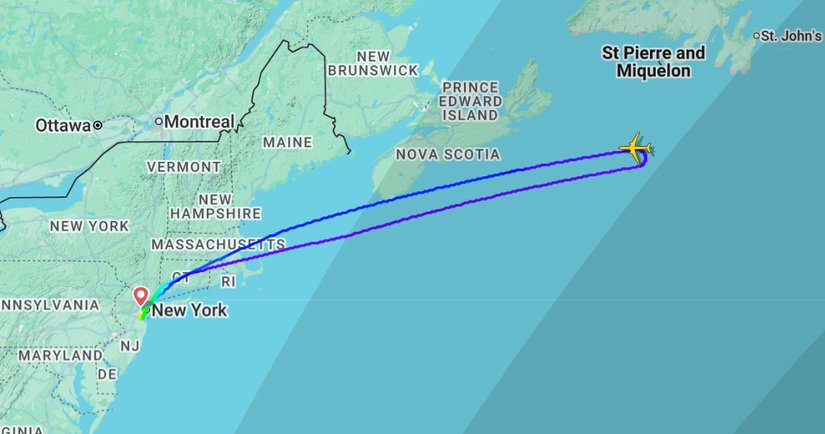
On the evening of May 30, United Flight 236 left Newark (EWR) for Palma de Mallorca (PMI) in a Boeing 767‑400ER (registration N67052). About an hour into the transatlantic leg, cabin crew announced over the public address system that all Bluetooth devices had to be turned off immediately, or the aircraft would be required to return to the departure airport.
What set off the alarm?
A passenger later posted on Reddit that the crew had identified a Bluetooth speaker broadcasting a device name that read "BOMB" – a four‑letter word that triggered United’s internal threat‑detection protocol. Recordings from LiveATC.net captured a ground‑operations specialist informing the crew that “agents” were being dispatched to investigate the source of the potential threat.
Immediate response
United’s ground team instructed passengers to leave all carry‑on items on the plane and deplane with only passports and phones. Law‑enforcement officers from the Port Authority Police, the FBI, and the Transportation Security Administration converged on Gate A7. Passengers were escorted to a secure holding area while the aircraft underwent a thorough sweep for explosives and other hazards.
Parallel incidents
The incident mirrors a security scare that occurred earlier in May on another United flight, where a Wi‑Fi hotspot named "Free Palestine, F Zionists" prompted a cockpit warning and a threat of FBI involvement if the name was not changed within 30 seconds. Both cases involved passenger‑controlled wireless devices broadcasting provocative identifiers that were automatically flagged by airline security systems.
Operational impact
After several hours on the tarmac, the 767 returned to Newark around 9:00 PM local time. Passengers were re‑screened through TSA checkpoints and later boarded a replacement flight on the same aircraft. The new departure was scheduled for 2:30 AM the following morning, with an estimated arrival in Palma de Mallorca in the early afternoon.
Why this matters
Airlines increasingly rely on automated monitoring of Bluetooth and Wi‑Fi device names to prevent potential threats. The technology scans for keywords associated with weapons, explosives, or extremist messaging and alerts crew members in real time. While the system can prevent genuine security risks, false positives – such as a user naming a speaker for a joke – can cause significant disruption, passenger inconvenience, and added operational costs.
Looking ahead
United Airlines has not released an official statement beyond confirming that the incident was resolved without injury and that the aircraft was cleared for the subsequent flight. Industry observers expect airlines to refine the sensitivity of their detection algorithms to balance safety with passenger experience. Some experts suggest offering a brief pre‑flight reminder about acceptable device naming conventions as a low‑cost mitigation step.
Reporting by Luke Bodell, aviation analyst.
Comments
Please log in or register to join the discussion