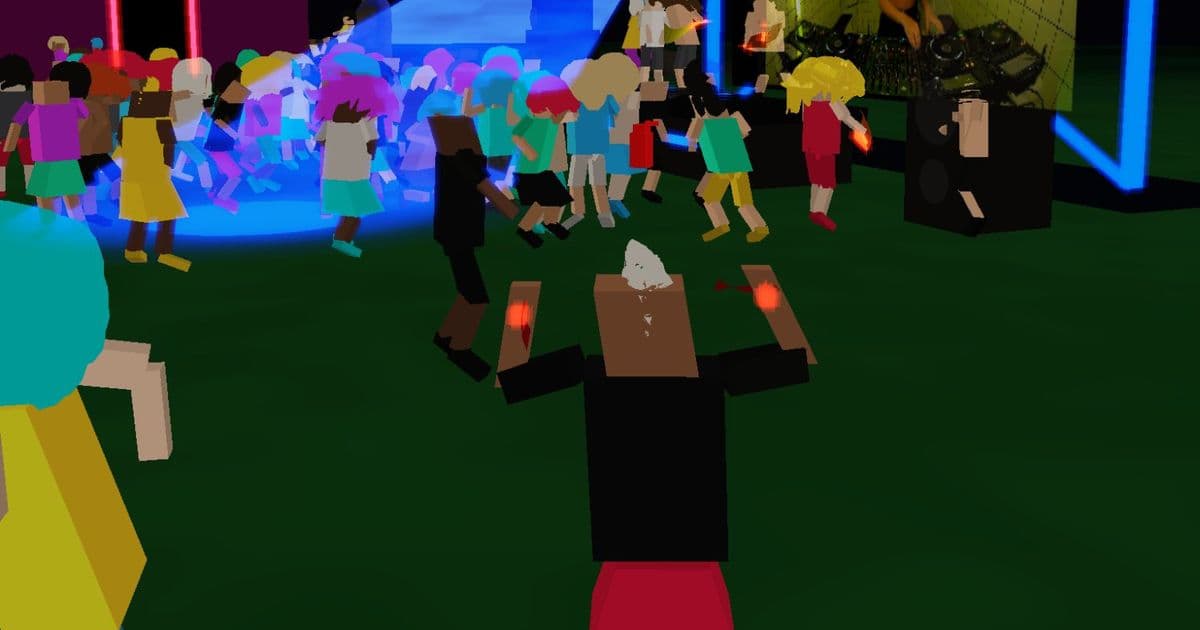
A solo developer launched Hallucinate, a low‑poly, browser‑based multiplayer rave with no login or ads. The site exploded on Hacker News, overloaded its server, and sparked a flood of feature requests—all while the open‑source code remains on GitHub for anyone to improve.
When a single developer posted a link to Hallucinate on Hacker News, the internet answered with a collective dance floor. The site drops you straight into a low‑poly 3D club where avatars—each representing a real user—bounce to a looping DJ set that pulls tracks from YouTube. There are no accounts, no passwords, and no ads to interrupt the groove.
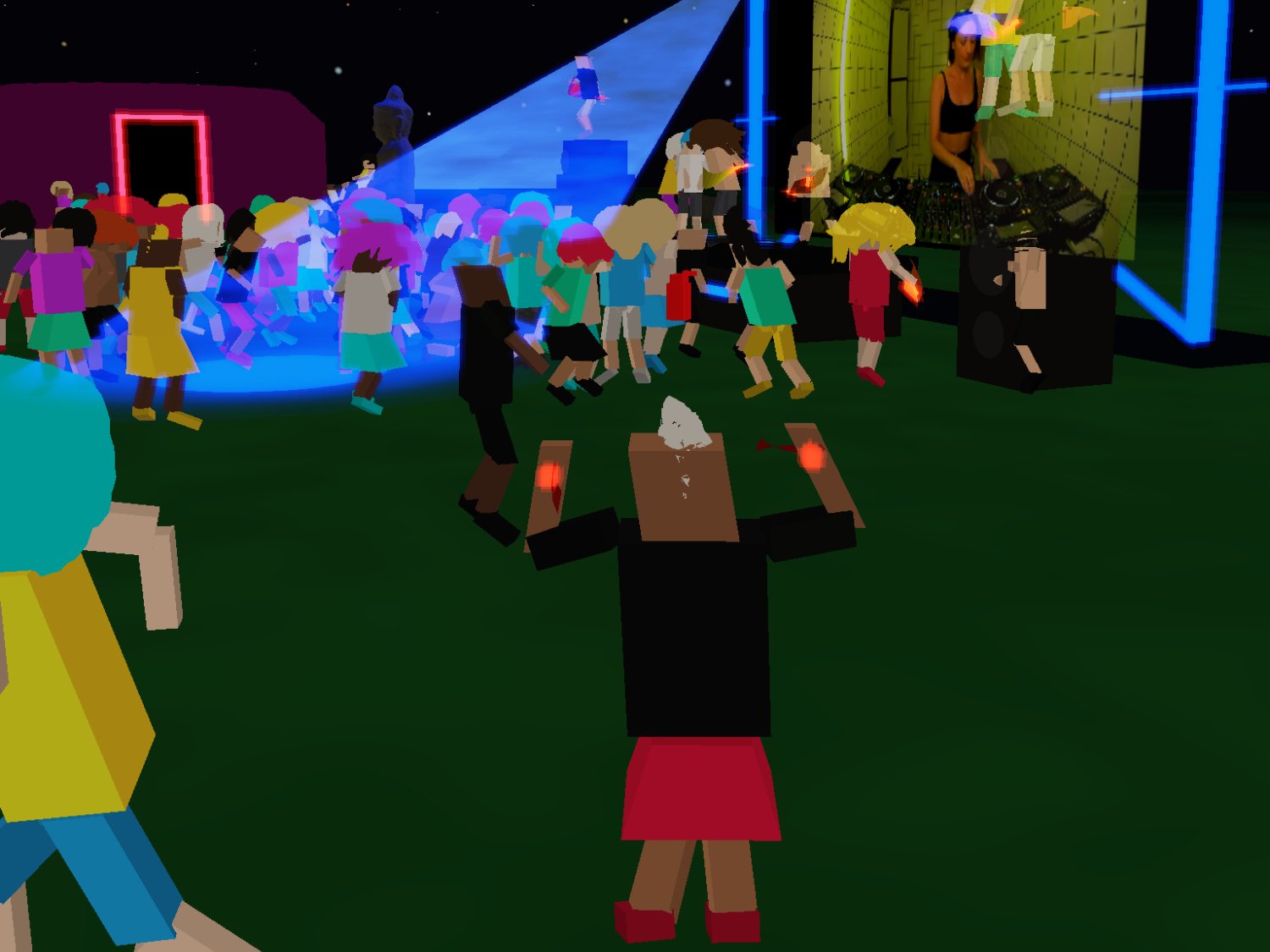
What’s under the hood?
Stagas, the creator behind the project, built Hallucinate with a client‑authoritative, dead‑reckoning model. Instead of sending every tiny movement to the server, each client only transmits key state changes (e.g., start/stop dancing, avatar position snaps). The server then reconciles these updates and broadcasts the minimal data needed to keep everyone in sync. This approach lets hundreds of participants share the same space without saturating the backend.
The entire codebase lives on GitHub under an MIT licence: github.com/stagas/hallucinate. Stagas explicitly invites pull requests, and the repository already includes a basic build pipeline that compiles the WebGL scene with Three.js and handles YouTube‑API integration for the music stream.
The crash that proved the concept
Within the first hour of the Hacker News post, the site attracted enough traffic to buckling the single‑node server. The page went dark, and Stagas raced to patch the deployment, spin up a new instance, and manually ban IPs that abused the open chat. The whole episode unfolded in real time on the comment thread, giving observers a front‑row seat to live‑ops troubleshooting.
"They keep coming back with different IPs," Stagas wrote, noting the difficulty of moderating an open‑access experience.
Feature requests that poured in
Even as the server hiccuped, the community started suggesting improvements:
- Jumping mechanics – let avatars leave the floor for a momentary vertical hop.
- Skin colour options – customize avatar appearance beyond the default palette.
- Mobile controls – adapt the interface for touch devices.
- Live player count – display how many dancers are currently online.
Stagas’ response was succinct: "PR will be accepted." The open‑source nature of the project means any of these ideas can be turned into a pull request and merged without waiting for a single maintainer to implement them all.
How does Hallucinate compare?
| Feature | Hallucinate | Typical MMO (e.g., Roblox) | Browser‑only party apps |
|---|---|---|---|
| Login required | No | Yes | Often yes |
| Ads | None | May appear in free tiers | Common |
| Server model | Client‑authoritative, dead‑reckoning | Authoritative server | Peer‑to‑peer or server‑heavy |
| Open source | MIT licence on GitHub | Proprietary | Rare |
| Max concurrent users (tested) | ~300 before crash | Thousands (scaled) | Tens to low hundreds |
Hallucinate’s minimalistic approach makes it a pure playground for developers who want to see real‑time networking in action without the overhead of a full MMO stack. It also serves as a reminder that even a modestly sized audience can overwhelm a single server, highlighting the importance of autoscaling or cloud‑based load balancers for future iterations.
Who should care?
- Web developers interested in real‑time sync techniques can study the dead‑reckoning implementation as a lightweight alternative to authoritative server models.
- Game designers looking for inspiration on low‑barrier multiplayer experiences will appreciate the zero‑login, ad‑free premise.
- Community managers can observe the moderation challenges of an open chat and see how manual IP bans can be a stop‑gap before implementing rate‑limiting or captcha solutions.
- Casual internet surfers who just want a quick, free dance floor can jump in without creating an account.
Where to go next?
The source code is ready for contributions, and the community has already suggested a roadmap that includes:
- Autoscaling on a cloud provider – to prevent the next traffic surge from taking the site offline.
- WebSocket‑based rate limiting – to curb spam and IP‑hopping.
- Custom avatar editor – expanding the visual identity options.
- Mobile‑first UI – making the rave accessible on phones and tablets.
If you’re curious, fire up the site, grab a virtual drink, and start dancing. Then, if you have a tweak in mind, fork the repo and send a pull request. Hallucinate proves that a single developer can spin up a shared, real‑time experience that feels like a tiny slice of the internet’s collective joy—no login, no ads, no hidden catch.
Live site: https://hallucinate.site GitHub repository: https://github.com/stagas/hallucinate
Comments
Please log in or register to join the discussion