
New US export rules would create worldwide licensing system for AI accelerators, giving Trump administration power to block global sales and influence international AI infrastructure development.
The U.S. government is drafting sweeping new export regulations that would give it authority to approve nearly all global shipments of advanced AI accelerators made by American companies, including AMD and Nvidia, reports Bloomberg. The rules would expand existing country-based restrictions into a worldwide licensing system and will give Trump's administration power to allow or decline large-scale AI infrastructure buildouts.
The proposed policy is by no means a total export ban, but an extremely powerful tool that lets the U.S. government influence how global AI infrastructure develops. If the Trump administration does not like the fact that a UK or France-based company deploys a cluster of over 200,000 GB300 GPUs or equivalent, it can deny appropriate export licenses if appropriate governments and companies do not meet their requirements.

(Image credit: Nvidia)
The newly proposed export regime establishes a tiered licensing system based on computing scale: small-scale batches would pass through a simplified review, mid-scale deployments would require 'preclearance before seeking export licenses' from the U.S. Department of Commerce, whereas large-scale AI clusters would require governments of host countries to negotiate the deal with the U.S. government and investments in the U.S. AI infrastructure as part of the deal.
Shipments involving up to 1,000 Nvidia GB300 GPUs would pass through a simplified review and may qualify for limited exemptions. Larger installations would require pre-authorization before export licenses could be issued. These will introduce compliance obligations that may include operational transparency, disclosure of business activities, and potential on-site inspections by U.S. authorities.
Clusters powered by 200,000 GB300 GPUs operated by a single company within one country — such as those currently deployed by AWS, Microsoft, Oracle, Open AI, or xAI — would trigger direct intergovernmental arrangements. In these cases, approvals would depend on national-security assurances as well as commitments to invest in American AI infrastructure.
For now, companies like AMD, Cerebras, and Nvidia cannot ship high-performance AI processors to select countries, such as China, Iran, North Korea, and Russia, just to name a few. Yet, shipping large-scale batches of AI accelerators to Middle Eastern countries requires direct intergovernmental arrangements and investments in the American AI infrastructure.
If the newly proposed regulation becomes a law, then such arrangements would become much more common particularly with allied nations in Europe.
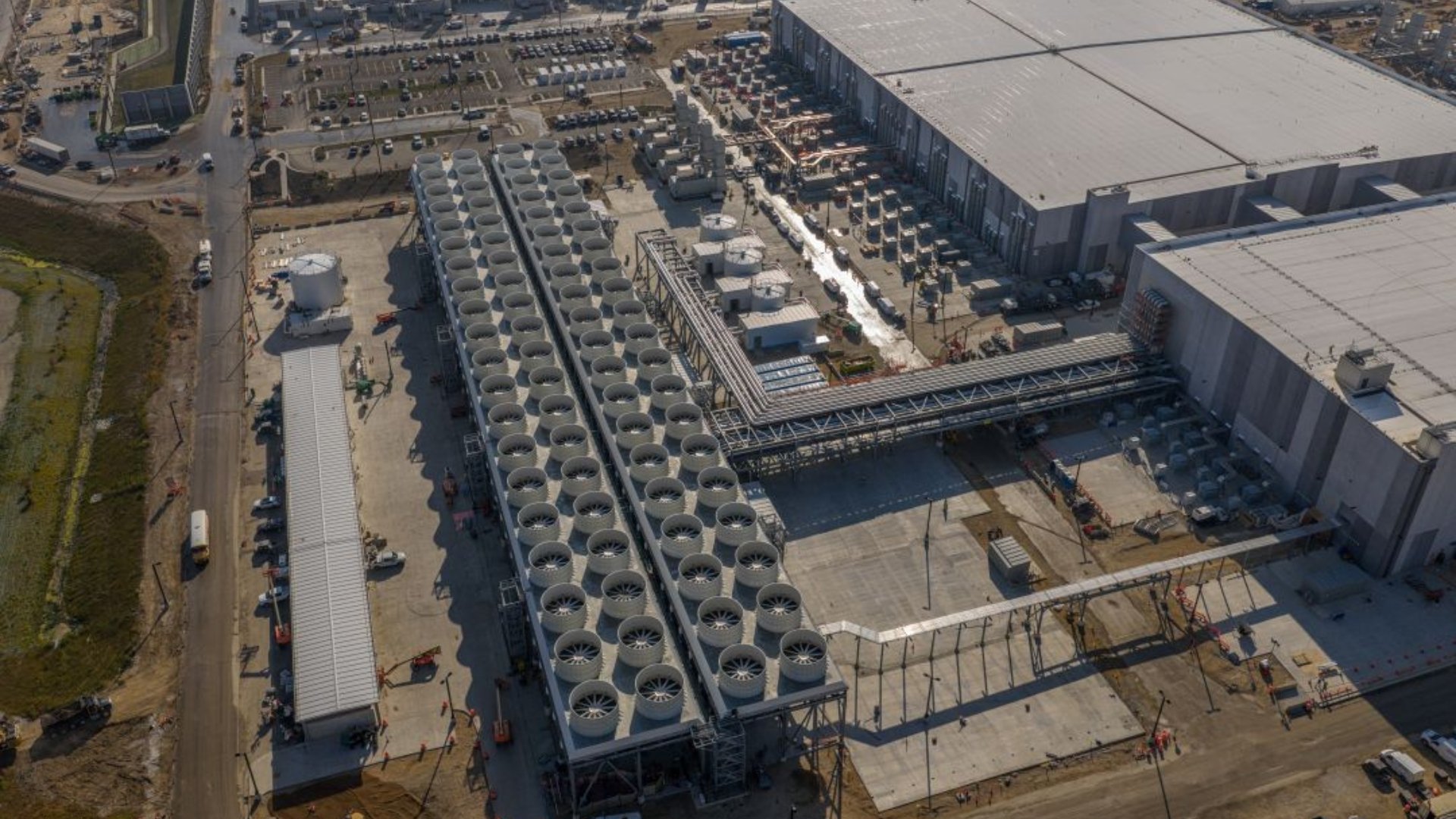
(Image credit: Microsoft)
The rule turns out to be considerably stricter than the highly-criticized AI Diffusion Rule from the Biden era. The Biden administration's approach focused primarily on country-based restrictions, whereas the Trump administration's proposal creates a comprehensive global framework that would affect even allied nations.
If the proposed policy is enacted, for companies like AMD or Nvidia, which ship their products globally, everything will depend on how quickly licenses are granted and what conditions are attached. Fast approvals with light restrictions would let most small projects move forward, though with more paperwork. However, for larger installations, tougher requirements would delay construction and make operating large data centers outside the U.S. considerably more complicated.
Meanwhile, building clusters comparable to those currently operated by AWS, Google, Oracle, Microsoft, or xAI outside of the U.S. would face extreme complications, which would lower their economic feasibility.
The proposed system represents a significant escalation in U.S. efforts to maintain technological leadership in AI. By creating a global licensing framework, the administration would gain unprecedented visibility into and control over international AI infrastructure development. This approach goes beyond traditional export controls by establishing ongoing relationships with foreign governments and companies rather than simply blocking specific transactions.
Industry analysts suggest the policy could reshape global AI development patterns, potentially accelerating data center construction in the United States while creating bottlenecks for international projects. The requirement for intergovernmental negotiations for large-scale deployments could also give the U.S. leverage in broader diplomatic discussions about technology standards and security protocols.
For the semiconductor industry, the rules would create new compliance burdens and potentially extend sales cycles for high-end AI processors. Companies would need to factor in the possibility of license denials when planning international expansions, potentially leading to more conservative growth strategies outside the United States.
The proposal is still in draft form and faces potential opposition from industry groups, allied governments, and possibly Congress. However, if implemented, it would mark one of the most comprehensive attempts by any nation to control the global development of AI infrastructure through export controls.
The timing of the proposal coincides with growing concerns about AI safety, national security, and economic competitiveness. By requiring U.S. approval for large-scale AI deployments worldwide, the administration aims to ensure that American values and standards shape the development of this transformative technology while maintaining the country's competitive edge in the global AI race.
Comments
Please log in or register to join the discussion