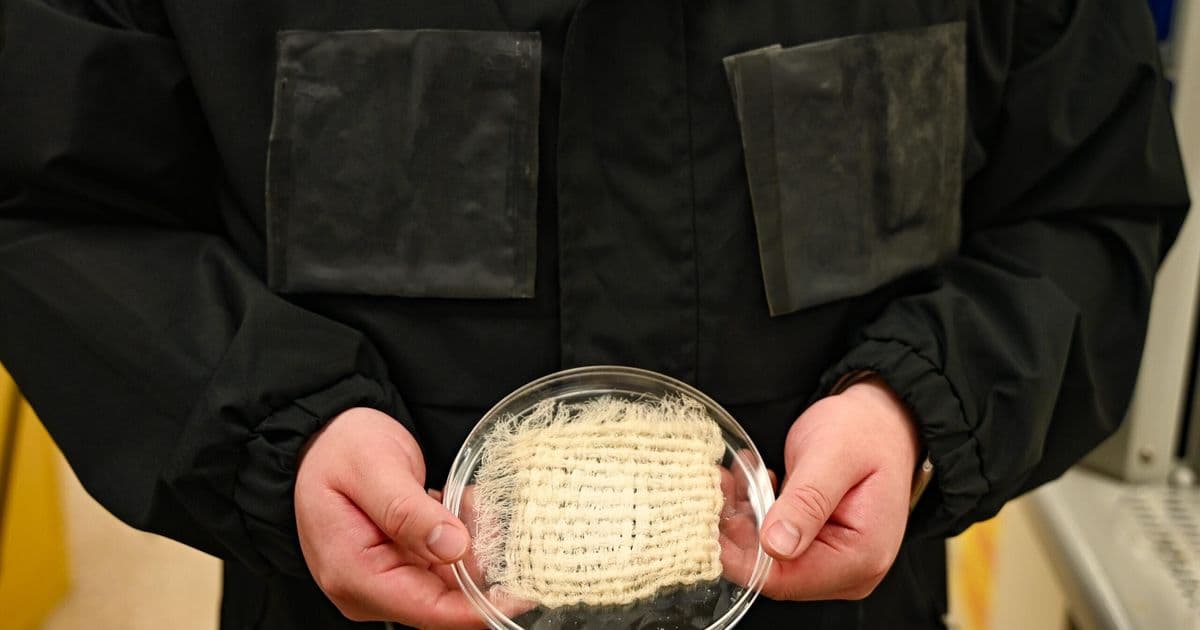
A team at UT Austin built a jacket that pulls 400 to 900 milliliters of drinking water from the air each day, and a companion solar device that hit a record 4.3 liters per kilogram of material. The numbers are real and the science is published, but atmospheric water harvesting has a long history of promising lab figures that thin out in the field.
Atmospheric water harvesting has a credibility problem, and the people working in it know it better than anyone. For more than a decade, the field has produced a steady stream of papers announcing materials that absorb moisture from dry air, each accompanied by a chart showing impressive grams-per-gram capture under controlled humidity. Then the device gets built, the sun does something unexpected, the humidity drops, and the real-world yield lands somewhere far below the headline. So when a group at The University of Texas at Austin publishes not one but two systems at once, a wearable textile and a record-setting solar harvester, the interesting question is not whether the lab numbers are good. They usually are. The question is whether this time the transport from vapor to usable water actually survives contact with the world.
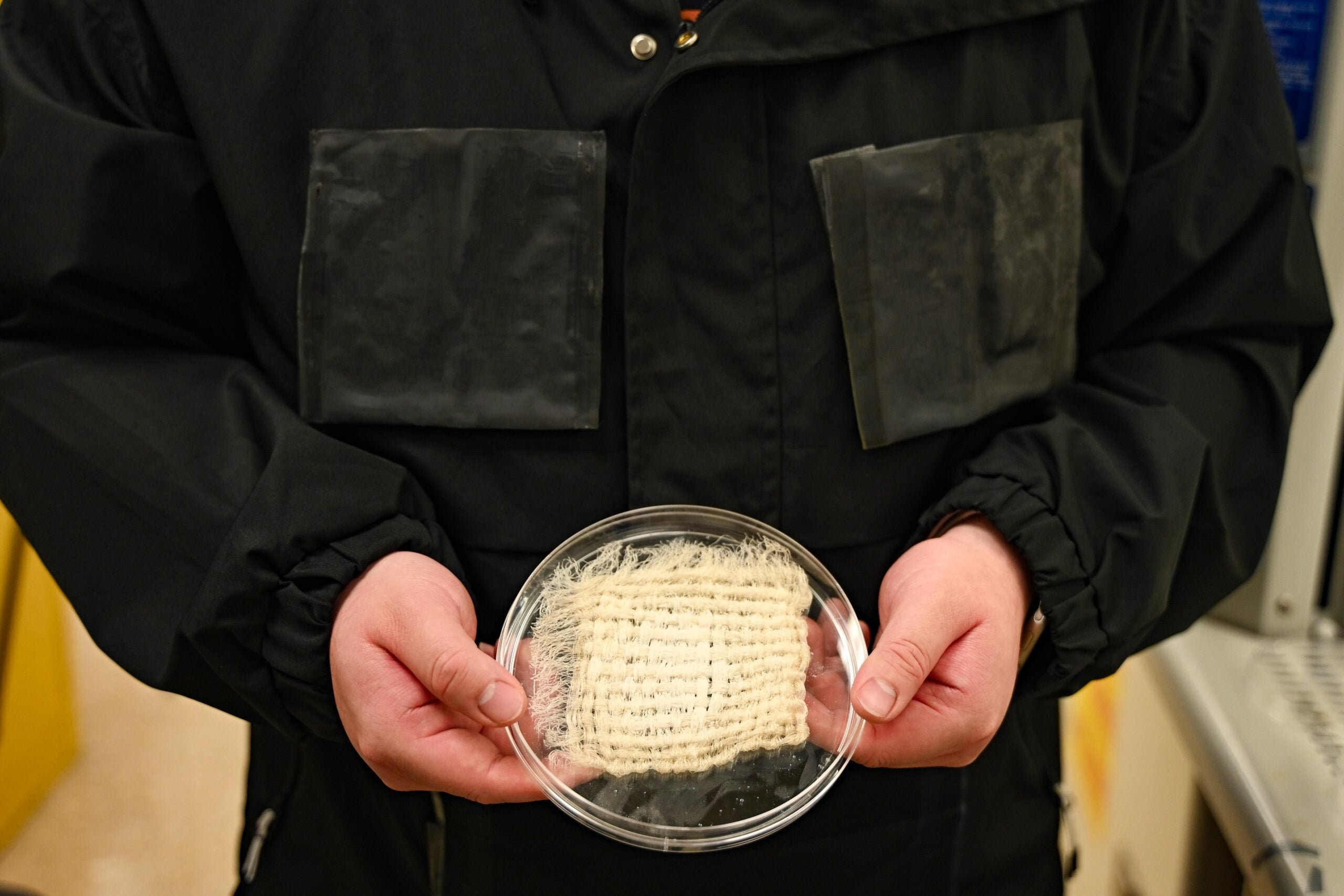
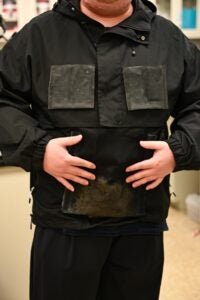
The wearable result, published in Science Advances, is the one that breaks from the usual template. Most water-from-air research imagines a box, a panel, or a large sorbent bed sitting in a yard. The UT team led by Guihua Yu, a professor in the Cockrell School of Engineering's Walker Department of Mechanical Engineering, put the absorbing function into the fabric itself. The jacket's textile collects moisture and funnels it to small detachable harvesting units. Those units drop into a foldable collector and get heated to release the captured water as liquid. In testing the jacket produced between 400 and 900 milliliters per day, roughly 14 to 30 ounces, scaling with ambient humidity.
The part that actually matters
The sorbent material is not where the team is putting its claim, which is unusual and worth paying attention to. Keith Johnston, a co-author from the McKetta Department of Chemical Engineering, framed the contribution as a transport problem rather than an absorption one. "They designed a pathway for water to move quickly, from vapor in the air, to liquid on the fiber surface, and then into the textile," he said. "That transport design is what allows the material to work not just in a small lab test, but in a wearable system."
This distinction is the whole ballgame for anyone who has watched this field. Plenty of materials absorb water beautifully and then refuse to give it up efficiently, or they saturate and stall because the captured water has nowhere to go. By engineering the movement of water through the fibers, the team reports a three- to ten-fold improvement over conventional harvesting materials at scale. That "at scale" qualifier is doing real work in the sentence, because scaling is exactly where this technology has historically fallen apart. A gram of magic powder is easy. A jacket someone wears for a day is not.
The second system, and the bigger number
Running in parallel, the same group reported a solar-driven device in Nature Water that captured 1.3 liters of clean water per day across both the arid Chihuahuan Desert in New Mexico and the more humid air of Austin. Normalized to material mass, that works out to 4.3 liters per kilogram of moisture-capturing material per day, which lead author Weixin Guan describes as more than any other research group has achieved. The device centers on a hydrogel fabric made from biomass-derived materials that absorbs moisture, then releases it when heated by sunlight so it can be condensed and collected.
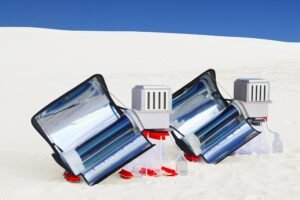
The fact that the device performed in two genuinely different climates is the data point skeptics should sit with. A system tuned for 70 percent humidity that collapses in the desert is a lab curiosity. A system that holds up across both ends of the range is a candidate for the places that need it. The team maps its best-performing regions onto some of the world's most water-stressed areas: parts of North Africa, the Middle East, South Asia, and sub-Saharan Africa. The pitch is decentralized water, generated where conventional infrastructure is hard to build or maintain.
Where the enthusiasm should pause
There is a counter-case, and it is not about the science being wrong. It is about what a daily yield of one to two liters means in practice. A human needs roughly two to three liters of drinking water per day in moderate conditions, more in heat. A jacket producing 400 to 900 milliliters is a meaningful supplement for a hiker or a soldier, not a primary supply. The honest framing is augmentation, not replacement, and the researchers' own list of target uses, outdoor recreation, remote field operations, disaster response, reflects that. These are situations where a half-liter you did not have to carry is genuinely valuable, not where you are trying to hydrate a village.
Energy is the other open question the announcements gloss over. The textile units require heating to release their water, and the solar device depends on usable sunlight. Both of those are fine in the New Mexico desert and awkward on an overcast day, and the published figures naturally come from conditions that favor the technology. None of this is disqualifying. It is the normal gap between a working prototype and a product, and it is the gap that has swallowed earlier atmospheric harvesting startups that raised money on slide-deck liters per day.
What is different this time
The broader effort, branded AirGel, won the top prize in the graduate category of the 2025 National Collegiate Inventors Competition, which signals institutional confidence beyond a single paper. The more durable signal is the framing shift across both projects. Instead of chasing a higher absorption number, the team has spent its effort on water transport and on form factor, the two things that historically separate a press release from a deployable system. Embedding the function into textiles, backpacks, tents, and emergency shelters, rather than asking people to carry another rigid box, is the kind of design decision that suggests the researchers have actually thought about who picks this thing up and uses it.
The right posture toward atmospheric water harvesting remains cautious optimism with the emphasis on cautious. This is a field that has cried liter-per-day before. What earns UT's work a longer look is that it is being careful about the parts that usually break: the transport pathway, the cross-climate testing, and the wearable scale rather than the benchtop one. Whether the jackets and harvesters hold their numbers outside the published conditions is the test that matters, and it is one the team seems to understand it still has to pass.
Comments
Please log in or register to join the discussion