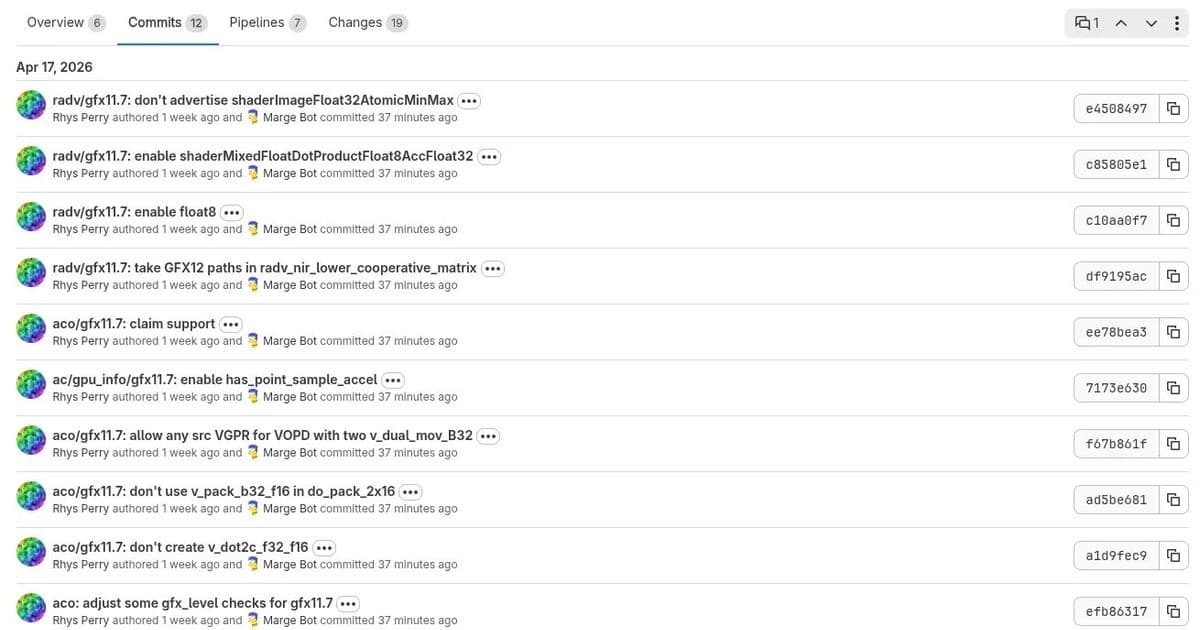
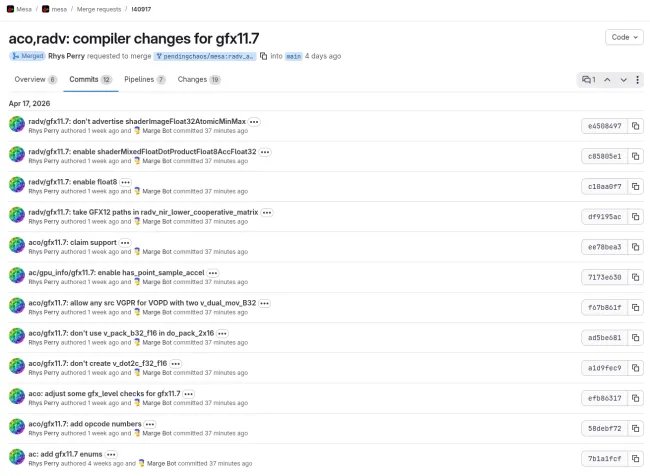
Valve developer Rhys Perry has merged RADV/ACO compiler changes for AMD's GFX11.7 GPU target, extending shaderFloat8 support and other GFX12-like features to the upcoming RDNA 4m architecture.
The open-source Linux graphics driver ecosystem continues to evolve with the latest merge to Mesa Git, bringing support for AMD's upcoming GFX11.7 GPU target—the architecture behind what AMD will market as "RDNA 4m." The changes, which landed today, represent a significant step forward in preparing Linux for AMD's next-generation mobile graphics hardware.
Valve's Linux Graphics Team Takes the Lead
What makes this development particularly noteworthy is that the RADV/ACO changes didn't come from AMD's engineering team, but rather from Rhys Perry of Valve's Linux graphics driver team. This continues a pattern we've seen develop over the past year, where Valve engineers have taken on substantial responsibility for the ACO compiler—a compiler they originally created—as well as broader RADV driver development.
Since AMD acknowledged last year that RADV would replace AMDVLK as their preferred open-source Vulkan driver, the company has been providing more early resources to Valve's Linux graphics team. This collaboration appears to be paying dividends, with Valve now handling critical hardware enablement work that traditionally would have fallen to AMD's own engineers.
Technical Details of the GFX11.7 Enablement
The merged changes extend several key features from RDNA4 (GFX12) to the new GFX11.7 architecture:
- shaderMixedFloatDotProductFloat8AccFloat32: This shader capability, previously limited to RDNA4, now supports GFX11.7 as well
- EXT_shader_float8: 8-bit floating point support has been reaffirmed for GFX11.7
- GFX12-like feature parity: The changes suggest GFX11.7 shares more similarities with GFX12 than being a simple rebrand of GFX11 (RDNA3)
These technical additions indicate that RDNA 4m isn't just a marketing rebrand of existing RDNA3 technology, but rather a distinct architecture with feature parity to its desktop counterpart.
The Mystery of RDNA 4m's Target Market
One of the most intriguing aspects of this development is the uncertainty around where RDNA 4m will actually appear. The "m" designation strongly suggests mobile-focused hardware, likely targeting APUs and SoCs rather than discrete desktop graphics cards. This aligns with AMD's strategy of differentiating their mobile and desktop product lines while maintaining architectural similarities.
Given Valve's involvement in the driver development, speculation naturally arises about potential Steam Deck 2 or other Valve hardware that might utilize this architecture. However, the article notes that RDNA 4m is "not to say though that RDNA 4m is necessarily for Valve," suggesting the hardware could appear in various AMD-powered devices from multiple manufacturers.
The Bigger Picture for Linux Gaming
This development represents another milestone in Linux's maturation as a gaming platform. The fact that critical hardware enablement for upcoming AMD graphics technology is happening in the open-source Mesa drivers before the hardware even launches demonstrates the strength and maturity of the Linux graphics stack.
For Linux gamers and developers, this means better out-of-the-box support when RDNA 4m hardware eventually ships. The early driver work ensures that performance optimizations and feature support will be ready from day one, rather than requiring months of post-launch driver development.
Looking Ahead
As we await the official launch of RDNA 4m hardware, the Linux community can take comfort in knowing that support is already being baked into the open-source drivers. The collaboration between AMD and Valve continues to yield impressive results, with Valve's Linux graphics team proving themselves capable stewards of critical graphics infrastructure.
The next questions to be answered are: which devices will feature RDNA 4m, and how will AMD market this mobile-focused architecture in relation to their broader RDNA product lineup? Whatever the answers, Linux users appear poised to benefit from excellent driver support from the moment these new GPUs hit the market.
The ongoing work on GFX11.7 serves as a reminder of how the Linux graphics landscape has evolved, with major industry players like Valve investing heavily in open-source graphics infrastructure that benefits the entire ecosystem.
Comments
Please log in or register to join the discussion