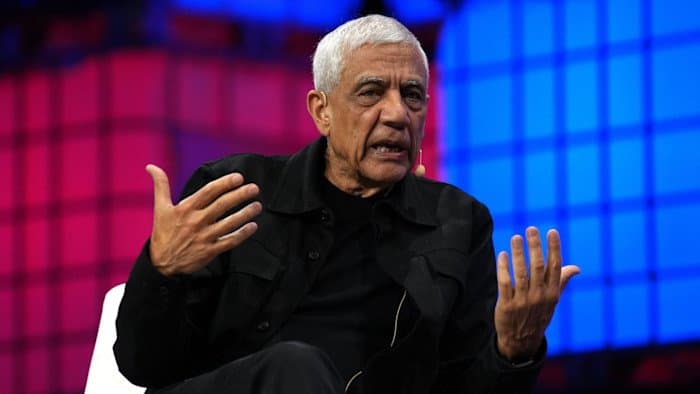
Venture capitalist Vinod Khosla argues AI will rapidly shift wealth and power from workers to capital owners, potentially fueling political backlash, and suggests US tax system overhaul as a solution.
Venture capitalist Vinod Khosla has issued a stark warning about artificial intelligence's economic impact, arguing that AI will accelerate a fundamental shift of wealth and power away from workers toward capital owners. In a recent analysis, Khosla suggests this technological transformation could trigger significant political consequences unless addressed through systemic reforms.
The Wealth Transfer Dynamic
Khosla's central thesis focuses on how AI technologies are fundamentally altering the economic landscape. As automation and intelligent systems become more capable, they're increasingly able to perform tasks traditionally done by human workers. This shift creates a direct transfer of economic value from labor to the owners of capital—those who control the AI systems, data centers, and intellectual property.
The venture capitalist argues this isn't a gradual transition but an accelerating phenomenon. AI systems can scale infinitely without the limitations of human workers, meaning the productivity gains and resulting wealth creation are concentrating in fewer hands. This concentration effect is happening faster than previous technological revolutions due to AI's ability to learn and improve autonomously.
Political Implications
According to Khosla, voter fears about job losses and economic displacement will shape upcoming US elections. He suggests that as more workers experience the direct effects of AI-driven automation—whether through job elimination, wage stagnation, or reduced bargaining power—political pressure will mount for solutions.
This political dimension is crucial because it connects technological change to democratic processes. Khosla implies that without addressing the underlying economic shifts, populist movements and anti-technology sentiment could gain traction, potentially slowing innovation and creating policy gridlock.
Proposed Tax System Overhaul
The core of Khosla's solution involves a comprehensive overhaul of the US income tax system. While he doesn't detail specific proposals, the implication is that current tax structures—designed for a pre-AI economy—are inadequate for addressing the new wealth distribution patterns.
Potential reforms might include:
- Adjusting capital gains taxes to reflect AI-driven wealth concentration
- Creating new tax categories for AI-generated value
- Implementing wealth taxes on technology companies and their owners
- Restructuring corporate taxation to account for reduced human labor costs
Broader Context
The timing of Khosla's warning coincides with several related developments in the AI industry. Anthropic, a major AI company, has been experiencing rapid growth in paid subscriptions, with reports indicating paid subscriptions have more than doubled this year. This commercial success underscores the economic value being created by AI systems.
Meanwhile, companies like OpenAI are expanding their enterprise offerings with tools like Codex plugins, which standardize repeatable AI workflows across major platforms including Figma, Notion, Gmail, and Slack. These tools further accelerate the automation of knowledge work, potentially accelerating the wealth transfer Khosla describes.
Industry Response
The AI industry appears to be grappling with these economic implications. Anthropic recently adjusted Claude session limits and warned users about hitting limits faster during peak hours, suggesting the computational demands of AI systems are creating new forms of scarcity and potential cost structures that could further concentrate economic benefits.
Looking Forward
Khosla's analysis presents a sobering counterpoint to the often-optimistic narratives about AI's economic benefits. While proponents highlight increased productivity and new opportunities, Khosla focuses on the distributional effects and political risks.
The venture capitalist's warning suggests that the AI revolution's success may depend not just on technological advancement but on society's ability to adapt its economic and political institutions. Without such adaptation, the very technologies driving economic growth could become sources of social and political instability.
The debate Khosla has sparked—between technological optimism and economic realism—will likely intensify as AI systems become more capable and widespread. His call for tax reform represents one potential path forward, though the specifics of such reforms remain to be determined.
For now, Khosla's analysis serves as a reminder that the AI revolution's ultimate impact will depend not just on what the technology can do, but on how society chooses to distribute its benefits and manage its disruptions.
Comments
Please log in or register to join the discussion