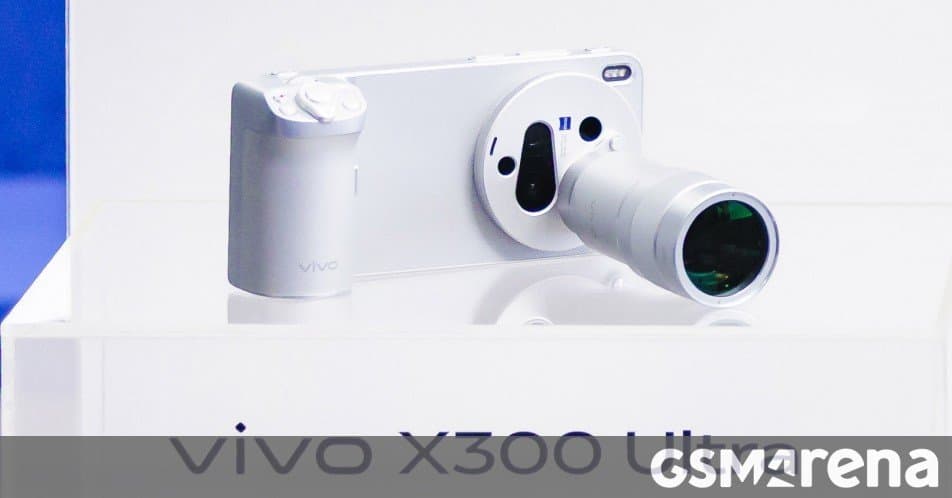
vivo has officially confirmed the X300 Ultra will feature a 200MP primary camera with Sony's LYTIA-901 sensor, promising 30% more light capture and improved stabilization.
vivo has officially confirmed details about the X300 Ultra's camera system, revealing that the flagship device will feature a 200MP primary rear camera with Sony's LYTIA-901 sensor. The announcement comes after the phone was first showcased at MWC 2026 with limited information about its hardware specifications.
The main camera will utilize a 1/1.12-inch sensor with a 35mm focal length, representing a significant upgrade in light-gathering capabilities. According to vivo, the new sensor can capture 30% more light per pixel compared to previous generations, which should translate to improved performance in challenging lighting conditions.
Beyond the raw specifications, vivo is emphasizing the camera's enhanced stabilization capabilities. The system meets the CIPA 6.5 standard, an improvement over the X200 Ultra's CIPA 5.0 certification. This advancement suggests better video recording stability and potentially smoother handheld shooting experiences, particularly in low-light scenarios where longer exposures are typically required.
The lens system has also been refined, now featuring a 1 glass + 6 plastic element configuration. vivo claims this new arrangement, combined with an upgraded coating, can reduce glare by up to 30% compared to the previous setup. This improvement should help maintain image quality in high-contrast situations and when shooting toward bright light sources.
While vivo has confirmed the primary camera specifications, recent rumors suggest the complete rear camera setup will include a 50MP ultrawide camera, a 200MP periscope telephoto lens, and a 5MP multispectral sensor. This would provide users with a versatile photography toolkit covering wide-angle, standard, and telephoto perspectives, plus specialized spectral analysis capabilities.
The vivo X300 Ultra's camera system appears to be positioning the device as a serious contender in the flagship smartphone photography segment, with particular emphasis on low-light performance and video stability. As mobile photography continues to evolve, these hardware improvements could help vivo compete more effectively against established players in the high-end smartphone market.
For those interested in the technical specifications, the Sony LYTIA-901 sensor represents the latest in mobile imaging technology, designed to balance resolution with light sensitivity. The 1/1.12-inch size is notably large for a smartphone sensor, allowing for better light capture and potentially shallower depth of field effects when desired.
As MWC 2026 concludes, vivo's detailed camera specifications provide a clearer picture of what to expect from the X300 Ultra when it launches. The combination of high-resolution imaging, improved light sensitivity, and enhanced stabilization suggests vivo is targeting photography enthusiasts and content creators who demand professional-level capabilities from their mobile devices.
[IMAGE:1]
[IMAGE:2]
Comments
Please log in or register to join the discussion