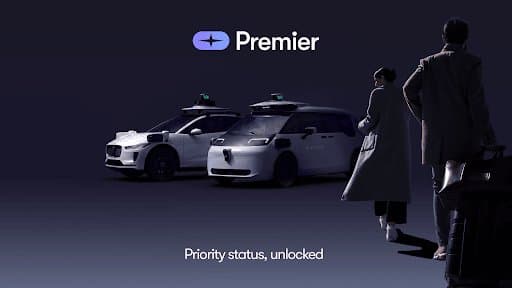
Waymo is borrowing a page from airlines and Amazon Prime with an invite-only membership that promises priority pickups and cash back. The move says less about self-driving cars than about how autonomous fleets plan to make money once the novelty wears off.
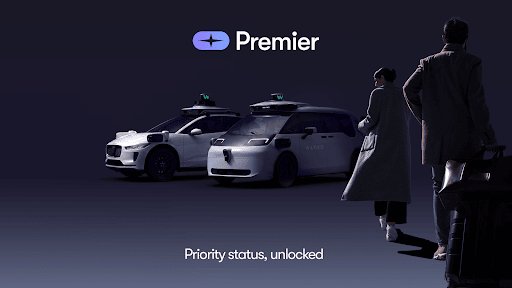
Waymo just announced Waymo Premier, an invite-only membership that charges riders $29.99 a month for priority pickups, 10% cash back on trips, early access to new cities, and up to five free cancellations. It is launching for select riders in San Francisco, Los Angeles, and Phoenix, the three markets where Waymo has the deepest operational footprint. On its face this is a routine loyalty program. Looked at more carefully, it is the clearest signal yet of how autonomous ride-hailing intends to behave once it stops being a curiosity and starts being a business.
What actually changed
For most of its public life, Waymo's pitch has been about the ride itself. No driver, no small talk, a predictable car that shows up and behaves the same way every time. The company leaned on that consistency, and a sizable group of riders responded by making it their default for commutes and airport runs. Premier is the first time Waymo has tried to monetize that habit directly, separate from the per-trip fare.
The structure is familiar to anyone who has used a subscription before. The cash back is the anchor benefit: a daily commuter spending a few hundred dollars a month recovers the membership fee and then some, while occasional riders pay $30 for benefits they will rarely trigger. That asymmetry is intentional. Subscriptions are profitable precisely because they sort users into people who extract value and people who quietly subsidize them.
The more interesting line in the announcement is "priority pickups," described as prioritized matching that lets members skip the line. That phrasing matters. It confirms what frequent riders in Phoenix and San Francisco have reported for months: during peak demand, Waymo's supply runs short, and wait times climb. A paid priority tier is an admission that the fleet is capacity-constrained, and that the company would rather ration access by willingness to pay than by simply adding more cars, which it cannot do quickly.
The evidence that this was coming
None of this is a surprise if you have watched the unit economics. Building and maintaining a sensor-laden autonomous vehicle is expensive, and depreciation on that hardware does not care whether the car is full or idle. Every robotaxi operator faces the same problem: the fixed cost of the fleet is enormous, and the only way to make the math work is to push utilization up and find recurring revenue that does not scale linearly with miles driven.
A membership solves part of that. It smooths revenue, increases the switching cost of trying a competitor, and pulls forward demand from riders who now have a sunk cost pushing them back into the app. Uber and Lyft both run versions of this with Uber One and Lyft Pink, and the playbook is well understood. Waymo adopting it suggests the company now thinks of itself less as a technology demonstration and more as a transportation operator competing on retention.
The early-access perk fits the same logic. Letting members ride first in new cities turns expansion into a membership benefit rather than a free-for-all, which gives Waymo a controlled way to seed demand and gather data in markets where it is still tuning operations.
Where the community pushes back
The reaction among riders and observers has not been uniformly warm, and the objections are worth taking seriously.
The first is the priority-pickup mechanic itself. Critics point out that a two-tier system in a capacity-limited fleet means non-members will see worse availability during exactly the moments they most need a ride. When supply is fixed, giving someone priority is mathematically identical to deprioritizing everyone else. People who appreciated Waymo for feeling egalitarian, the same car and the same wait for everyone, read this as the moment that ended.
The second objection is about timing. Waymo still operates in a small number of cities and frequently surges or pauses service during weather and high demand. Charging a monthly fee for reliability while reliability remains inconsistent strikes some riders as premature. The Premier promise of "greater reliability" is doing a lot of work in the announcement, and skeptics note that reliability is a property of the fleet, not of a subscription tier.
There is also a quieter structural critique. As long as Waymo competes with human-driven Uber and Lyft, its prices are disciplined by an outside market. But in a future where autonomous fleets dominate a city, a subscription that rewards lock-in starts to look like the early scaffolding for a system where the cheapest way to get around is to belong to one company's program. That is not a problem today. It is the kind of thing people flag now so it is not a surprise later.
The counter-case
The defense of Premier is straightforward, and the rider quoted in Waymo's own announcement makes it: for someone who does not drive and uses the service every day, cash back plus priority is simply a better deal than the status quo. Loyalty programs exist because they genuinely benefit heavy users, and there is nothing inherently wrong with letting a company's best customers pay for and receive more. Five free cancellations a month is a real convenience for people whose plans change. If you were already spending enough to clear the break-even point, Premier is a discount with extra steps, not a tax.
And priority matching, unattractive as it sounds to non-members, is how nearly every constrained service in the world already works, from airline boarding groups to restaurant reservations. Waymo is not inventing a new unfairness so much as importing a familiar one.
What to watch
The number that will tell the real story is how aggressively Waymo gates non-member service during peak hours. If priority remains a mild tiebreaker, the program is a benign loyalty play. If non-members start seeing materially longer waits, the subscription stops being optional in practice and becomes the price of dependable access. Whether the company expands Premier beyond its three launch cities, and how it prices the program as the fleet grows, will reveal whether this is a perk layered on top of a healthy service or a lever the business has decided it needs to pull. For now it is a small announcement that quietly tells you a great deal about where robotaxi economics are heading.
Comments
Please log in or register to join the discussion