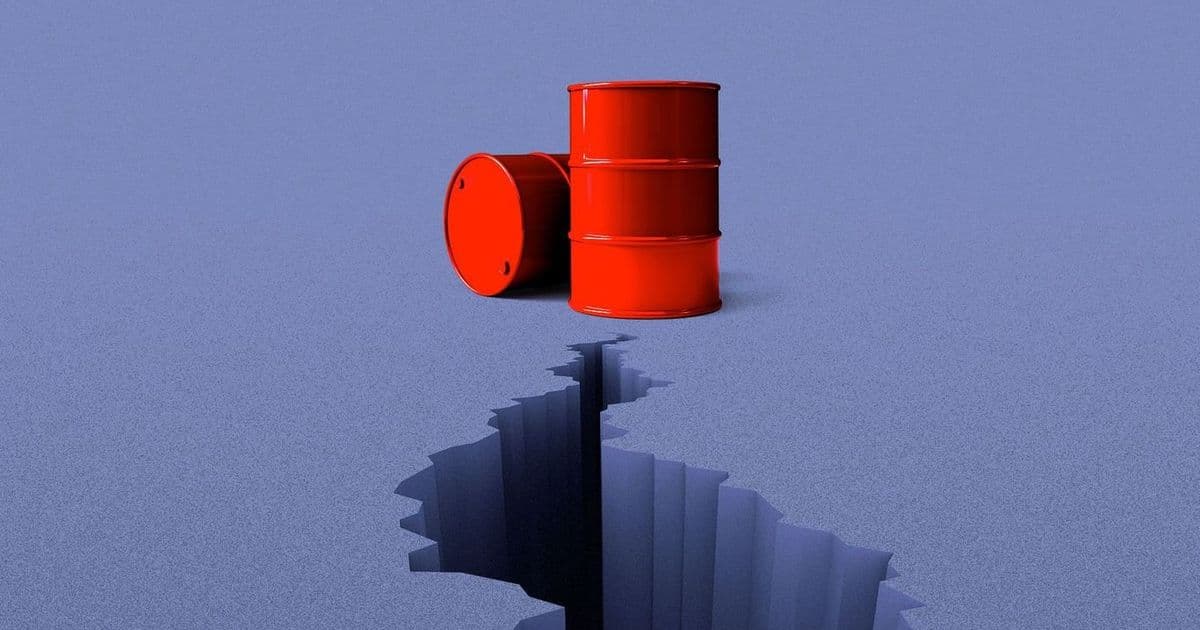
Despite escalating Middle East tensions, oil prices remain surprisingly stable due to market dynamics and strategic reserves.
Oil prices have shown remarkable resilience in the face of recent Iranian strikes, defying expectations of a major price spike. This stability reflects complex market dynamics that extend beyond immediate geopolitical tensions.
Market Context and Price Behavior
The global oil market has demonstrated surprising composure despite escalating Middle East tensions. Brent crude, the international benchmark, has remained relatively stable, trading in a range that suggests markets have already priced in much of the geopolitical risk. This contrasts sharply with historical patterns where similar conflicts typically triggered significant price volatility.
Several factors contribute to this unusual market behavior. First, global oil inventories remain at comfortable levels, providing a buffer against supply disruptions. Major consuming nations have also been actively building strategic reserves, which serves as an additional safety net. The International Energy Agency has noted that OECD countries' commercial oil inventories stood at 2.91 billion barrels in January 2025, providing substantial coverage for potential supply interruptions.
Supply Chain Resilience
One of the most significant factors keeping prices in check is the diversification of global oil supply. The United States, now the world's largest oil producer, has dramatically reduced its dependence on Middle Eastern crude. In 2024, U.S. oil production averaged 13.3 million barrels per day, a record high that has fundamentally altered global market dynamics.
Additionally, other major producers like Brazil, Guyana, and Canada have expanded their output, creating a more distributed supply network. This diversification means that even if Iranian exports were significantly disrupted, the global market has multiple alternative sources to compensate.
Strategic Reserves and Market Mechanisms
Strategic petroleum reserves play a crucial role in price stabilization. The United States Strategic Petroleum Reserve, while currently at historically low levels, still contains approximately 372 million barrels. Other nations, including China, Japan, and India, maintain substantial reserves that could be tapped if needed.
Market mechanisms also help absorb shocks. Futures markets allow producers and consumers to hedge against price volatility, while sophisticated trading algorithms can quickly rebalance supply and demand imbalances. These financial instruments provide a cushion that wasn't available during previous Middle East conflicts.
Demand Dynamics
On the demand side, global economic growth has been more moderate than in previous years, reducing pressure on oil markets. The International Monetary Fund projects 3.2% global GDP growth for 2025, which, while positive, represents a slowdown from the post-pandemic recovery period.
Energy efficiency improvements and the ongoing transition to renewable energy sources have also dampened oil demand growth. Electric vehicle adoption continues to accelerate, with global EV sales expected to reach 17 million units in 2025, reducing oil consumption in the transportation sector.
What This Means for the Future
The current price stability suggests that oil markets have evolved to better handle geopolitical shocks. However, this doesn't mean prices won't eventually rise if tensions escalate further. The market is essentially in a holding pattern, waiting to see whether the current situation will resolve peacefully or deteriorate into a more serious conflict.
For consumers, this stability translates to relatively predictable fuel prices at the pump. For investors, it suggests that oil-related volatility may be lower than historical patterns would indicate, though sudden price movements remain possible if the situation changes dramatically.
The bottom line is that while Middle East tensions remain a significant concern, the global oil market has developed multiple layers of resilience that are keeping prices in check for now. This represents a fundamental shift in how energy markets respond to geopolitical events, with implications that extend far beyond the current crisis.
Comments
Please log in or register to join the discussion