
The Youyeetoo K1 splits a mini PC into a replaceable Intel N100 compute module and a carrier board packed with I/O, starting at $210. It's an interesting hardware play for anyone who builds embedded apps, kiosks, or cross-platform device targets and wants the brains to be upgradeable instead of soldered down for good.
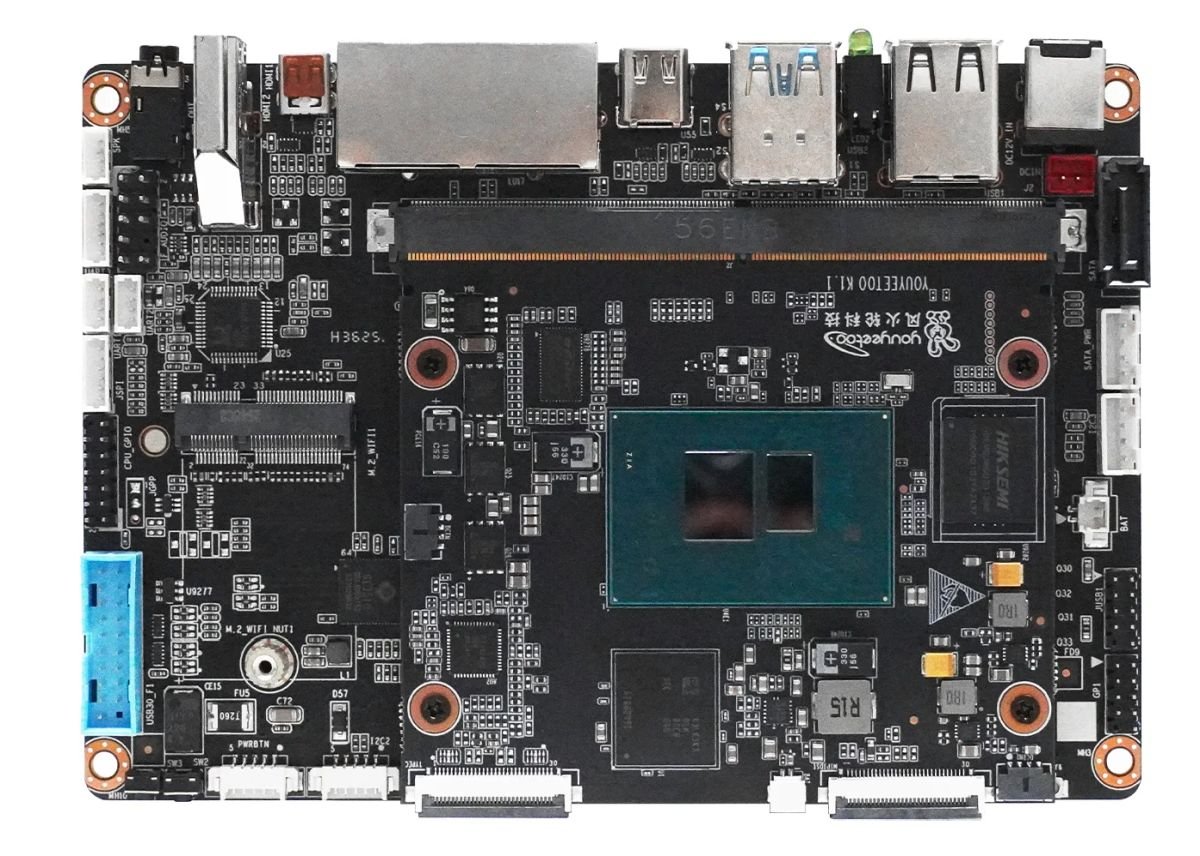
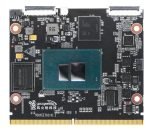
The Youyeetoo K1 is a tiny x86 computer that fits in your palm, but the part worth paying attention to is how it's built. Instead of one fixed board, it separates the processor into an 82 x 71mm (3.23" x 2.8") compute module that plugs into a larger 134 x 92mm (5.28" x 3.62") carrier board, almost the way a stick of RAM seats into a slot. The module carries an Intel N100 quad-core chip, up to 16GB of LPDDR5 onboard memory, and storage options spanning eMMC, SATA, and NVMe. It's available now starting at $210.
What the modular design actually buys you
Most mini PCs at this size solder the CPU and RAM directly to a single board. When the silicon ages out or you need more compute, the whole unit is e-waste. The K1's split design changes that math. The compute module holds the N100, the memory, and the storage interface, while the carrier board handles everything else: power, networking, video output, and the dense bank of headers and connectors. If Youyeetoo ships a faster module later, you swap the brains and keep the rest of your build intact.
For anyone shipping software onto physical hardware, that separation maps cleanly onto how you already think about device lifecycles. The carrier board is your stable platform layer. The module is the part you version.
Specs and pricing
The $210 entry model pairs 8GB of LPDDR5 with 128GB of eMMC. Step up to the 16GB + 256GB configuration and the price moves to $260. Both run on the Intel N100, a quad-core Alder Lake-N part that has become the default chip for fanless and low-power x86 builds. It handles Windows and most mainstream Linux distributions without drama, which matters if your test matrix or deployment target spans both.
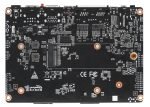
The carrier board is where the K1 separates itself from the usual fare. Storage alone gives you three paths: a top-facing M.2 2230 slot intended for an optional wireless card, an M.2 2280 slot on the underside that supports a PCIe 3.0 x2 NVMe SSD, and a dedicated SATA data connector paired with a SATA power connector for running cables out to a 2.5" or 3.5" drive.
The rest of the I/O list reads like a single-board computer that decided it wanted to be a desktop:
- 2 x Gigabit Ethernet
- 1 x HDMI and 1 x mini HDMI
- 1 x eDP
- 1 x USB Type-C
- 2 x USB 3.0 Type-A and 2 x USB 3.0 headers
- 2 x USB 2.0 Type-A and 2 x USB 2.0 headers
- 1 x 3.5mm audio
- 1 x DC power input
- 1 x MIPI-CSI and 1 x MIPI-DSI
- GPIO, I2C, UART, and SPI
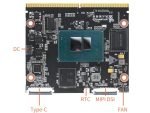
There are also connectors for headphones, speakers, fans, an RTC battery, and an NFC antenna. WiFi, Bluetooth, and 4G LTE are optional add-ons, but NFC support is baked into the board itself.
Why a mobile developer should care
The dual MIPI-CSI and MIPI-DSI connectors are the tell. Those are the camera and display interfaces you'd find on a phone or tablet, not a typical mini PC. Combined with onboard NFC, GPIO, and the I2C/UART/SPI bus headers, the K1 is clearly aimed at people building devices, not just running a desktop OS.
If you maintain apps across iOS and Android, hardware like this fills a gap that emulators and phones can't. The two Gigabit Ethernet ports make it a usable on-prem build agent or device-farm node that runs Linux for your Android pipeline while staying close to the physical sensors a kiosk or point-of-sale build needs to exercise. NFC payment flows, camera capture paths, and serial peripheral integration are exactly the surfaces that behave differently on real silicon than in a simulator, and the K1 gives you a cheap, x86 place to reproduce them.
The MIPI-DSI output is worth a specific note. Driving a raw MIPI display panel is a different exercise than pushing pixels over HDMI, and it's the kind of integration work that shows up when a cross-platform UI framework gets deployed onto custom hardware rather than a consumer handset. Having a board that exposes that interface directly, alongside a standard HDMI output for everyday work, lets you validate both the embedded display path and the conventional one from the same machine.
Migration and practical considerations
If you're already running a fixed-CPU mini PC as a build node or device gateway, moving to the K1 is mostly a matter of treating the carrier board as your long-lived asset. Wire your SATA drive, your display panel, and your peripheral headers to the carrier once, and future compute upgrades become a module swap rather than a full rebuild and rewiring job.
The N100 is a sensible floor for this class of work. It won't compile large native codebases quickly, so don't expect it to replace a beefy CI runner, but for headless test execution, device emulation of NFC and camera flows, and acting as a deployment target that mirrors production embedded hardware, it has enough headroom. Budget for the optional wireless module if you need WiFi or LTE, since neither ships standard.
The K1 surfaced via LinuxGizmos, and Youyeetoo lists both configurations on its store now. For developers who keep one foot in mobile and one in the embedded hardware those apps eventually run on, a palm-sized x86 box with real device interfaces and a CPU you can replace is a more interesting tool than its spec sheet first suggests.
Comments
Please log in or register to join the discussion