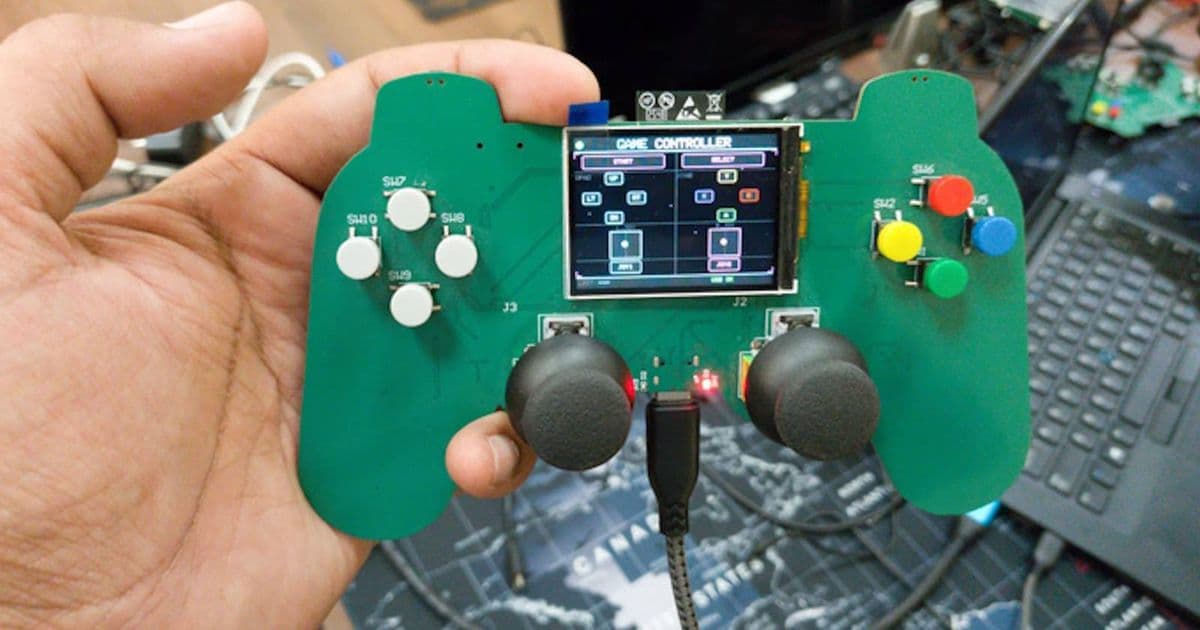
The Smart Joystick Controller is a fully programmable ESP32-S3 pad with a 2.0-inch color screen, dual analog sticks, haptics, IR, and USB-C. It works as a game handheld, a console controller with stats on the pad, or a remote with a live drone camera feed. Early bird Kickstarter pledges start at $55.
Most game controllers are dumb terminals. They read your thumbs and send button presses somewhere else, and a separate machine does the actual computing. A new ESP32 project flips that arrangement. The Smart Joystick Controller, spotted by Hackster.io, packs a small display into the middle of the pad so the thing you are controlling can show up right between your hands.
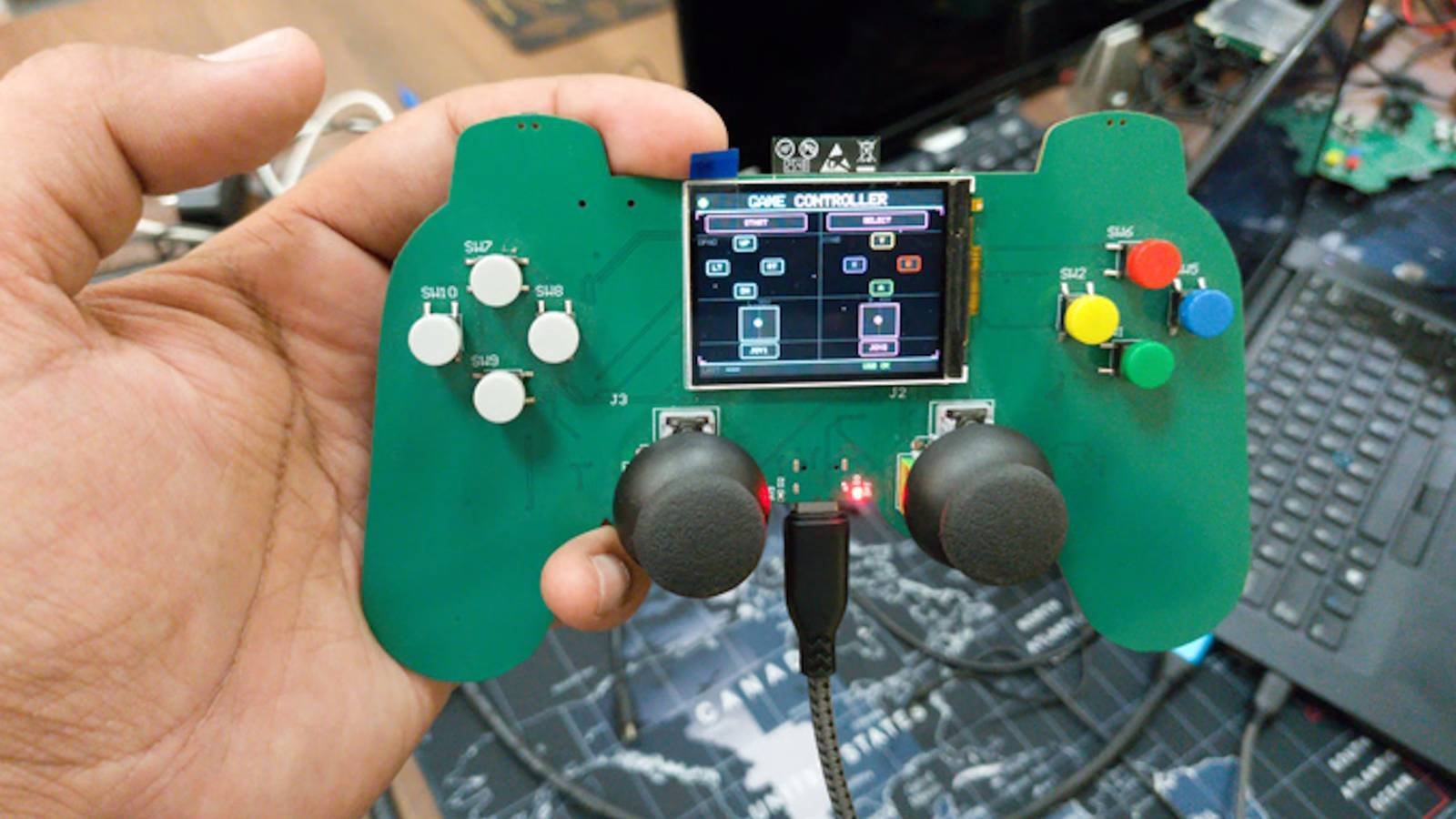
The device comes from The Open Gadget, and the headline feature is that little 2.0-inch color screen sitting where a touchpad would live on a Sony controller. The overall shape is clearly inspired by PlayStation's DualShock line, with two analog sticks, a familiar grip, and a face button layout you already know how to hold. The difference is what is happening underneath.
What the hardware actually is
At the center of the controller is an ESP32-S3. That is the dual-core, 240MHz Xtensa LX7 chip Espressif ships with built-in Wi-Fi and Bluetooth LE, and it has become the default brain for hobbyist hardware because it is cheap, well documented, and genuinely capable. The S3 variant adds vector instructions that help with things like display rendering and lightweight machine learning, which is part of why a small handheld with a live screen is feasible on a board this size.
Here is what The Open Gadget lists for the controller:
- A 2.0-inch color display in the center of the pad
- Dual analog sticks
- Haptic feedback motors for rumble
- An IR transmitter for controlling TVs, AV gear, and other infrared devices
- USB-C for charging and data
- Fully programmable firmware
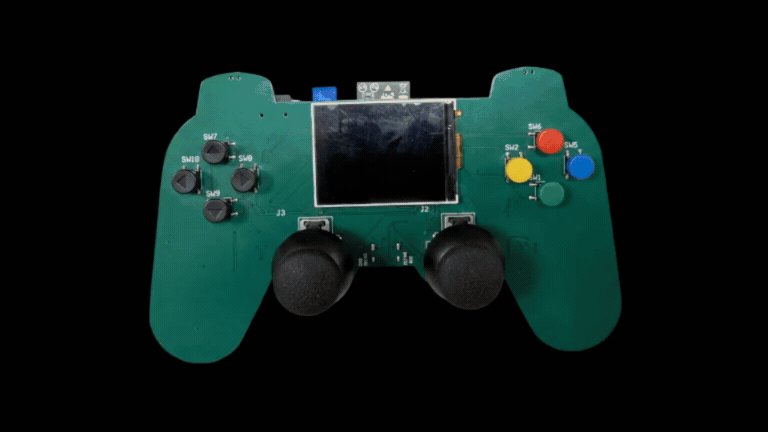
The programmable part is the whole point. Because this is an ESP32 board rather than a sealed accessory locked to one console, you write the code that decides what the sticks, buttons, screen, and radios do. You can flash it through the Arduino IDE, ESP-IDF, or PlatformIO, all of which support the S3 out of the box. If a stick starts drifting or a button wears out, you are dealing with standard, replaceable parts instead of a proprietary module you have to throw away.
More uses than gaming
You can treat the screen as a tiny handheld and run a game directly on the device, but that is the least interesting option. Wire the controller to a console or a PC over Bluetooth or USB, play your game on a real television, and use the on-pad display for whatever you want. A live health bar, ammo count, lap times, a map, or system telemetry could all sit on the controller screen while the main action stays on the big display. That second screen has been tried before by manufacturers, the Wii U GamePad and the Dreamcast VMU being the obvious reference points, but here you control exactly what it shows.
Step outside gaming and the radios start to matter more. The same pad can drive a robot or a drone, and the screen becomes a first-person video feed from an onboard camera. A live FPV view sitting between two analog sticks is a clean, self-contained way to fly without strapping a phone to a separate transmitter. The IR transmitter means it can double as a universal remote, and the Wi-Fi and BLE radios open the door to controlling smart-home gear or any other ESP-based project you have already built.
That last point connects to a broader pattern around the ESP32. The same chip already shows up in DIY video doorbells that skip the monthly cloud subscription, in home automation nodes, and in countless camera and sensor builds. A programmable controller with a screen slots neatly into that ecosystem as a physical interface for projects you already run, rather than yet another single-purpose gadget.
The crowdfunding caveat
The Smart Joystick Controller is being funded through a Kickstarter campaign. Early bird pledges are listed at $55, with the regular price at $59. Those numbers put it in the same range as a mainstream first-party controller, except this one is open hardware you can reprogram.
The usual warning applies, and it is not a formality. Backing a crowdfunding campaign buys you a pledge, not a finished product. Hardware projects in particular slip on timelines, hit supply problems, or fail to ship at all, and you generally have little recourse if that happens. Treat any pledge as money you are comfortable never seeing again. If the project delivers, you get a genuinely flexible piece of kit. If it does not, you want that to be a disappointment rather than a real financial hit.
For anyone who already tinkers with ESP32 boards, the appeal is obvious. A controller-shaped, screen-equipped, fully programmable S3 board removes a lot of fiddly enclosure and input work from future projects. The fact that it can also just be a decent game controller is almost a bonus.
Comments
Please log in or register to join the discussion