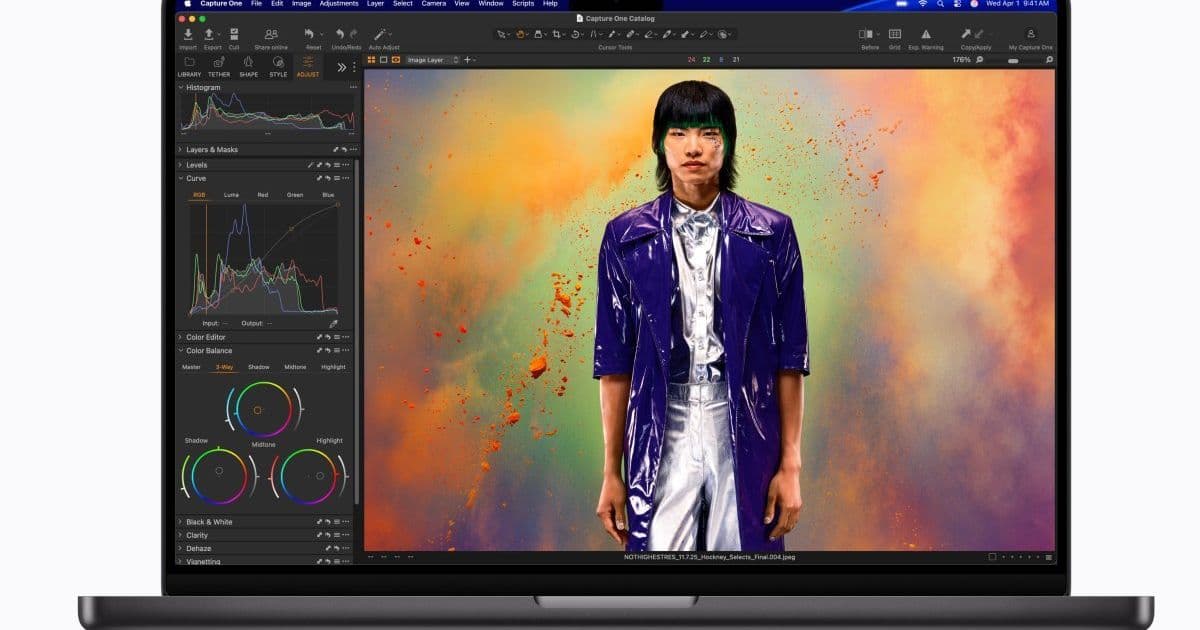
Apple has launched new MacBook Pro models with M5, M5 Pro, and M5 Max chips, offering significant performance gains and expanded memory options for professionals.
Apple has unveiled its latest MacBook Pro lineup featuring the new M5 family of processors, bringing substantial performance improvements and expanded capabilities to the company's professional laptop offerings. The new models are available in 14-inch and 16-inch configurations, with pricing starting at $1,699 for the base M5 model and reaching up to $3,899 for the high-end 16-inch M5 Max variant.
The M5 Family: Three Chips for Three Needs
The M5 processor family consists of three distinct chips, each targeting different user requirements:
M5 (Base Model)
- 10-core CPU
- 8 or 10-core GPU
- 16-core Neural Engine
- Up to 32GB unified memory
- 153 GB/s memory bandwidth
M5 Pro
- 15-core CPU + 16-core GPU
- 18-core CPU + 20-core GPU option
- 16-core Neural Engine
- Up to 64GB unified memory
- 307 GB/s memory bandwidth
M5 Max
- 18-core CPU
- 32 or 40-core GPU
- 16-core Neural Engine
- Up to 128GB unified memory
- 614 GB/s memory bandwidth
Performance Gains
Apple claims significant performance improvements over previous generations:
- M5 Pro: Up to 30% faster multi-threaded CPU performance, 4x peak GPU compute performance for AI, and 35% faster ray tracing
- M5 Max: 15% boost in multi-threaded CPU performance, 20% graphics performance improvement, and 30% faster ray tracing
These gains are particularly notable for creative professionals and developers who rely on intensive computational tasks. The expanded memory options, especially the M5 Max's 128GB capacity, make these machines suitable for demanding workloads like 3D rendering, video editing with multiple 4K or 8K streams, and large-scale machine learning models.
Design and Features
The new MacBook Pros maintain the familiar design language but include several notable upgrades:
- Storage: All models with M5 Pro or M5 Max chips come with at least 1TB of storage, with M5 Max models starting at 2TB. The SSD is twice as fast as previous generations.
- Connectivity: Apple's new N1 wireless chip with WiFi 7 and Bluetooth 6 support
- Audio: Six-speaker sound system with studio-quality microphones
- Camera: 12MP Center Stage camera for video calls
- Display: Liquid Retina XDR displays with ProMotion technology
Market Positioning
The new lineup strategically positions Apple's offerings across different price points:
- M5 (14-inch): $1,699 - Entry-level option, also available in the new MacBook Air
- M5 Pro (14-inch): $2,199 - Mid-range professional option
- M5 Pro (16-inch): $2,699 - Larger display for professionals
- M5 Max (14-inch): $3,599 - High-end performance in compact form
- M5 Max (16-inch): $3,899 - Maximum performance with larger display
Availability
The new MacBook Pro models are available for pre-order starting March 4, 2026, with availability beginning March 11, 2026. The M5 processor is also making its way to the MacBook Air, though in a passively cooled configuration that won't deliver quite the same performance as the MacBook Pro variants.
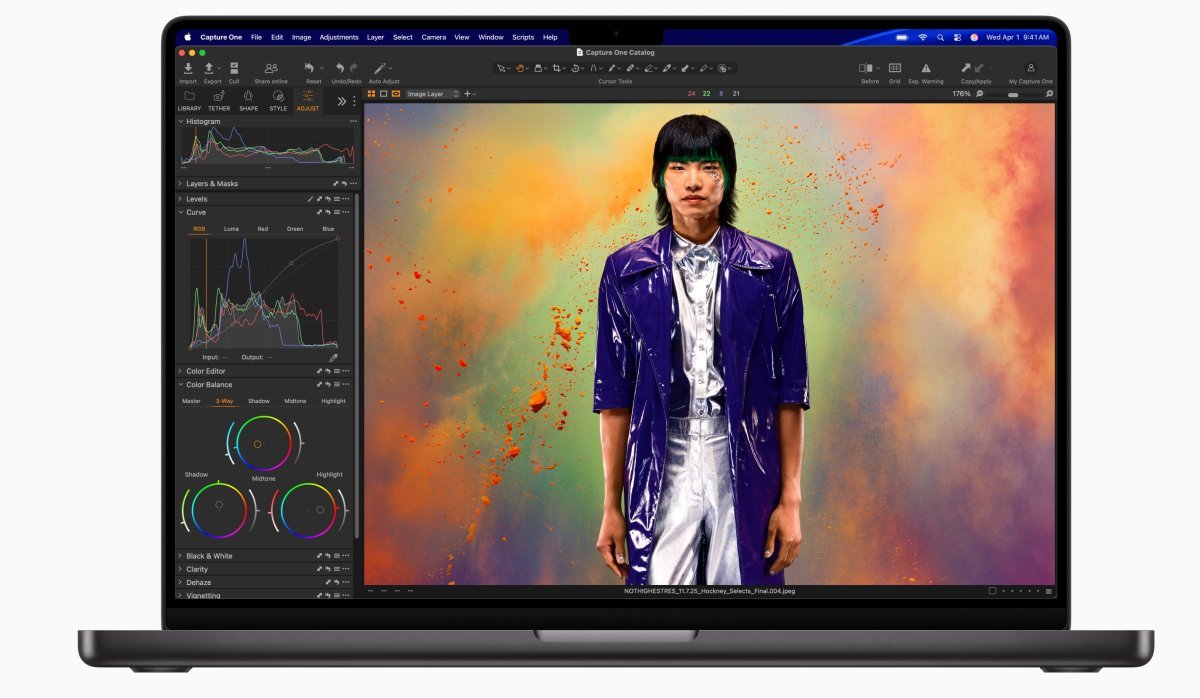
For professionals who need maximum performance and memory capacity, the M5 Max models offer compelling upgrades, particularly the ability to configure up to 128GB of unified memory - a significant increase that addresses one of the limitations of previous Apple Silicon chips. The performance gains in AI workloads and ray tracing make these machines particularly attractive for creative professionals working with the latest software that leverages these capabilities.
The introduction of these chips continues Apple's strategy of vertical integration, controlling both hardware and software to deliver optimized performance. As Apple Silicon matures, we're seeing the company push the boundaries of what's possible in laptop performance while maintaining the power efficiency that has become a hallmark of the platform.
Comments
Please log in or register to join the discussion