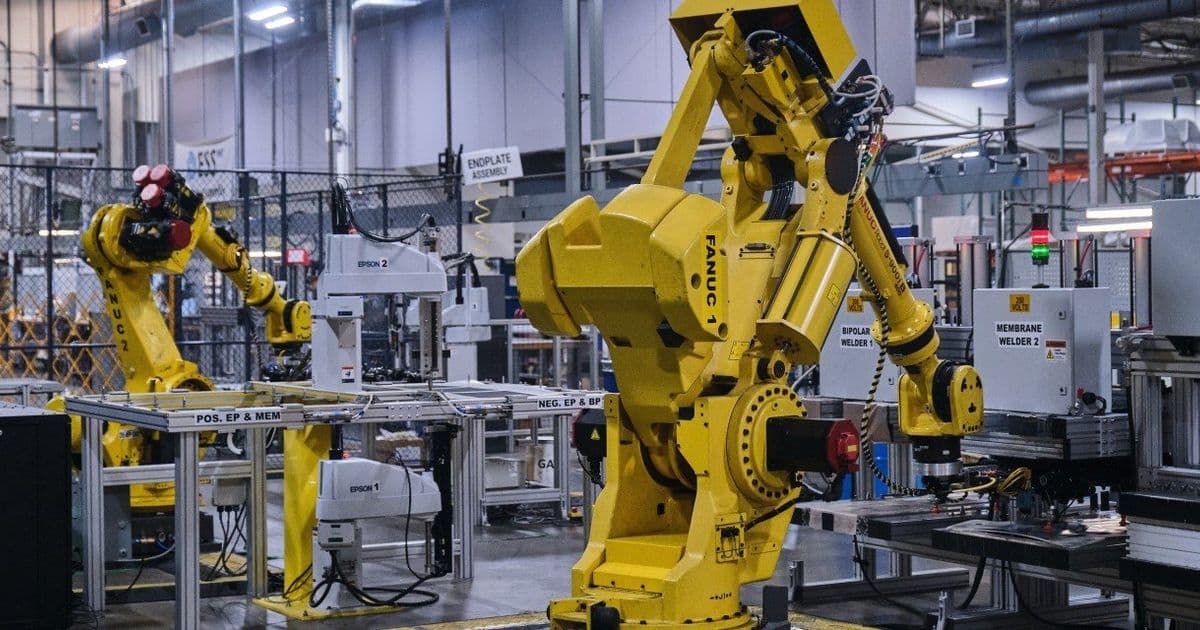
Bob McGrew, former OpenAI chief research officer, launches Arda to automate manufacturing with AI, securing $70M funding at $700M valuation as investors bet on AI-driven industrial transformation.
The manufacturing sector is set for an AI-driven transformation as Arda, a startup co-founded by Bob McGrew, former chief research officer at OpenAI, raises $70 million at a $700 million valuation, according to sources familiar with the matter.
The funding round signals strong investor confidence in AI's potential to revolutionize industrial processes, particularly in automating complex manufacturing operations that have traditionally relied on human expertise and manual oversight.
McGrew's Vision for AI-Driven Manufacturing
McGrew brings deep AI expertise from his tenure at OpenAI, where he helped shape the development of some of the most advanced language models in existence. His move into manufacturing automation represents a significant bet that the same breakthroughs enabling AI to understand and generate human language can be applied to physical production processes.
"Manufacturing has been surprisingly resistant to the kind of digital transformation we've seen in other industries," said a source familiar with Arda's strategy. "The complexity of physical systems, the variability in materials and processes, and the high stakes of production errors have made manufacturers cautious about adopting new technologies."
The startup aims to address these challenges by developing software platforms that can learn from manufacturing data, predict equipment failures, optimize production schedules, and even control autonomous factory systems with minimal human intervention.
The Manufacturing Automation Opportunity
The timing for Arda's entry into the market appears strategic. Global manufacturing faces multiple pressures: labor shortages, supply chain disruptions, rising costs, and increasing demand for customization. AI-driven automation promises to address these challenges simultaneously.
Industry analysts note that while robotics and automation have been present in manufacturing for decades, the integration of advanced AI represents a qualitative leap. Traditional automation systems follow predetermined rules, while AI systems can adapt to new situations, learn from experience, and make decisions in complex, uncertain environments.
"What's different now is the maturity of AI technologies," explained a manufacturing technology consultant. "We're seeing AI systems that can understand natural language instructions, interpret visual data from factory cameras, and make real-time decisions based on multiple data streams. This wasn't possible even five years ago."
Competition and Market Dynamics
The manufacturing automation market is becoming increasingly competitive, with both established industrial giants and AI-native startups vying for position. Companies like Siemens, ABB, and Rockwell Automation have been integrating AI capabilities into their industrial control systems, while startups like Covariant and Bright Machines focus on specific automation challenges.
Arda's OpenAI pedigree gives it credibility in the AI community, but manufacturing automation requires domain expertise that goes beyond AI capabilities. The company will need to demonstrate not just technical prowess but also deep understanding of manufacturing workflows, quality control requirements, and safety regulations.
Investment Implications
The $700 million valuation for a pre-revenue or early-revenue company reflects the high expectations investors have for AI applications in industrial settings. Similar to how AI companies in other sectors have commanded premium valuations, manufacturing AI startups are benefiting from the broader AI investment boom.
However, some industry observers caution that manufacturing automation faces unique challenges that could slow adoption. "Factories operate on thin margins and can't afford downtime for experimentation," noted a manufacturing executive. "The barrier to entry for new technologies is much higher when you're talking about production lines that generate millions in revenue per day."
Technical Challenges Ahead
Building AI systems for manufacturing requires solving several technical challenges. These include:
- Data quality and availability: Manufacturing data is often siloed, inconsistent, or incomplete
- System integration: AI platforms must work with legacy industrial control systems
- Safety and reliability: Manufacturing AI systems must meet stringent safety standards
- Explainability: Manufacturers need to understand why AI systems make certain decisions
Arda's success will depend on its ability to address these challenges while delivering tangible value to manufacturing customers.
The Broader AI Industrial Revolution
Arda's funding round is part of a larger trend of AI companies targeting industrial applications. From logistics and supply chain optimization to quality control and predictive maintenance, AI is finding its way into every aspect of manufacturing.
The convergence of several technological trends makes this moment particularly opportune: the maturation of AI algorithms, the proliferation of industrial sensors and IoT devices, the availability of cloud computing resources, and the growing acceptance of AI in industrial settings.
"We're at the beginning of what could be a decade-long transformation of manufacturing," said a venture capitalist focused on industrial technology. "Companies that can successfully apply AI to manufacturing challenges will create enormous value."
What Success Looks Like
For Arda to justify its valuation, it will need to demonstrate several key capabilities:
- Scalability: The platform must work across different manufacturing verticals and scales
- ROI: Customers must see clear return on investment within reasonable timeframes
- Reliability: The system must operate reliably in mission-critical manufacturing environments
- Integration: It must seamlessly integrate with existing manufacturing systems and workflows
Industry experts suggest that early adopters in high-margin manufacturing sectors like electronics or pharmaceuticals may provide the initial beachhead, with expansion into more price-sensitive sectors following as the technology matures and costs decrease.
The Road Ahead
The $70 million funding will enable Arda to build out its technical team, develop its platform, and begin customer pilots. The company faces the classic challenge of deep-tech startups: balancing the need for rapid development with the requirement for thorough testing and validation in safety-critical environments.
McGrew's background at OpenAI suggests the company will prioritize cutting-edge AI research, but success in manufacturing will require equal attention to practical implementation challenges. The gap between AI research breakthroughs and real-world industrial deployment remains significant.
As manufacturing continues to evolve in response to global economic pressures and technological opportunities, companies like Arda represent the vanguard of a new industrial revolution. Whether they can deliver on the promise of AI-driven manufacturing efficiency remains to be seen, but the investment community is clearly betting that they will.
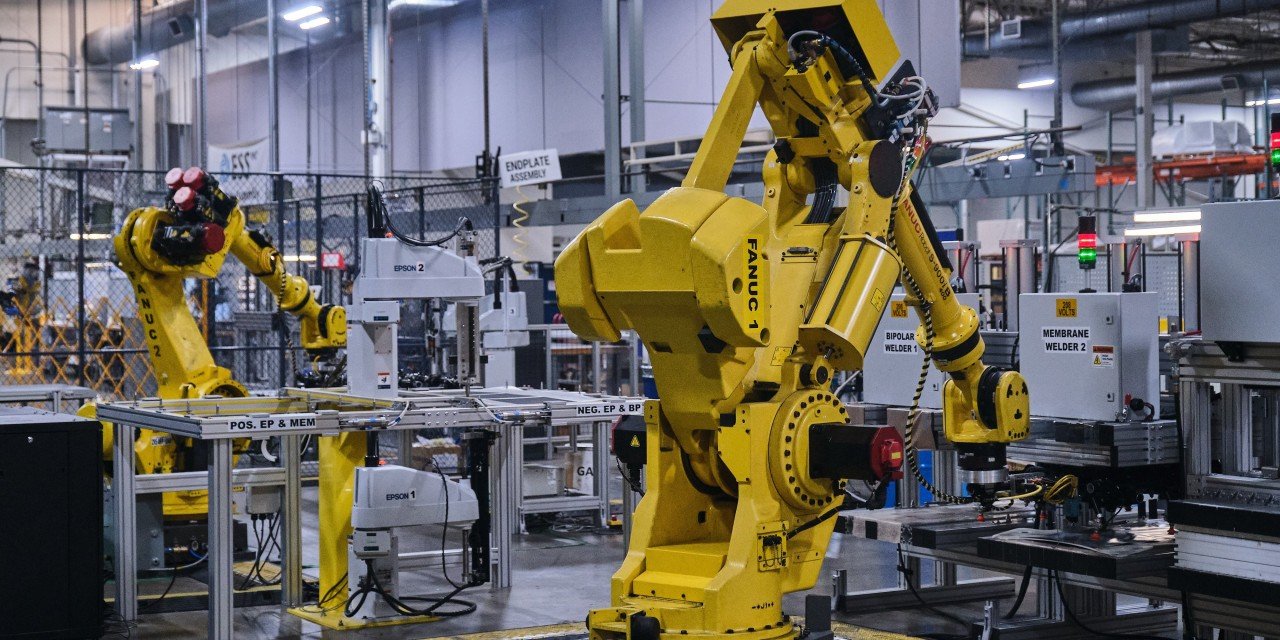
The manufacturing sector's AI transformation is accelerating, with startups like Arda raising significant capital to automate complex production processes. As traditional manufacturing faces labor shortages and supply chain disruptions, AI-driven solutions promise to address these challenges while improving efficiency and reducing costs.
Comments
Please log in or register to join the discussion