
Google's Pixel 10a arrives with minimal changes from its predecessor, raising questions about the value of incremental updates in the mid-range smartphone market.
The Google Pixel 10a has arrived, and it presents an interesting puzzle for smartphone enthusiasts. At first glance, it appears to be Google's latest affordable offering in its A-series lineup, but a closer examination reveals something rather unusual: this phone is essentially last year's Pixel 9a wearing a new name tag.
The Curious Case of Minimal Evolution
When Google announced the Pixel 10a, many expected to see meaningful improvements over its predecessor. After all, a year has passed since the Pixel 9a's release, and the tech industry typically uses that time to implement upgrades. However, Google has taken a different approach this year.
The hardware specifications tell the story clearly. The Pixel 10a shares the exact same chipset - the Google Tensor G4 - built on a 4nm process. It features the identical 5100mAh battery, the same 6.30-inch P-OLED display with 120Hz refresh rate and peak brightness of 3000 nits, and the same camera setup with a 48MP main sensor and 13MP ultrawide lens. Even the physical dimensions remain unchanged at 153.9x73.0x9.0mm, with the device weighing in at 183 grams.
This level of hardware consistency between generations is unprecedented in the smartphone industry, where even minor spec bumps are typically used to justify new model releases. The question naturally arises: why would Google release what is essentially the same phone under a different name?
What's Actually New?
Despite the overwhelming similarities, there are a few notable changes worth mentioning:
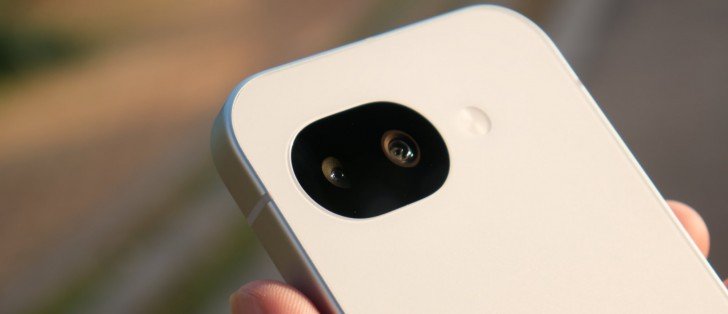
Design refinements: The back panel has been updated to feature a completely flat surface, moving away from any curves or contours. This gives the device a more modern, slab-like appearance that aligns with current design trends.
Display protection: The front glass has been upgraded to Gorilla Glass 7i, which represents a generational improvement over the previous model. This should provide better scratch resistance and durability.
Color options: Google has introduced new color variants for the Pixel 10a, along with matching cases to complement these fresh hues.
Software features: The device ships with Android 16 and includes some software features borrowed from the higher-end Pixel 10 series, though the specifics of these additions weren't detailed in the initial announcement.
Pricing and Market Position
The Pixel 10a maintains competitive pricing in the mid-range segment:
- 128GB/8GB RAM: €549.00 / £499.00
- 256GB/8GB RAM: €649.00 / £599.00
These prices position the device as an affordable option within Google's ecosystem, though they're notably higher than some competing mid-range offerings from other manufacturers.
The Unboxing Experience
Google continues its commitment to environmental sustainability with the Pixel 10a's packaging. The box is made entirely from paper materials, reflecting the company's broader environmental initiatives. Inside, the contents are minimal - you'll find only the phone itself and a USB-C to USB-C cable (2.0 specification). Notably absent is a charger, which has become standard practice across the industry.
Technical Specifications at a Glance
Body: 153.9x73.0x9.0mm, 183g; Glass front (Gorilla Glass 7i), aluminum frame, plastic back; IP68 dust tight and water resistant (immersible up to 1.5m for 30 min)
Display: 6.30" P-OLED, HDR, 120Hz, 2000 nits (HBM), 3000 nits (peak), 1080x2424px resolution, 20.2:9 aspect ratio, 422ppi
Chipset: Google Tensor G4 (4 nm): Octa-core (1x3.1 GHz Cortex-X4 & 3x2.6 GHz Cortex-A720 & 4x1.9 GHz Cortex-A520); Mali-G715 MP7
Memory: 128GB 8GB RAM, 256GB 8GB RAM; UFS 3.1
OS/Software: Android 16, up to 7 major Android upgrades
Rear camera: Wide (main): 48 MP, f/1.7, 25mm, 1/2.0", 0.8µm, dual pixel PDAF, OIS; Ultra wide angle: 13 MP, f/2.2, 120˚, 1/3.1", 1.12µm
Front camera: 13 MP, f/2.2, 20mm (ultrawide), 1/3.1", 1.12µm
Video capture: Rear camera: 4K@30/60fps, 1080p@30/60/120/240fps, gyro-EIS, OIS; Front camera: 4K@30fps, 1080p@30fps
Battery: 5100mAh; 30W wired, PD3.0, 50% in 30 min, 10W wireless, Bypass charging
Connectivity: 5G; eSIM; Wi-Fi region; BT 6.0; NFC
Misc: Fingerprint reader (under display, optical); stereo speakers; Satellite SOS support
The Bigger Question
The Pixel 10a raises an important question about the smartphone industry's approach to product cycles. Is it acceptable for a company to release what is essentially the same device with minimal changes and simply increment the model number? Or does this practice undermine consumer trust and devalue the concept of annual upgrades?
For budget-conscious consumers, the Pixel 10a might still represent good value, particularly if they're upgrading from an older device or entering the Pixel ecosystem for the first time. The promise of up to seven years of software updates is particularly compelling in this price segment.
However, for those who purchased the Pixel 9a last year, the 10a offers little to no reason for an upgrade. This strategy might actually benefit consumers who can find the Pixel 9a at discounted prices now that the "new" model has been released.
The Pixel 10a serves as a fascinating case study in product strategy, raising questions about innovation cycles, consumer expectations, and the balance between maintaining product lines and delivering meaningful improvements. Whether this approach will be successful remains to be seen, but it certainly breaks from the traditional smartphone release pattern we've come to expect.
Comments
Please log in or register to join the discussion