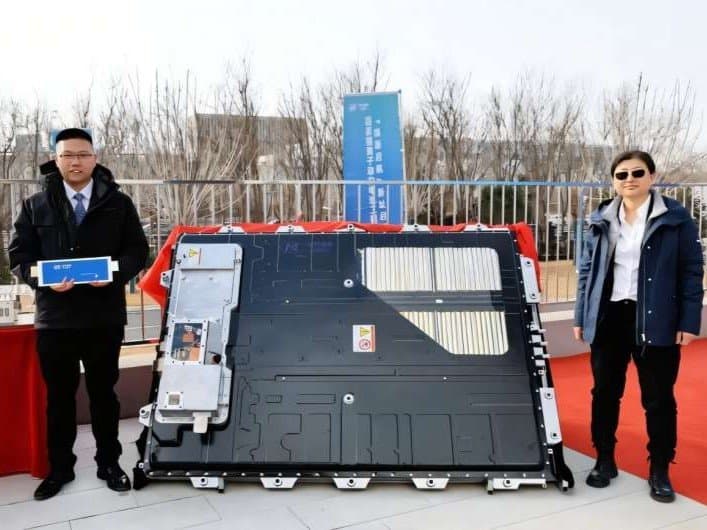
A breakthrough electrolyte design enables lithium batteries to achieve unprecedented energy density and extreme cold performance, potentially transforming aerospace and EV applications.
A research team in China has developed a novel hydrofluorocarbon electrolyte that shatters current battery performance ceilings. Published in the journal Nature, the study reveals a solvent capable of delivering energy densities exceeding 700 Wh/kg at room temperature and approximately 400 Wh/kg at −50 °C (122 °F). This significantly outperforms conventional electric vehicle batteries, which typically peak around 270 Wh/kg under normal conditions, unlocking new potential for aerospace, grid storage, and electric transportation in extreme climates.
Historically, battery electrolytes have relied on oxygen- and nitrogen-based ligands to carry charges between the cathode and anode. However, these traditional materials create strong binding that frustrates charge transfer at the electrode-electrolyte interface, severely limiting performance during low-temperature operation or fast charging.
To overcome this, the researchers synthesized six monofluorinated hydrofluorocarbon solvents. By specifically designing the fluorine-based ligands with adjusted steric hindrance and Lewis basicity, the team improved lithium salt dissolution to exceed 2 mol/L. The standout solvent, 1,3-difluoropropane, demonstrated exceptional properties, including a low viscosity of 0.95 centipoise and a high oxidation stability above 4.9 volts.
By incorporating fluorine atoms into the first solvation shell, the resulting weak coordination facilitates highly efficient lithium plating and stripping. This mechanism achieves a Coulombic efficiency of 99.7% and an exchange current density a full magnitude larger than that of traditional oxygen-based systems at −50 °C (122 °F).
Testing proved successful in lithium-metal pouch cells operating with electrolyte amounts of less than 0.5 grams per ampere-hour. According to the researchers, this fluorine-coordination chemistry moves beyond traditional electrochemical design limits. Future modulation of carbon and fluorine ratios could yield even more stable, high-boiling-point variations above 100 °C (212 °F), establishing a promising pathway to further elevate the power and energy density of next-generation energy storage systems.
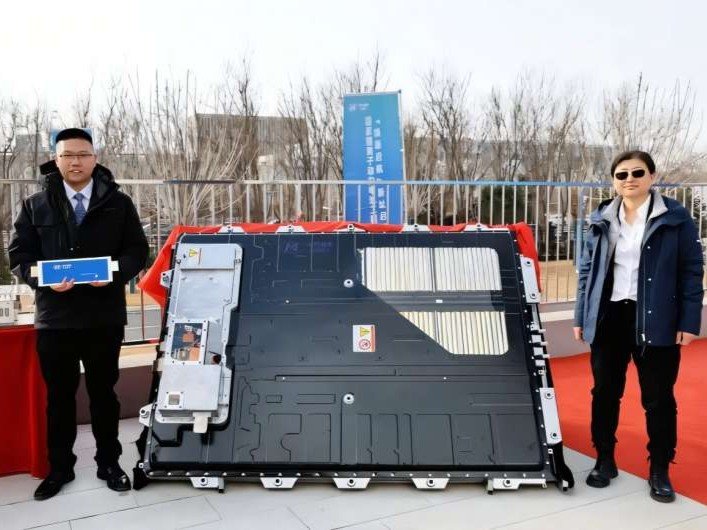
The implications of this breakthrough extend far beyond laboratory curiosity. Current lithium-ion batteries struggle significantly in cold environments, with performance dropping by 30-40% at freezing temperatures and becoming nearly unusable below -20 °C. The ability to maintain 400 Wh/kg at -50 °C represents a fundamental shift in what's possible for energy storage in extreme conditions.
For electric vehicles, this technology could eliminate range anxiety in cold climates, where battery performance traditionally suffers most. Electric aircraft, which require maximum energy density for practical flight ranges, could see transformative improvements. Grid storage systems operating in diverse climates would gain reliability and efficiency.
The 99.7% Coulombic efficiency achieved by the new electrolyte design is particularly noteworthy. This means that nearly every electron transferred during charging is recovered during discharge, minimizing energy waste and extending battery cycle life. The weak coordination between fluorine atoms and lithium ions enables faster ion transport, addressing one of the key bottlenecks in high-performance battery operation.
While the research demonstrates promising laboratory results, several challenges remain before commercial deployment. Manufacturing scale-up of the specialized hydrofluorocarbon solvents, long-term stability testing across thousands of charge cycles, and integration with existing battery manufacturing processes will require significant development work.
The publication in Nature signals the scientific community's recognition of this work's significance. As research continues and manufacturing processes evolve, this fluorine-based electrolyte chemistry could establish new benchmarks for energy storage across multiple industries, from consumer electronics to aerospace applications.
Comments
Please log in or register to join the discussion