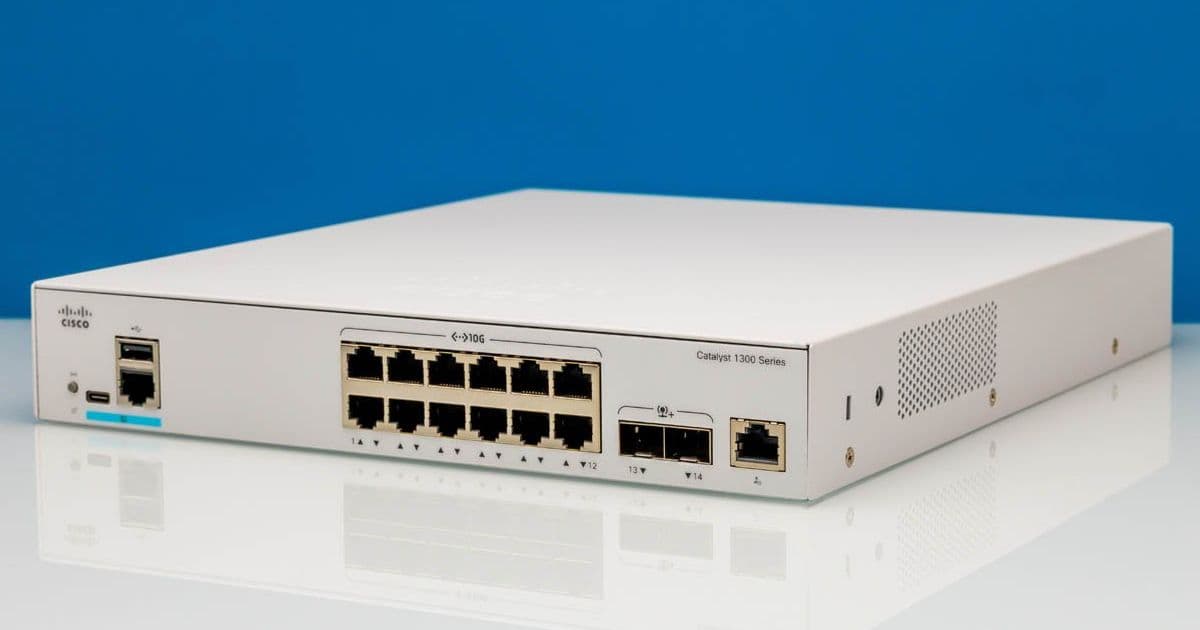
Cisco's C1300-12XT-2X offers twelve 10Gbase-T ports plus two SFP+ 10G ports in a compact 1U form factor, with thoughtful features like out-of-band management and Kensington lock security.
Cisco Catalyst C1300-12XT-2X Review: A Better 14-Port 10GbE Managed Switch
The Cisco Catalyst C1300-12XT-2X represents an interesting entry point into Cisco's managed switch lineup. With twelve 10Gbase-T ports and two SFP+ 10G ports packed into a 14-port form factor, this switch offers capabilities that many small to medium-sized deployments might find appealing.
Form Factor and Physical Design
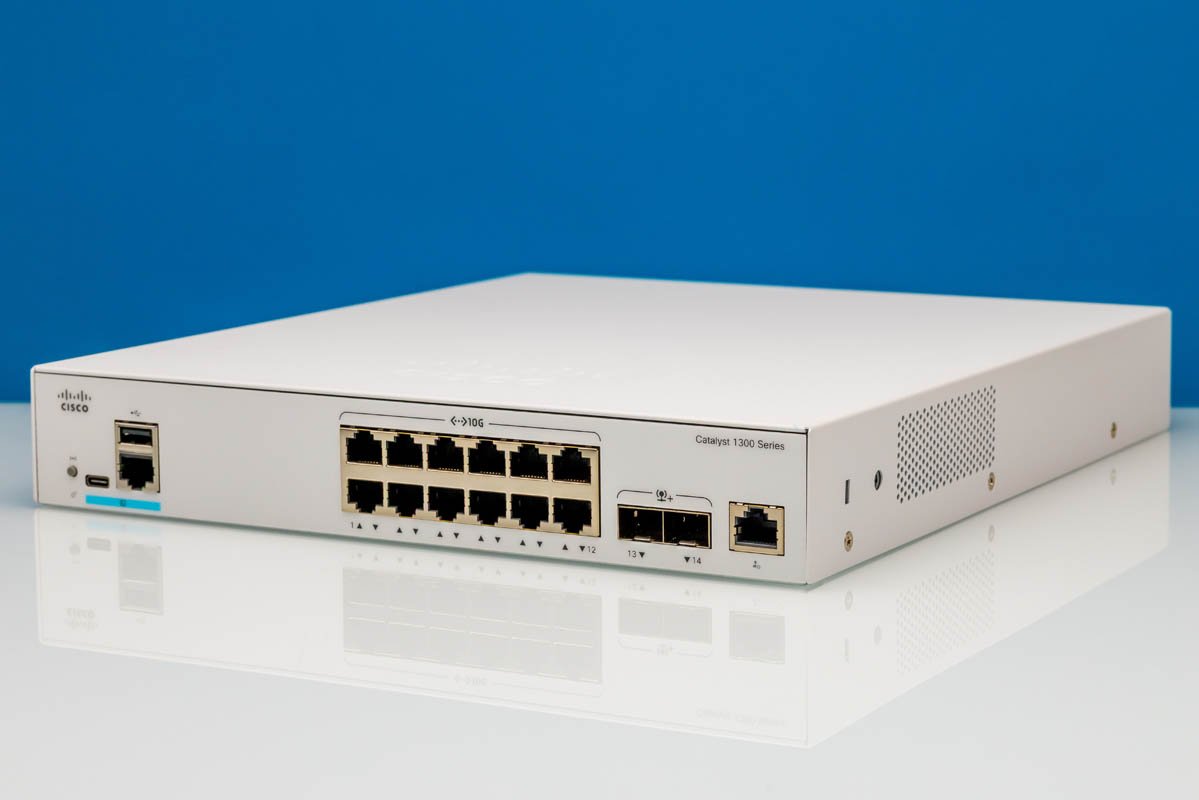
The C1300-12XT-2X comes in a 1U rackmount design that measures 268 x 300 x 43.94mm (10.55 x 11.81 x 1.73in). While we didn't have the rackmount ears for our review unit, they're readily available and the switch is designed to fit standard rack deployments. Interestingly, this chassis sits between a full 19" EIA rack width and a half-width design, making it a somewhat unique form factor in Cisco's portfolio.
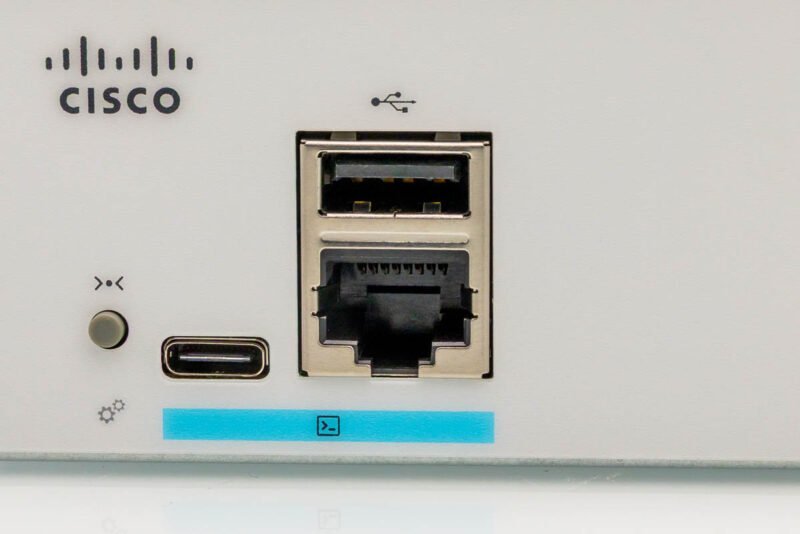
Console Access and Management
Starting from the left side of the front panel, Cisco provides multiple ways to access the console CLI. This flexibility is appreciated for administrators who might prefer different connection methods depending on their environment or troubleshooting needs.
Port Configuration and Labeling
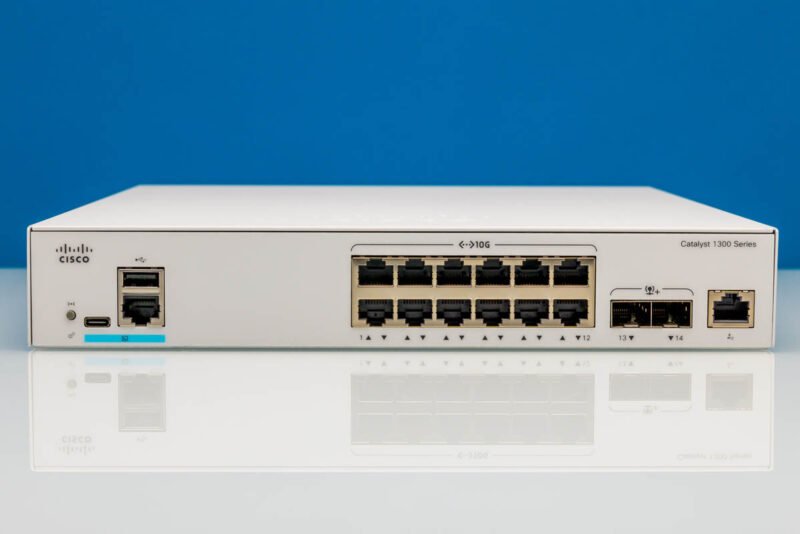
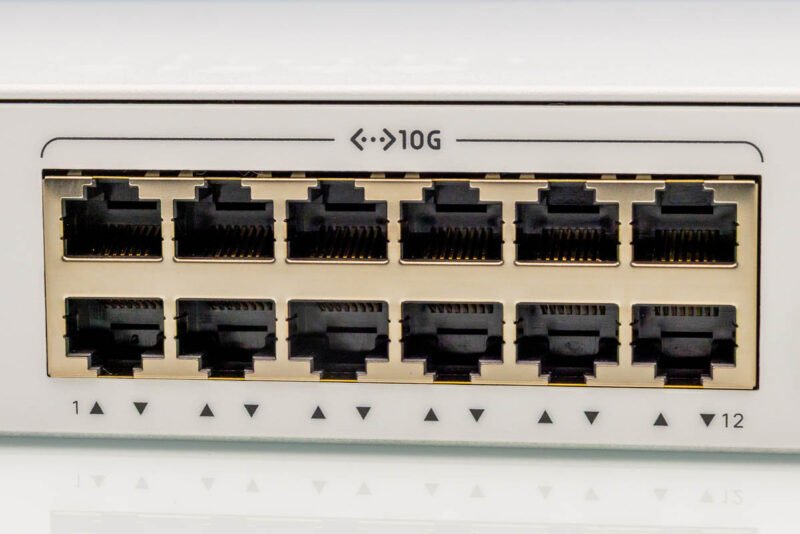
The switch features twelve 10Gbase-T ports, which use standard RJ45 connectors and support 10GbE over copper cabling. However, there's a notable design quirk here: only ports 1 and 12 are labeled. If you need to identify port 7, for example, you must first locate ports 1 and 12, understand the numbering convention, and then count across. This creates unnecessary mental overhead that could have been avoided with individual port numbering - a common feature on most managed switches.
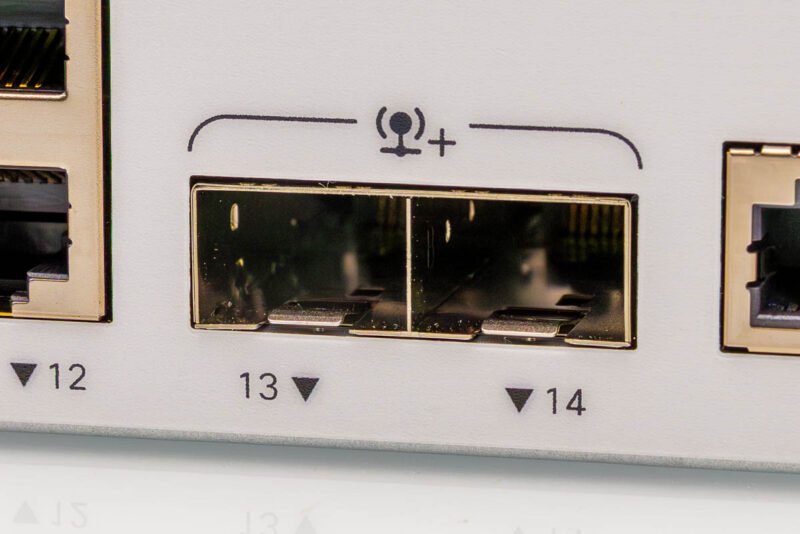
Ports 13 and 14 are clearly labeled as SFP+ 10G ports. It's important to note these are not combo ports, meaning you cannot use the same physical port for either RJ45 or SFP+ connectivity - you get dedicated 10Gbase-T ports and dedicated SFP+ ports.
Out-of-Band Management
One feature that distinguishes this model from the Cisco Catalyst C1300-8FP-2G is the inclusion of an out-of-band management port. This dedicated port provides network administrators with a separate path for switch management, which can be crucial for troubleshooting network issues without affecting production traffic.
Cooling and Security Features
The chassis design incorporates multiple ventilation points. Side vents help with airflow across the internal components, while a particularly important vent is located near the rear where the AC power input is situated.
On the rear panel, Cisco includes a Kensington lock port - a feature more commonly associated with desktop or portable equipment than rackmount switches. This makes sense given the hybrid nature of this chassis, which could easily be used in desktop scenarios. The lock provides basic physical security to prevent unauthorized removal of the device.
Power and Mounting
Power input is handled through a standard AC connection on the rear. The bottom of the switch features mounting points for rack installation, along with another product label for identification.
Internal Access
Opening the switch reveals the internal architecture, though specific component details weren't provided in our initial examination. The accessible design suggests serviceable components for those comfortable with hardware maintenance.
Value Proposition
For organizations considering entry into Cisco's managed switch ecosystem, the C1300-12XT-2X offers a compelling combination of port density, speed options, and management features at what appears to be an accessible price point. The mix of twelve 10Gbase-T ports for immediate copper connectivity and two SFP+ ports for fiber uplink or specialized connections provides flexibility for various deployment scenarios.
The minor inconvenience of unlabeled ports aside, this switch represents a solid option for SMBs, remote offices, or as a departmental switch in larger enterprises looking for Cisco reliability without enterprise-scale complexity.
Comments
Please log in or register to join the discussion