
Chainalysis reports cryptocurrency scams reached unprecedented levels in 2025, with $17 billion stolen through sophisticated AI-powered impersonation schemes and phishing attacks.

Blockchain analytics firm Chainalysis has documented a record-breaking surge in cryptocurrency theft during 2025, estimating $17 billion was stolen through sophisticated scams. This represents the largest annual increase in crypto fraud revenue observed since tracking began, driven primarily by AI-enhanced impersonation tactics and phishing schemes.
According to Chainalysis' blockchain forensics data, the average payment size to scammers increased 253% year-over-year, rising from $782 in 2024 to $2,764 in 2025. While $14 billion in thefts were directly recorded on blockchain ledgers during 2025 (a 34% increase over 2023's $9.9 billion total), Chainalysis projects the final figure will reach $17 billion due to reporting delays and unrecovered incidents.
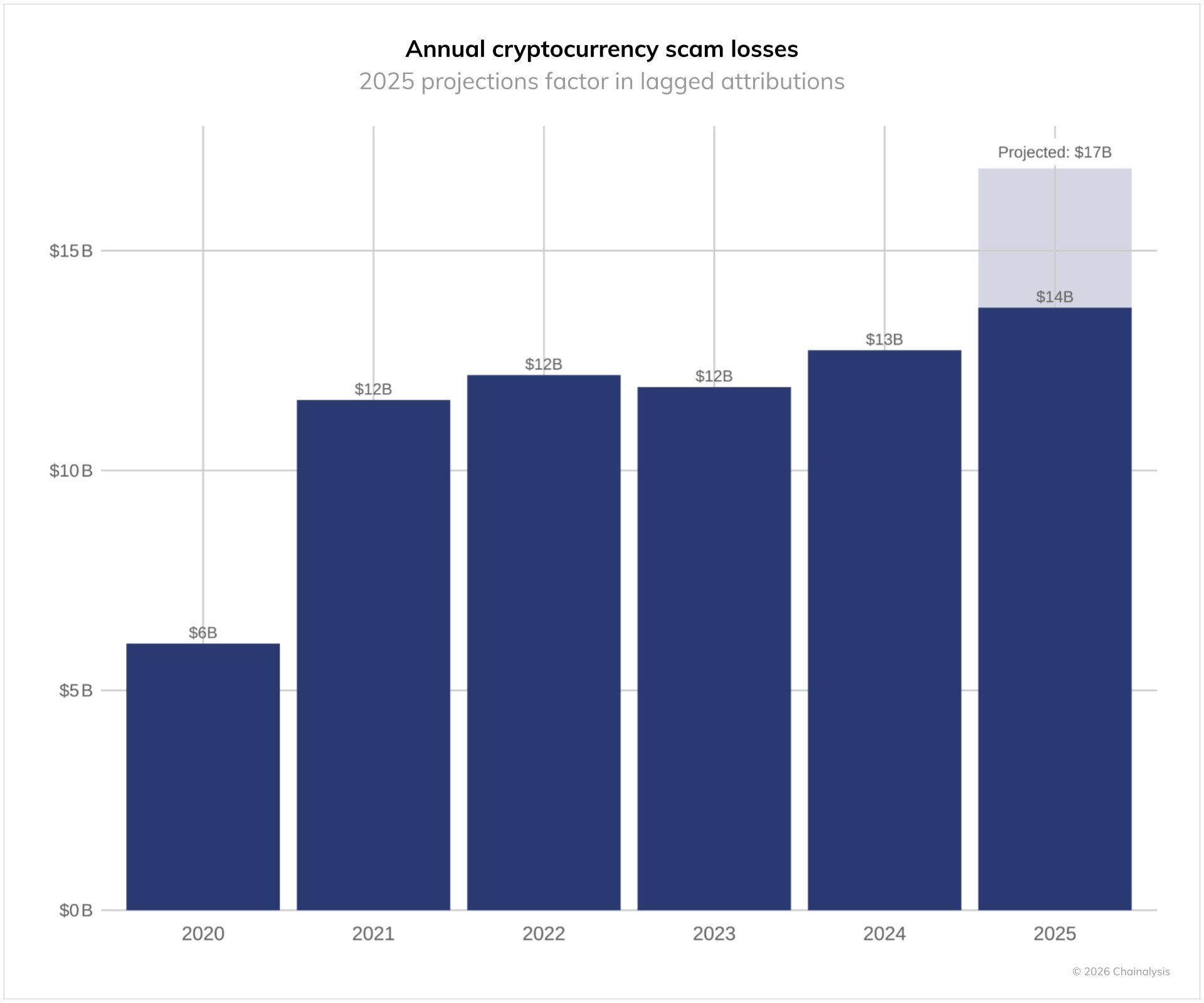 Chainalysis' cryptocurrency scam losses table (Image credit: Chainalysis)
Impersonation scams showed the most dramatic growth, increasing 1400% compared to 2024. These operations frequently involved fraudulent claims of authority, with government agency impersonation becoming particularly prevalent. The E-ZPass toll collection system scam exemplifies this trend, where fake text messages purporting to be from transportation authorities extracted $1 billion from victims over three years.
AI-powered attacks proved significantly more effective than traditional methods, generating 4.5 times more revenue per operation. Scams linked to on-chain AI service payments averaged $3.2 million per incident compared to $719,000 for non-AI scams. Chainalysis data further shows AI-enhanced fraud operations generated $4,838 in daily revenue versus $518 for conventional scams, while transaction volume increased ninefold with AI assistance.

These findings align with recent law enforcement warnings. The FBI recently cautioned that crypto ATM scams are escalating, with Americans losing $333 million to Bitcoin ATM fraud in 2025 alone. The year also witnessed history's largest cryptocurrency seizure when the U.S. Department of Justice confiscated $15 billion in Bitcoin from a Cambodian operation running pig-butchering scams using forced labor.
Despite these enforcement actions, cryptocurrency's inherent pseudonymity creates persistent challenges for authorities. Chainalysis warns that without significant advancements in blockchain forensic capabilities and public awareness, these fraud patterns will likely intensify. The report underscores the critical need for verification of financial requests and heightened scrutiny of unsolicited communications referencing cryptocurrency transactions.
 Aaron Klotz is a contributing writer covering cybersecurity and financial technology
Comments
Please log in or register to join the discussion