
The AI hardware boom now has a non-GPU bottleneck: communities are treating megawatts, cooling water, noise, and utility bills as specs that can kill a project before the first server rack arrives.
What's new
The data center buildout has run into a wall that cannot be solved by ordering more GPUs. According to Data Center Watch, at least 75 U.S. data center projects worth roughly $130 billion were blocked or delayed in Q1 2026, roughly matching the scale of all disrupted projects in 2025 in only three months. For an industry used to treating land, permits, substations, and fiber routes as procurement problems, that is a serious change in the operating model.
The numbers matter because these are not small server closets being held up by zoning paperwork. Modern AI data centers are often planned around tens or hundreds of megawatts of load, with dense GPU racks, high-capacity networking, backup generation, liquid or evaporative cooling, and utility upgrades that can outlive the accelerators they serve. A facility proposed in Seattle, for example, was part of a group of five projects that could have drawn up to 369MW, according to TechRadar's report on Seattle's moratorium. That is not a rounding error for a city grid.
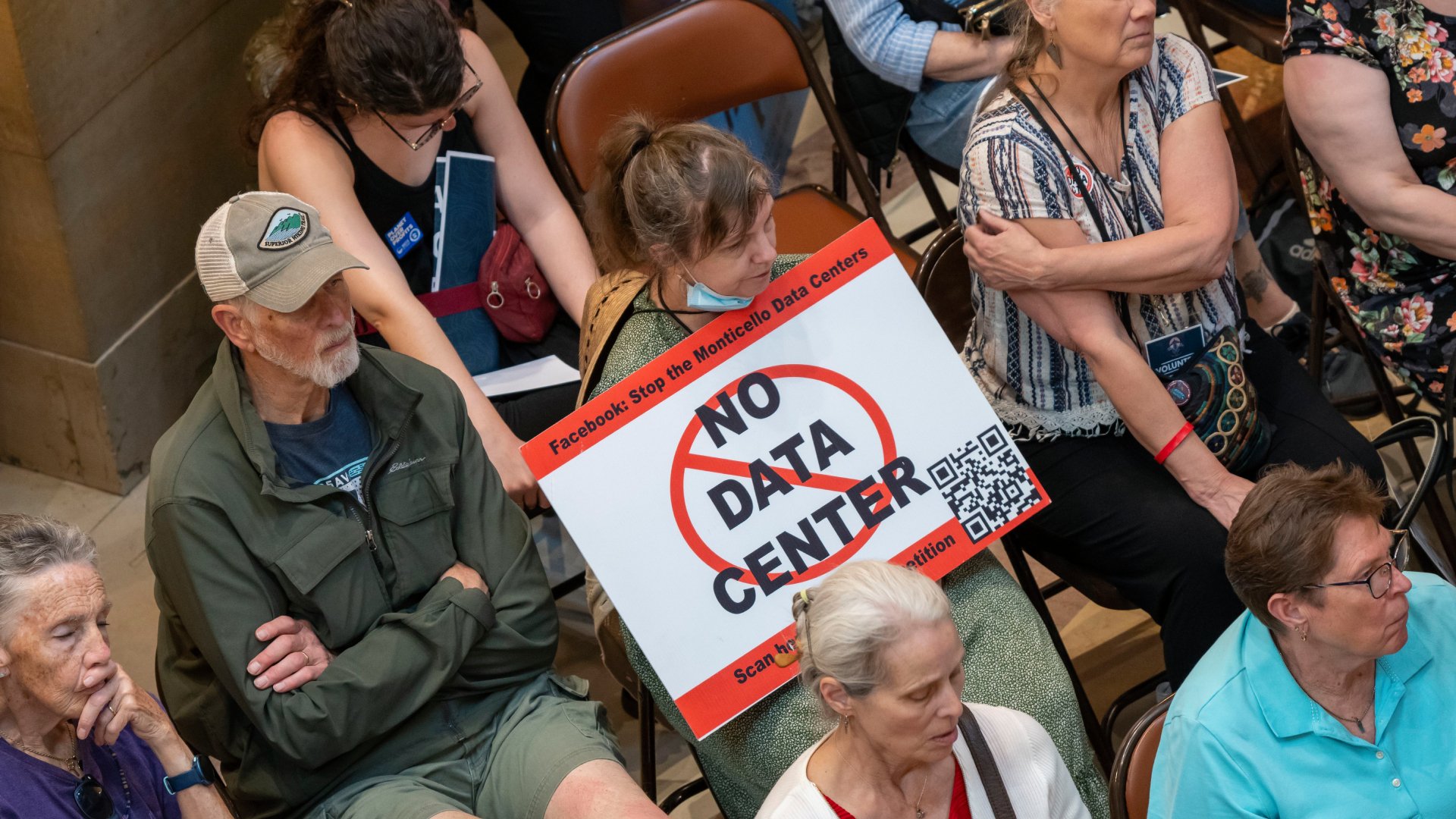
The opposition is also broader than the usual local zoning fight. Data Center Watch says more than 300 state data center bills were filed in the first six weeks of 2026, with statewide moratorium proposals introduced in 14 states. Seattle has approved a one-year pause on new data centers, Maine nearly passed a statewide moratorium before Governor Janet Mills vetoed it, and other cities and counties are using temporary bans to write new rules for power, water, noise, land use, and ratepayer protection.
The timing is awkward for the AI hardware cycle. Nvidia, AMD, Intel, Broadcom, Marvell, HBM suppliers, optical networking vendors, power equipment makers, and cooling specialists all need these facilities to turn chip demand into deployed compute. A GPU sitting in a warehouse is not an AI service. It only becomes useful after a long chain of transformers, switchgear, chillers, pumps, fiber, permits, and power contracts comes together.
How it compares
Compared with the cloud buildouts of the 2010s, the 2026 AI data center push is heavier, hotter, louder, and more politically visible. Traditional enterprise racks commonly lived in the 5kW to 10kW range. AI racks can run many times higher once high-end accelerators, NVLink-class fabrics, storage, and networking are packed into a training cluster. That changes the building. It changes the cooling plant. It changes the substation conversation. It also changes who pays when the grid needs new generation or transmission.
That last point is where the practical fight starts. A data center operator may pay for its direct meter, but the surrounding grid upgrades can affect everyone connected to the same utility system. Lawrence Berkeley National Laboratory's 2024 U.S. data center energy report estimated that data centers used about 4.4% of U.S. electricity in 2023 and could rise to 6.7% to 12% by 2028. Those percentages sound abstract until a utility asks regulators for new transmission, new generation, or new rate structures to serve a few massive loads.
This is why the backlash is bipartisan. For conservative counties, the argument often centers on property rights, rural land use, taxes, and whether households should carry infrastructure costs for trillion-dollar tech companies. For progressive cities, the focus is often water, emissions, labor rules, environmental justice, and whether AI infrastructure brings enough local benefit. The labels differ, but the spec sheet is the same: megawatts in, water out, heat dumped, noise generated, jobs promised, taxes collected, bills shifted.
The public polling has moved just as fast as the permitting fights. The Verge reported on Gallup polling showing more than 70% of Americans opposed AI data centers in their area, with concerns centered on electricity, water, local costs, pollution, and quality of life. That is a rough customer satisfaction score for an industry that still talks about cloud infrastructure as invisible.
The comparison with older data centers is also a comparison in depreciation risk. A conventional facility could host mixed enterprise workloads for years. An AI training site may be optimized around a narrower hardware stack, a specific power density, and a particular cooling design. GPUs can depreciate quickly when a new generation offers better performance per watt. If a project is delayed two years, the economic case can change before the first rack is energized.
There is a competitor angle too. The U.S. wants domestic AI capacity, but every blocked project widens the gap between chip announcements and usable compute. China, the Gulf states, Europe, and large cloud regions are all competing for accelerators, power equipment, and engineering labor. A developer that cannot get a site approved in one county may move to another state or another country. That can preserve the project, but it does not solve the underlying problem if the new location has the same grid and water constraints.
The better comparison is not data centers versus no data centers. It is flexible, well-sited compute versus rushed, inflexible load. Research on flexible data center siting and operation, including recent work on planner-initiated siting, points to a more technical path: build where the grid can actually absorb the load, shift workloads when possible, pair projects with new generation, and make power behavior part of the design rather than a late-stage utility negotiation. That is less glamorous than a bigger GPU order, but it is closer to how these projects will survive public review.
Who it's for
For AI companies, the lesson is simple: power is now a product spec. A model roadmap that assumes unlimited data center capacity is as incomplete as a laptop review that ignores battery life. If a company claims it will add hundreds of megawatts of training or inference capacity, investors and customers should ask where the power comes from, what cooling method is used, how much water is consumed during peak heat, and whether the project has a signed interconnection agreement rather than only a press release.
For hardware buyers, this matters even if they never set foot in a data center. AI infrastructure is already pulling on the same supply chains that feed high-end PCs, workstations, servers, SSDs, networking gear, and memory. When hyperscalers buy GPUs, HBM, power modules, and high-speed optics at enormous scale, the rest of the market feels it through pricing, lead times, and product allocation. If projects stall, some pressure can ease. If approved projects rush to catch up, shortages can return quickly.
For communities, the practical buying guide is a checklist. A serious proposal should disclose peak MW demand, expected annual energy use, water source, cooling design, backup generator emissions, noise profile, number of permanent jobs, tax incentives, grid upgrade costs, and who pays if demand forecasts miss. A project that cannot answer those questions is not ready for approval. A project that can answer them may still be a bad fit, but at least the discussion moves from slogans to measurable trade-offs.
For utilities, the old approach of treating large loads as normal economic development is wearing thin. Data centers can be good customers because they buy a lot of electricity at high utilization. They can also create ugly peak demand, transmission congestion, and political blowback if residential customers believe their bills are rising to subsidize AI. Separate rate classes, firm capacity requirements, on-site generation, demand response, and transparent interconnection queues are likely to become standard parts of the package.
For server vendors and cooling companies, the blocked-project count is a warning and an opportunity. Air cooling alone is a poor fit for the densest AI racks, but liquid cooling is not a magic fix if it shifts cost and complexity elsewhere. Direct-to-chip liquid loops, rear-door heat exchangers, immersion systems, warm-water cooling, and heat reuse all deserve more scrutiny in bids. The winning design is not only the one that supports the highest rack density. It is the one that a planning board, utility, and nearby residents can live with.
My read as a hardware reviewer is that the AI buildout has entered its thermal-throttling phase. The silicon can go faster, but the platform around it is hitting limits. In a laptop, that shows up as fan noise, hot keys, reduced boost clocks, and shorter battery life. At data center scale, it shows up as moratoriums, interconnection delays, water fights, and ratepayer anger. The fix is the same in principle: stop reviewing the chip in isolation and judge the whole system.
The projects that get built from here will need better specs, not bigger promises. That means credible power sourcing, lower water exposure, quieter mechanical design, enforceable cost allocation, and more honest local benefits. The AI companies that treat those requirements as core engineering constraints will get capacity online. The ones that treat them as public relations issues will keep discovering that a $130 billion pipeline can still be stopped by a city council vote.
Comments
Please log in or register to join the discussion