Lawrence Livermore’s Lynx cluster gives Cornelis Networks a federal test case for 400 Gbps Omni-Path, a revived Intel fabric that challenges InfiniBand in high-performance computing.
The Energy Department powered on Lynx at Lawrence Livermore National Laboratory this week, giving Cornelis Networks a high-profile deployment for its 400 Gbps CN5000 Omni-Path interconnect.
The National Nuclear Security Administration commissioned the system for the Advanced Simulation and Computing program, which supports modeling and simulation work for the U.S. nuclear stockpile. Lynx uses 952 Dell Technologies PowerEdge nodes with Intel fourth-generation Xeon Scalable processors, known by the Sapphire Rapids code name.
The processor choice does not set Lynx apart. The network does. Lawrence Livermore chose Cornelis CN5000 Omni-Path switches and network interface cards instead of Nvidia InfiniBand or HPE Cray Slingshot, the fabrics that dominate many Energy Department supercomputing systems.
Matt Leininger, a senior principal HPC strategist at Lawrence Livermore, tied the deployment to a public-private research push between NNSA’s ASC program and Cornelis. The lab plans to use Lynx for modeling, simulation and analysis work across the NNSA complex.
Intel introduced Omni-Path in 2015 as a lossless fabric for high-performance computing. Los Alamos National Laboratory used it in Trinity, and the National Energy Research Scientific Computing Center used it in Cori. Intel dropped further Omni-Path development in 2019, then spun the business into Cornelis Networks in 2020.
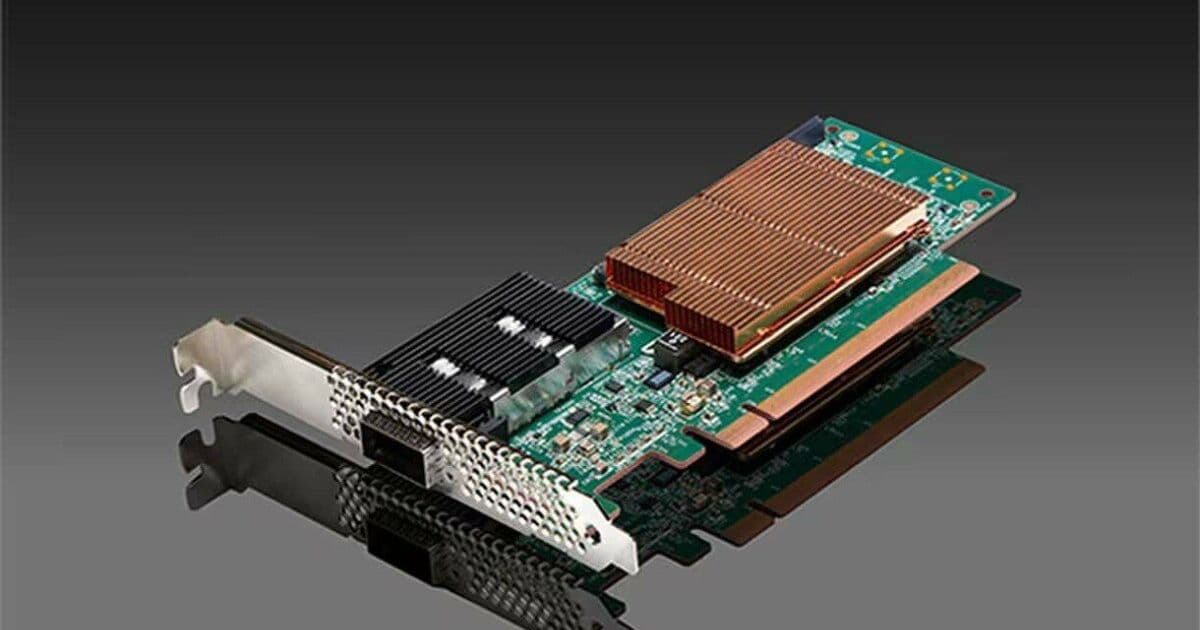
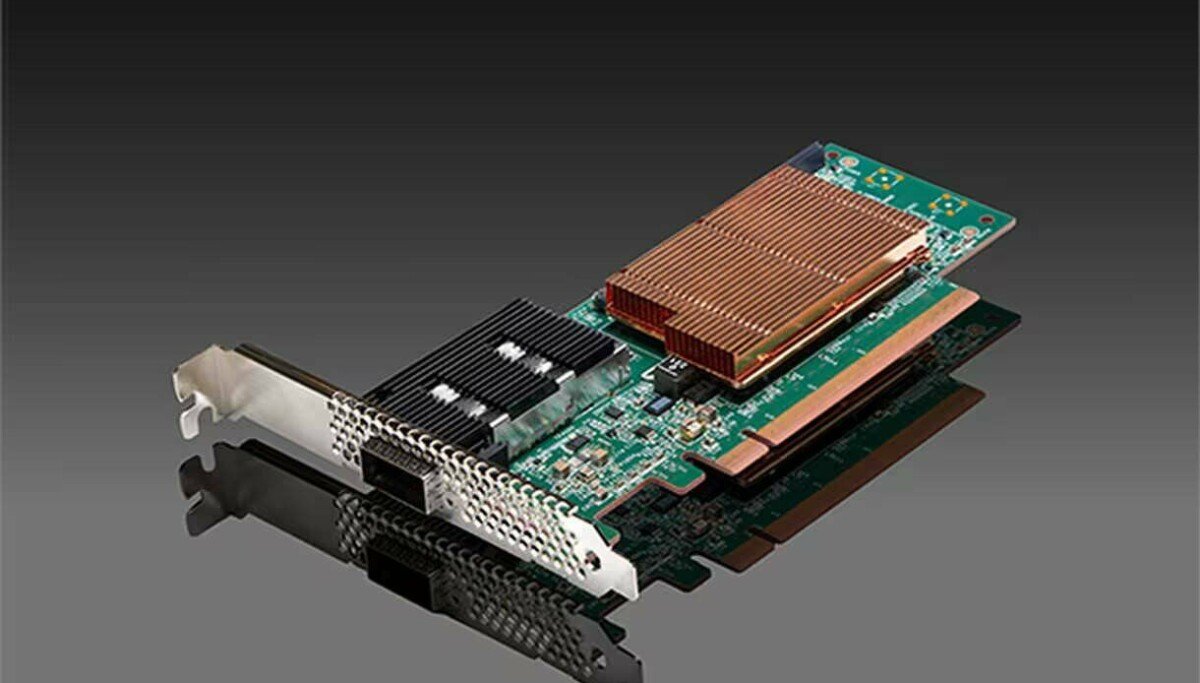
Cornelis brought the architecture back with CN5000, a portfolio that includes 400 Gbps SuperNICs, 48-port switches, director-class switches and management software. The company pitches the fabric for HPC and AI clusters that need high message rates, low latency and high endpoint scale.
For cluster operators, the interconnect can determine how much of the purchased compute capacity users can use. A simulation code that spreads work across hundreds or thousands of nodes depends on fast exchanges of small messages. If the fabric adds latency or congestion, CPUs and accelerators wait.
Cornelis CEO Lisa Spelman said Lynx showed 91% network scaling efficiency at this cluster size. That metric matters because a larger machine can lose much of its value if each added rack contributes less usable performance than the rack before it.
The Energy Department also gains another supplier for systems that do not use Cray architectures. Many Cray systems in DOE labs use Slingshot at 200 Gbps. InfiniBand supports higher speeds, but AI cluster demand has tightened supply and pushed procurement teams to evaluate more options.
Omni-Path gives Livermore a fabric with 400 Gbps links today and a roadmap toward 800 Gbps. Cornelis plans to launch CN6000 in the second half of 2026, timed for CPUs and platforms with PCIe 6.0 support. PCIe 5.0 constrains standard network cards at 400 Gbps, while some vendors add large PCIe switches to work around that limit.
Cornelis also plans Ethernet support with CN6000. That addition would help sites connect Omni-Path clusters to existing networks without building an isolated fabric for each machine.
For HPC buyers, Lynx gives Cornelis a reference customer with demanding workloads and procurement discipline. Livermore will test whether Omni-Path can scale from a 952-node system to larger machines with thousands of nodes, including systems that use nontraditional accelerators.
Nvidia still holds the stronger market position because InfiniBand has broad software support, deep operational history and close ties to GPU cluster designs. Cornelis now has a federal deployment that lets procurement teams compare real cluster behavior instead of roadmap claims.
The next test comes at larger scale. Cornelis wants to prove the fabric at 2,000 nodes, then 5,000 and 10,000. If those systems keep high scaling efficiency, Omni-Path can regain a role in national lab computing after Intel’s retreat left the architecture with a narrow path back.
Comments
Please log in or register to join the discussion