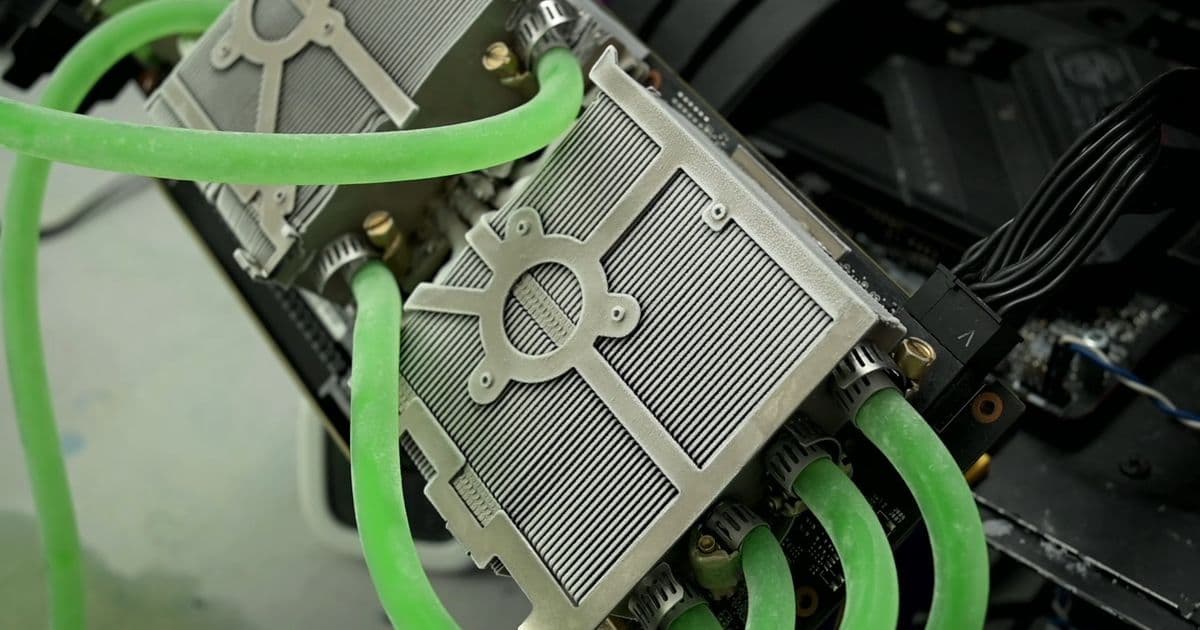
A hardware modder has successfully transformed an RTX 2060 by cutting open its heatpipes and routing sub-zero water directly through them, achieving a staggering 57°C temperature drop and unlocking higher boost clocks in the process.
The pursuit of extreme cooling has led hardware enthusiasts down many bizarre paths, but few are as audacious as what YouTube creator TrashBench has just accomplished. In a recent experiment, he took an Asus Dual RTX 2060, meticulously dismantled its cooler, and physically cut open the heatpipes to run chilled water directly through the internal vapor chambers. The result? A GPU that runs at a frosty 13°C under full load, a 57°C drop from its stock configuration, while maintaining a record-high boost clock of 2025 MHz.
This project is a direct follow-up to a previous endeavor where TrashBench mounted a CPU cooler onto a GPU. This time, he eliminated the intermediary entirely, modifying the GPU's own cooling apparatus to create a direct liquid pathway. The process, as detailed in his YouTube video, began with the complete disassembly of the Asus Dual RTX 2060 to expose the aluminum heatsink. The most challenging part was carefully picking away at the heatsink fins to gain access to the ends of the copper heatpipes. Once exposed, he cut them off, revealing the internal structure designed for a phase-change cooling system.
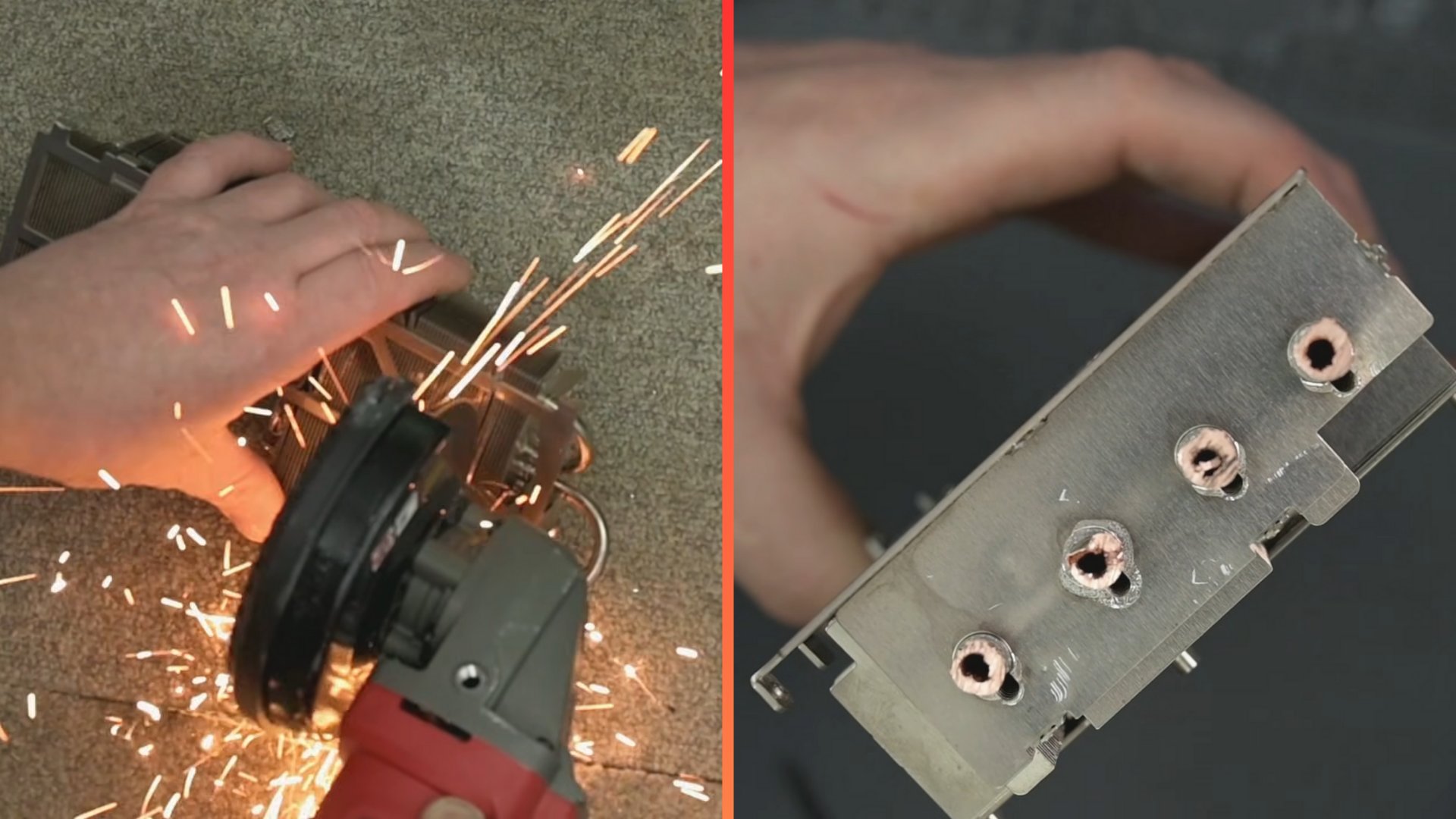 Cutting the heatpipes on an Asus Dual RTX 2060. (Image credit: TrashBench on YouTube)
With the heatpipes open, TrashBench attached silicone tubing to the cut ends, creating a sealed conduit for liquid. Initial testing with no fluid flowing through the system resulted in catastrophic performance—the GPU temperature soared to 88°C, and the boost clock plummeted to just 1350 MHz, severely throttling the card. This highlighted the critical role the original heatpipe design plays in heat distribution.
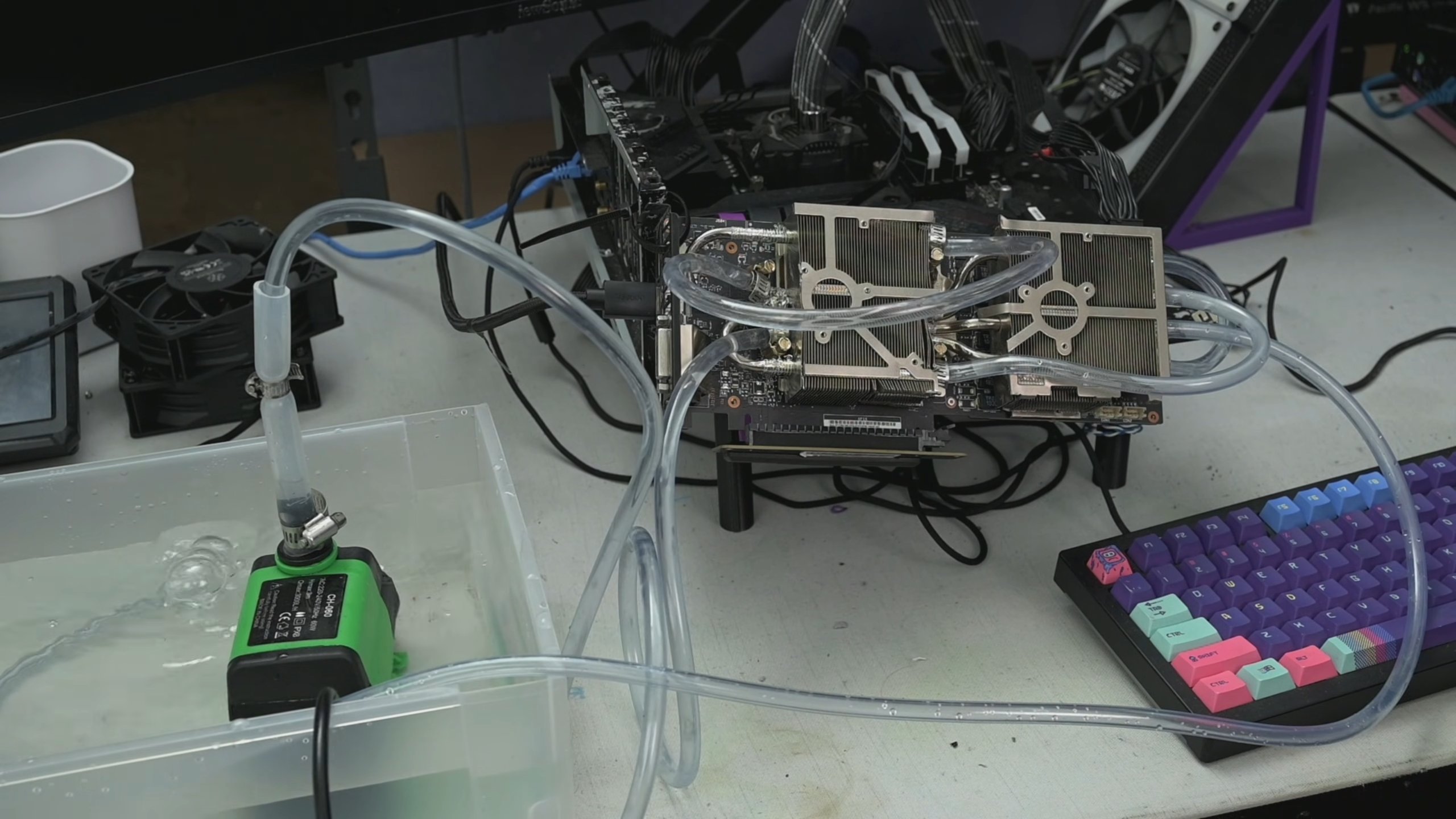 The modded RTX 2060 with water running through its heatpipes. (Image credit: TrashBench on YouTube)
The first major improvement came with the introduction of room-temperature water. With H₂O flowing through the modified heatpipes, the GPU temperature dropped to a much more manageable 47°C. This was a 23°C improvement over the stock thermal paste and heatsink solution, and a massive 41°C reduction compared to the dry, overheated state. The clock speeds also recovered, though not to stock levels.
The final phase of the experiment involved pushing the limits with sub-zero cooling. TrashBench connected the tubing to an ice chiller, which pumped a mixture of water and antifreeze (giving it a distinctive acid-green color) through the GPU's veins at near-freezing temperatures. Before this, he carefully coated the entire PCB in Vaseline to protect it from condensation—a critical step when dealing with sub-ambient temperatures. With the ice-cold coolant circulating, the results were dramatic. The RTX 2060's temperature under full load stabilized at a mere 13°C, a staggering 57°C drop from its stock 70°C operating temperature. Furthermore, it was 23°C cooler than the previous ambient-water setup.
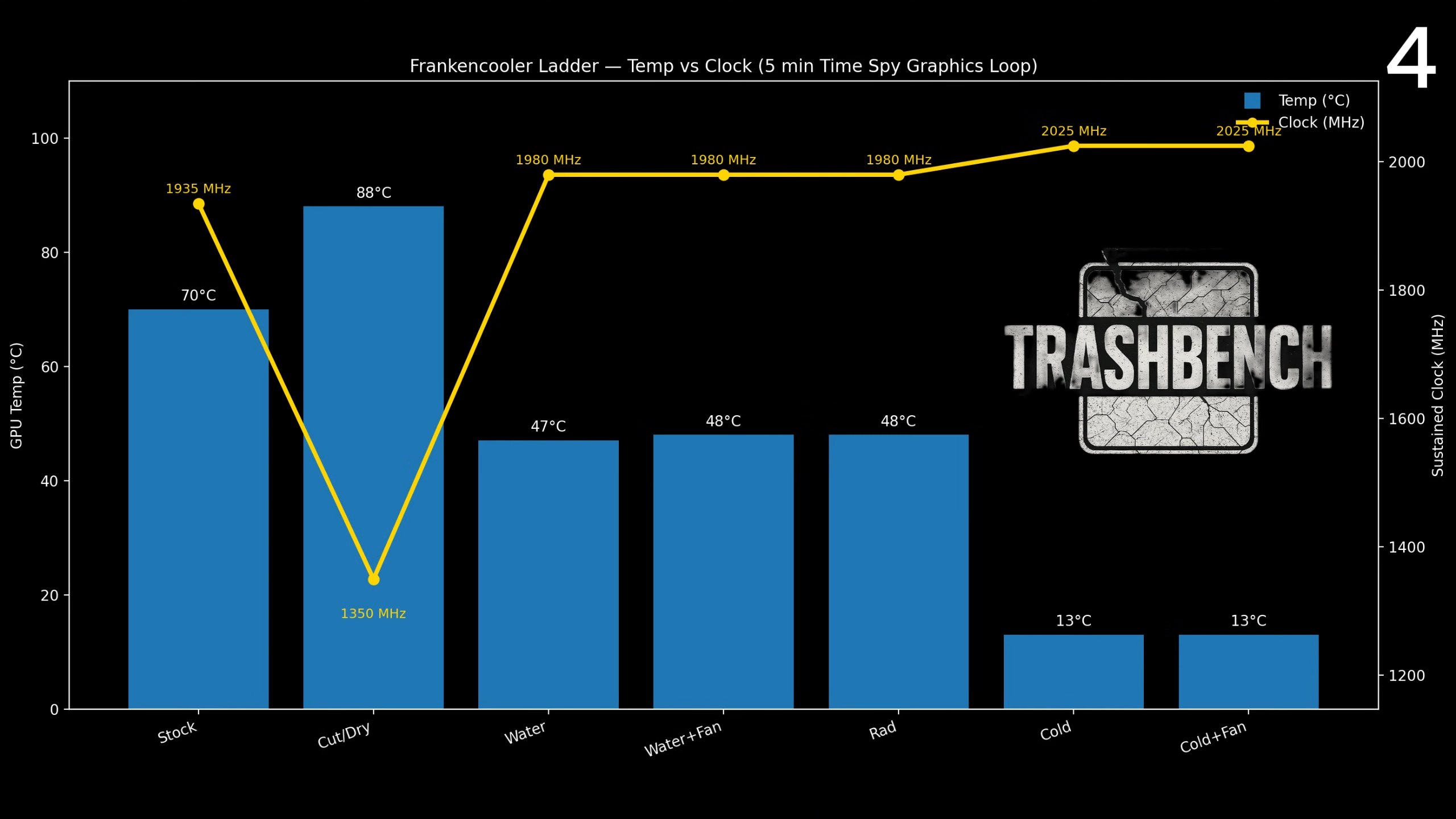 Benchmark results comparing the modded, liquid-cooled RTX 2060 to other variations. (Image credit: TrashBench on YouTube)
This extreme cooling unlocked the GPU's potential, allowing it to sustain a boost clock of 2025 MHz—a new record for this particular card. Interestingly, adding auxiliary 120mm fans or even connecting the loop to a radiator had no additional effect on the temperature, as the sub-zero water was so effective at heat extraction that the GPU's own thermal output was the limiting factor.
The Technical Trade-Offs and Practicality
While the results are undeniably impressive, this modification is far from a practical solution for everyday use. The process is irreversible, requiring the permanent destruction of the stock cooler. It also introduces significant risks, including potential leaks that could short-circuit the entire system, and the constant threat of condensation if the sub-zero cooling is not meticulously managed. The setup is also cumbersome, requiring an external pump (TrashBench used a Seaflo 12V diaphragm pump for the sub-zero phase) and a dedicated ice chiller.
This experiment serves as a fascinating case study in thermal dynamics and the limits of conventional GPU cooling. It demonstrates that the heatpipe and fin-stack design, while efficient for air cooling, can be repurposed for direct liquid cooling with dramatic results. However, it also underscores why manufacturers don't build GPUs this way: the complexity, cost, and reliability issues make it unviable for mass production. For most users, a standard aftermarket GPU cooler or an all-in-one liquid cooler is a more sensible and reliable path to lower temperatures.
 Hassam Nasir (Image credit: TrashBench on YouTube)
TrashBench's work continues to push the boundaries of what's possible in PC hardware modification, joining a list of other extreme cooling experiments he's conducted, such as submerging a GTX 1080 in transmission fluid. While not practical for the average consumer, these projects provide valuable insights into thermal management and inspire innovation in the broader cooling industry. For those interested in the full, painstaking process, the complete video offers a detailed look at every cut, connection, and benchmark.
Comments
Please log in or register to join the discussion