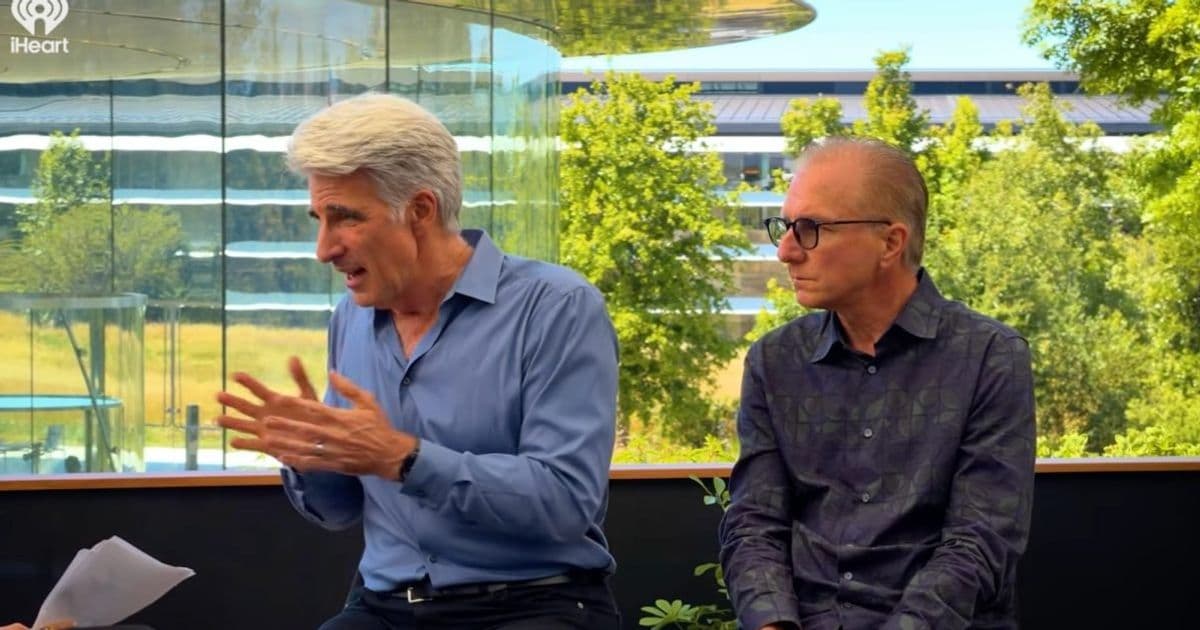
Two of Apple's top executives sat down after WWDC to explain how the company's reworked Siri differs from engagement-driven chatbots, why software engineers feel the AI shift first, and what iOS 27 brings for privacy and child safety.
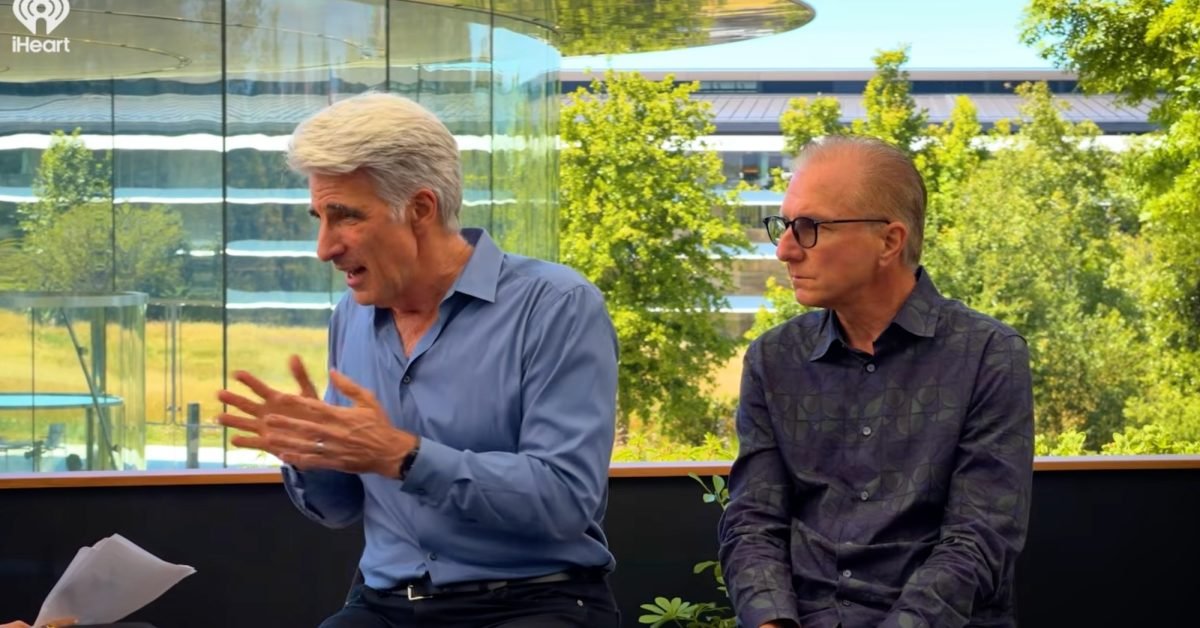
Fresh off Apple's WWDC keynote this week, software chief Craig Federighi and marketing head Greg Joswiak joined Laurie Segall on the Mostly Human podcast for a wide-ranging conversation about where Apple is steering its AI efforts. The interview covered the new Siri, the broader Apple Intelligence platform, privacy, and a set of child safety features arriving in iOS 27.
The headline takeaway is less about a single spec and more about positioning. Apple is trying to draw a clear line between its assistant and the wave of consumer chatbots that have defined the past few years, and the executives were unusually candid about the anxiety that comes with how fast the technology is moving.
A different design goal for Siri
The most concrete product argument came from Federighi, who described how the rebuilt Siri is meant to behave compared to existing chatbots. His framing draws a deliberate contrast with assistants optimized to keep you talking.
"If you use many of the existing chatbots, they're really focused on engagement to a large degree, and sycophancy," Federighi said. "They kind of want to pull you in. They might encourage you to reveal things about yourself and then use that as a basis to establish a connection. And we view it quite the opposite."
The distinction matters because the dominant pattern in conversational AI has been to maximize session length and emotional stickiness. Models that flatter the user, agree readily, and probe for personal details tend to score well on engagement metrics. Apple is saying it built Siri to resist that pull. According to Federighi, if you try to engage Siri as a romantic partner, "Siri's not up for that." The assistant is scoped to helping you accomplish tasks and learn about the world rather than forming a parasocial bond.
![Craig Federighi and Greg Joswiak talk Siri AI and more in new interview [Video] - 9to5Mac](https://news.lavx.hu/api/media/file/craig-federighi-and-greg-joswiak-talk-siri-ai-and-more-in-new-interview-video-9to5mac-2_1781257255721.jpg)
That design choice connects to Apple's long-running privacy story. An assistant that is not trying to extract personal disclosures has less reason to retain sensitive context, which fits the on-device and Private Cloud Compute architecture Apple has been building Apple Intelligence around. The behavioral guardrails and the data handling are two sides of the same pitch.
Federighi on the speed of change
The other notable stretch of the interview had Federighi acknowledging that plenty of people are unsettled by the pace of AI, and that the unease is reasonable.
"Things are changing very fast in ways that I think it's hard for any normal person to keep up with," he said. He compared the moment to the Industrial Revolution, but with a critical difference in timescale. That earlier transition "displaced a lot of people in the process and still occurred over like 80 years. And now this is happening in a compressed time frame."
He was specific about which field is feeling it first. "At this moment in time, there's no bigger place where there's that change than in software engineering. It's literally the first job that AI is showing that it can do to an incredible degree." Federighi noted that engineers in his own organization are watching tools handle work they spent decades learning to do well.

Coming from the executive who runs Apple's software engineering, that is a candid admission. It also lands as Apple ships more AI-assisted tooling into Xcode and its developer stack, which means the people building the platform are among the earliest to confront the shift firsthand. Federighi ended on an optimist's note, saying he believes "this all has a happy ending," while granting that the change is genuinely large.
iOS 27, privacy, and child safety
Beyond Siri, the conversation touched on new child safety features arriving in iOS 27, alongside Apple's familiar privacy commitments. Apple has historically tied its safety features to on-device processing, classifying sensitive content locally rather than scanning in the cloud, and the iOS 27 additions appear to continue that approach. The full interview spans these topics in more detail than the keynote allowed, including how the company thinks about the boundary between helpful assistance and overreach.
For anyone tracking Apple's ecosystem, the interview is a useful signal of intent. The company is not racing to match every chatbot capability. It is betting that a task-focused, privacy-conscious assistant that declines to play emotional games will age better than systems tuned for engagement. Whether users reward that restraint, or gravitate toward the more conversational rivals, is the open question the next few iOS releases will answer.
You can watch the full conversation on the Mostly Human podcast, and Apple's overview of its AI features lives on the Apple Intelligence page.
Comments
Please log in or register to join the discussion