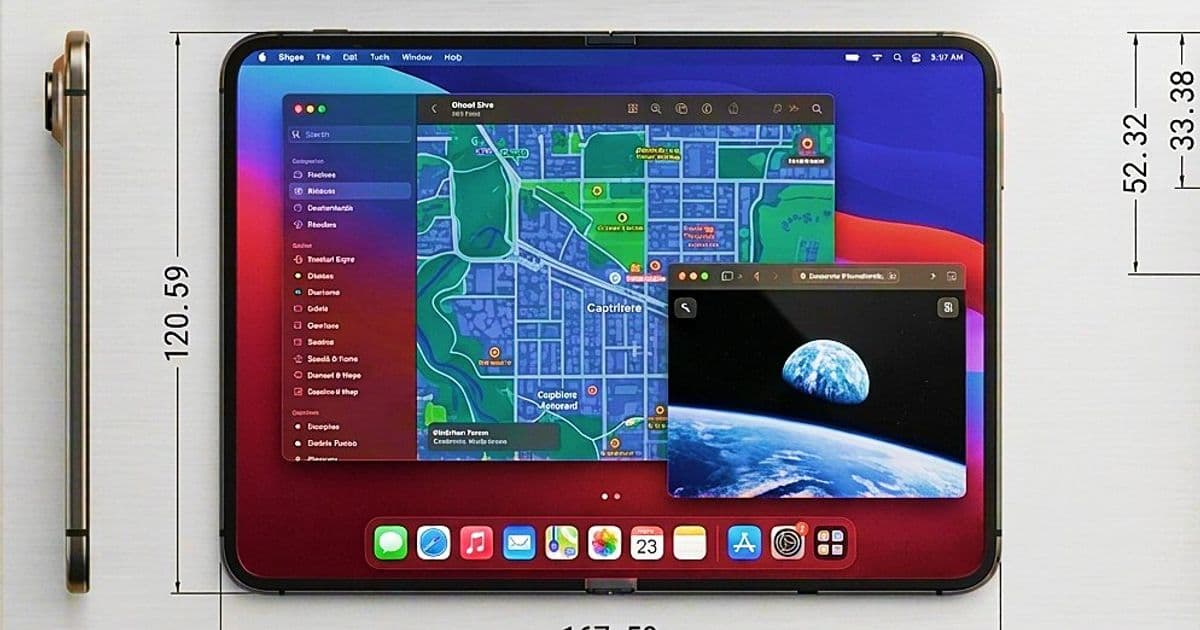
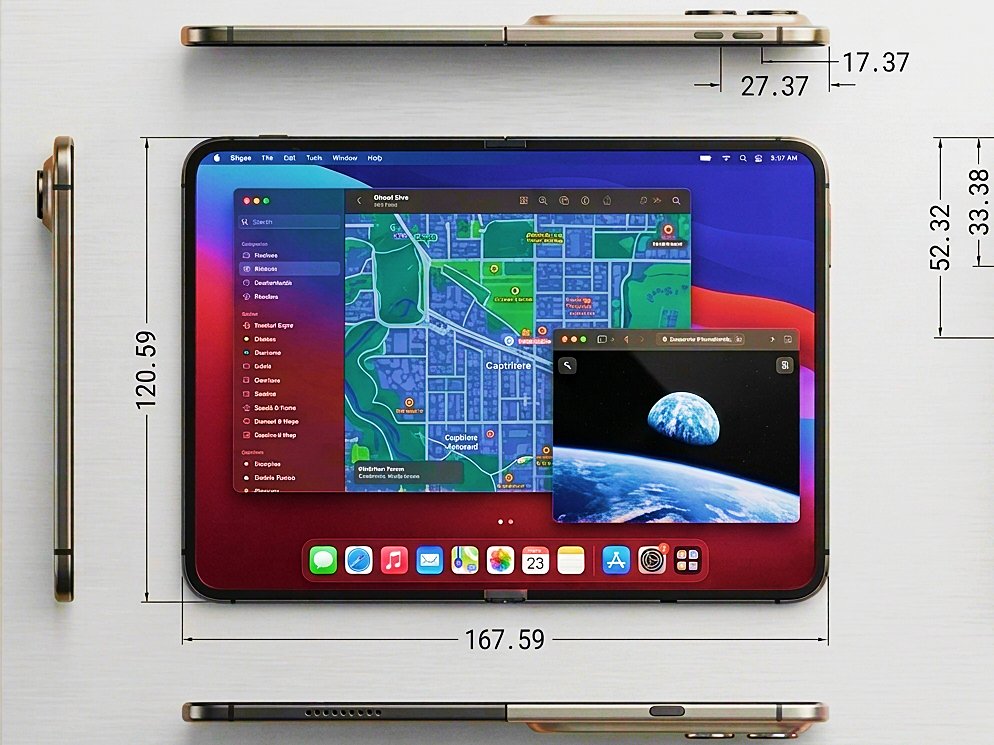
Exclusive leaked schematics from a case manufacturer provide the most detailed look yet at Apple's first foldable device, revealing a 9.2mm folded profile, punch-hole selfie camera placement, and dual 48MP camera system.
What's New:
The most comprehensive look yet at Apple's highly anticipated foldable iPhone has emerged through leaked technical schematics obtained from a case manufacturer. These detailed drawings provide precise measurements and design elements that could finally clarify the "thick boy" rumors surrounding the device. If accurate, the schematics suggest Apple's first foldable will measure just 9.23mm when folded, significantly thinner than the previously reported 11mm thickness. This would place the iPhone Fold right in the same ballpark as some of the thinnest foldables currently on the market from manufacturers like Honor, Samsung, and Oppo.
When unfolded, the device is expected to have a chassis thickness of approximately 4.7mm, though the massive camera bump will bring the maximum thickness to around 13.7mm. This camera "plateau" is designed to accommodate two 48MP sensors, likely consisting of a main camera and an ultra-wide angle lens. The camera assembly appears to be one of the most substantial elements of the design, potentially impacting the overall handling and pocketability of the device when closed.
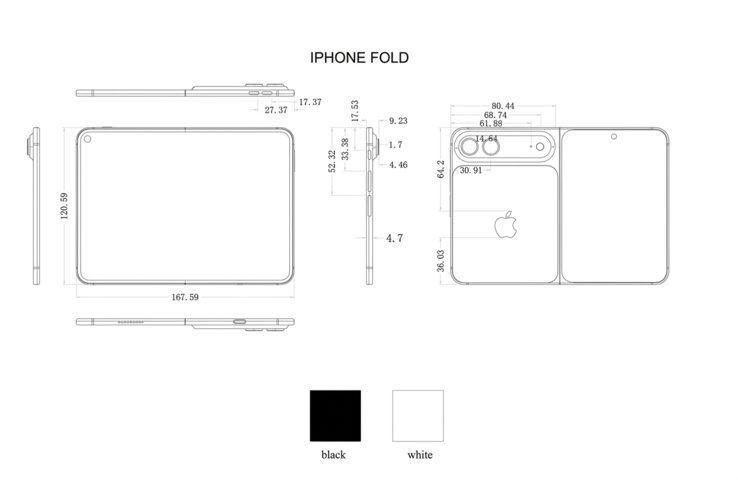
Perhaps the most intriguing revelation from the leaked schematics is the placement of the front-facing camera. For the first time, we see evidence of an "Android-style" punch-hole selfie camera positioned on the inner display of the foldable iPhone. According to the leaked information, Apple has placed this sensor in the left corner of the unfolded screen. This represents a significant departure from Apple's traditional camera placement and design philosophy, potentially indicating a more pragmatic approach to foldable design rather than maintaining the familiar notch or top-center camera placement.
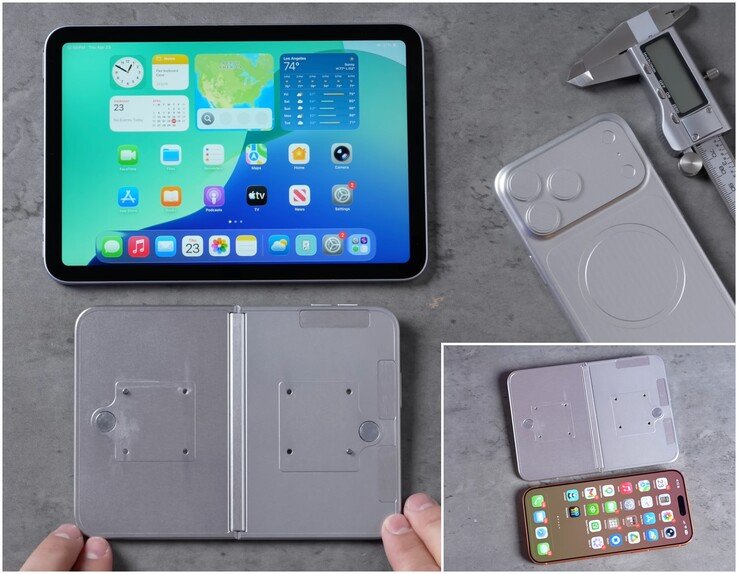
The volume buttons placement also presents an interesting ergonomic consideration. When the device is folded, the volume buttons are positioned in the top right corner. However, when unfolded and held in portrait orientation (the "mini iPad" mode), these buttons would end up in the bottom right corner. This unconventional placement could take some getting used to for longtime iPhone users.
Finally, the schematics leak suggests the iPhone Ultra/Fold will be offered in just two color options: black and white. This conservative approach to color selection aligns with Apple's typical strategy for premium devices, though it may limit customization options compared to some competitors in the foldable space.
How It Compares:
The 9.2mm folded thickness would make Apple's first foldable remarkably competitive with existing devices on the market. For comparison, Samsung's Galaxy Z Fold series typically measures around 13.4-15.8mm when folded, while the Huawei Mate X series ranges from 14.2-15.4mm. The only major foldable that comes close to Apple's rumored thickness is the Honor Magic V2, which measures approximately 9.9mm when folded. If Apple achieves a 9.2mm profile, it would represent a significant engineering achievement in the foldable space.
The dual 48MP camera setup positions the iPhone Fold as a direct competitor to premium foldables like the Samsung Galaxy Z Fold series, which typically features a 50MP main sensor alongside various other lenses. However, Apple's implementation might differentiate itself through computational photography advantages and tighter integration with iOS, rather than simply matching hardware specifications.
The decision to implement a punch-hole selfie camera on the inner display rather than an under-display camera represents a pragmatic compromise. While under-display camera technology has been implemented in some Android foldables, it often comes with compromises to display quality and camera performance. By using a punch-hole design, Apple may be prioritizing camera quality and display clarity over the novelty of a completely uninterrupted screen.
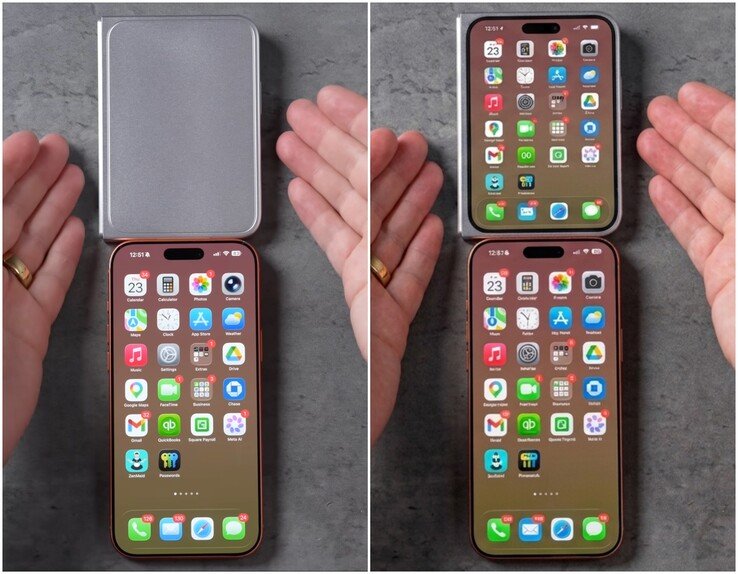
The lack of Face ID on the inner display is another interesting design choice. Apple's facial recognition technology has been a hallmark of recent iPhone models, but implementing it on a foldable screen presents unique challenges. The absence of Face ID on the inner display suggests Apple may be relying on Touch ID for authentication when the device is unfolded, or potentially implementing an alternative biometric solution.
Who It's For:
The iPhone Ultra/Fold, if real, would likely target Apple's premium customer base that values both cutting-edge technology and brand prestige. The device would appeal to:
Early adopters and tech enthusiasts who want to be among the first to experience Apple's take on foldable technology.
Professionals who need a larger display for productivity tasks but prefer the Apple ecosystem and iOS experience.
Content creators who would benefit from the larger screen for editing photos, videos, and other creative work.
Apple loyalists who want the latest and greatest from the company, regardless of form factor.
The device would likely command a premium price point, placing it in the highest tier of the smartphone market. Given Apple's history with premium products, we can expect the iPhone Fold to be positioned as a status symbol as much as a productivity tool.
The rumored September 2026 release date would position the iPhone Fold alongside the iPhone 18 Pro and iPhone 18 Pro Max, suggesting Apple plans to make 2026 a significant year for new product launches. The absence of "affordable" iPhone models in 2026 indicates Apple's continued focus on the premium segment, with more budget-friendly options potentially arriving in spring 2027 with the iPhone 18, iPhone Air (2nd Gen), and iPhone 18e.
As with any leaked information, it's essential to approach these schematics with a healthy dose of skepticism. The foldable iPhone has been one of the most anticipated devices in recent memory, which means leaks and rumors will continue to circulate as the potential launch date approaches. Apple is known for making last-minute design changes, and what we see in these leaked schematics may not reflect the final product.
However, if these leaked dimensions and design elements are accurate, Apple's first foldable could set a new standard for thinness in the category while maintaining the company's characteristic attention to detail and user experience. The combination of a slim profile, dual high-resolution cameras, and iOS optimization could make the iPhone Fold a compelling option for those looking to enter the foldable market without compromising on the Apple ecosystem experience.
The official unveiling is expected to take place in September 2026, when we'll finally get to see if Apple's vision for foldable technology lives up to the hype. Until then, these leaked schematics provide the most detailed look yet at what could be one of the most significant product launches in Apple's recent history.
Comments
Please log in or register to join the discussion