MIT researchers discover how unconscious visual attention reveals tacit knowledge during learning tasks, potentially revolutionizing how we teach complex skills.
A new study by MIT engineers reveals that unconscious visual attention patterns can expose hidden expertise, potentially transforming how we teach complex skills from medical diagnosis to sports.
Expertise often defies easy explanation. A seasoned cyclist can describe the basics of riding a bike, but the subtle adjustments that keep them balanced—when to shift weight, how to respond to road conditions—are intuitive skills that resist verbal description. This implicit know-how, known as tacit knowledge, has long been considered the hardest type of expertise to transfer.
But what if we could access this hidden knowledge and teach it directly?
"We as humans have a lot of knowledge, some that is explicit that we can translate into books, encyclopedias, manuals, equations," explains Alex Armengol-Urpi, research scientist in MIT's Department of Mechanical Engineering and lead author of the study. "The tacit knowledge is what we cannot verbalize, that's hidden in our unconscious."
In a groundbreaking experiment published in the Journal of Neural Engineering, MIT researchers demonstrated for the first time that visual attention patterns can reveal unconscious expertise during learning tasks—and that making this knowledge explicit can significantly improve performance.
The Hidden Patterns of Expertise
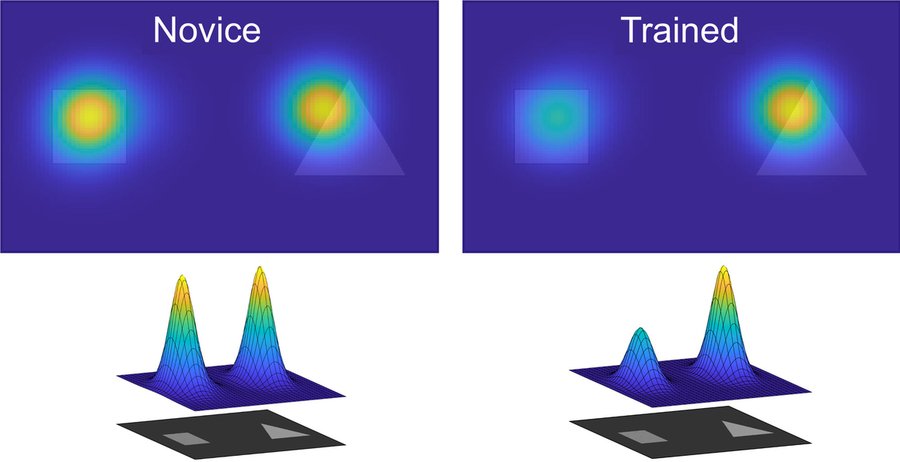
The study involved 30 volunteers who were shown over 120 images containing two simple shapes—squares, triangles, or circles—on either side of the screen. Each image had subtle combinations of shape, color, and pattern that determined whether it belonged to group A or group B. Crucially, only one side of each image contained the relevant information for classification.
At first, participants guessed randomly, classified as "novices." But as they progressed through the images, their accuracy improved dramatically, reaching "expert" levels. The researchers tracked this transformation using two key measurements: eye-tracking cameras to monitor visual focus and EEG sensors to measure cognitive attention.
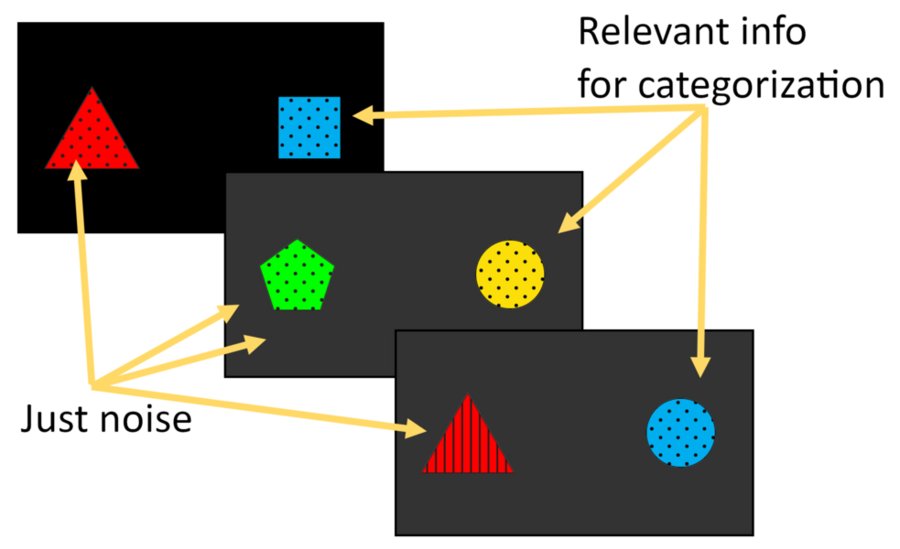
What they discovered was remarkable. As participants learned the classification task, they unconsciously shifted their attention to focus almost exclusively on the relevant side of each image. However, when asked directly about their strategy, they insisted they were looking at the entire image.
"They were unconsciously focusing their attention on the part of the image that was actually informative," Armengol-Urpi says. "So the tacit knowledge they had was hidden inside them."
From Unconscious to Conscious
The breakthrough came when researchers showed participants maps of their own gaze and attention patterns, revealing how these had shifted from novice to expert phases. Armed with this explicit knowledge of their unconscious strategies, participants showed even greater improvement when classifying new images.
This represents the first direct evidence that visual attention can reveal tacit knowledge during image classification tasks—and the first demonstration that bringing this concealed knowledge to the surface can enhance expert performance.
Beyond the Laboratory
The implications extend far beyond simple image classification. The researchers believe this approach could revolutionize training in fields that rely heavily on pattern recognition and observational skills.
Armengol-Urpi is already exploring applications in skilled crafts like glassblowing, sports such as table tennis, and medical imaging diagnosis. "We believe the underlying principle—capturing and reinforcing implicit expertise through physiological signals—can generalize to a wide range of perceptual and skill-based domains," he notes.
For medical professionals, this could mean faster, more accurate training in reading X-rays or MRIs. For athletes, it could accelerate the development of intuitive game sense. For craftspeople, it could preserve and transmit subtle techniques that have traditionally been passed down through years of apprenticeship.
The Science of Learning
The concept of tacit knowledge dates back to mid-20th century philosopher Michael Polyani, who observed that "we know more than we can tell." Since then, studies have shown tacit knowledge's role in everything from medical diagnosis to recognizing animal characteristics.
What makes this MIT study unique is its ability to measure and visualize this hidden knowledge through physiological signals—specifically, the direction of gaze and patterns of brain activity.
The researchers designed each image so that the two shapes flickered at different, imperceptible frequencies. By analyzing which flicker pattern brain waves synchronized with, they could determine exactly where attention was focused, even when participants weren't consciously aware of it.
The Future of Expertise
This research suggests a future where the gap between novice and expert could be dramatically shortened. Instead of spending years developing intuitive skills through trial and error, learners might accelerate their progress by accessing the unconscious strategies of masters.
"If we can make that knowledge explicit, we can then allow for it to be transferred easier, which can help in education and learning in general," Armengol-Urpi explains.
The study, supported by Takeda Pharmaceutical Company, opens new avenues for understanding how expertise develops and how we might more effectively cultivate it. As we continue to push the boundaries of what humans can learn and achieve, unlocking the secrets of tacit knowledge could prove to be one of our most powerful educational tools.
The research team included Andrés F. Salazar-Gomez from the MIT Media Lab, Pawan Sinha from the Department of Brain and Cognitive Sciences, and Sanjay Sarma, the Fred Fort Flowers (1941) and Daniel Fort Flowers (1941) Professor in Mechanical Engineering.
As we look to the future of education and skill development, this work suggests that the most valuable knowledge might not be the explicit facts we can write down, but the hidden patterns of attention and perception that separate true experts from beginners. By learning to see what experts see—even when they can't tell us what they're looking at—we may finally crack the code of mastering complex skills.
Comments
Please log in or register to join the discussion