
A fresh leak fills in the blanks on Huawei's rumored non-folding wide-screen phone, pointing to a Kirin 9-series chip, a battery north of 7,000mAh, and a serious triple-camera setup. It would bring the Pura X's unusual 16:10 silhouette to a slab phone, no hinge required.
Huawei's most interesting form-factor experiment of the past year wasn't a tall, narrow flagship or another book-style foldable. It was the Pura X, a clamshell that opened into a squat, almost landscape-leaning panel instead of the usual elongated rectangle. Now a new leak suggests Huawei wants to bring that wide aspect ratio to a phone with no hinge at all, and we finally have a rough spec sheet to look at.
What the leak says
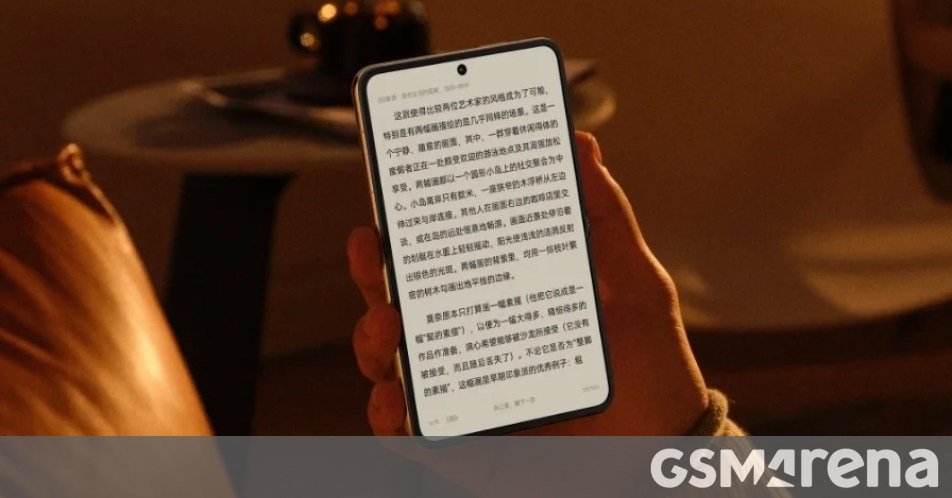
The details come from tipster Digital Chat Station, who posted the key specifications on Weibo before editing the post. According to that leak, Huawei is building a candybar smartphone with a 16:9 or 16:10 display, the same broad proportions that made the Pura X stand out, except this time without any folding mechanism. A rumor earlier this year had floated the existence of the device; this is the first time concrete hardware claims have been attached to it.
The headline numbers are aggressive. The phone is said to run a Kirin 9-series chipset, Huawei's in-house silicon line, and to carry a battery rated at 7,000mAh or more. That capacity puts it well above what most slab flagships ship with today, and it lines up with a broader push across Chinese brands toward enormous batteries. The recent leak claiming the Redmi K100 Pro could hit 8,000mAh is part of the same trend, driven largely by denser silicon-carbon cell chemistry that packs more energy into the same physical space.
On the camera side, the leak describes a 50MP primary sensor measuring 1/1.3 inches, a physically large sensor that helps with light gathering and depth of field. It's paired with a 50MP periscope telephoto for longer-range zoom and a multispectral sensor, the kind of sensor Huawei has used to improve color accuracy and white balance rather than to capture a conventional image. Huawei is expected to announce the phone in the fourth quarter of 2026, somewhere between October and December.
Why a wide screen on a non-folding phone matters
Almost every phone you can buy uses a tall aspect ratio, typically around 19.5:9 or 20:9. That shape is great for scrolling feeds and holding the device one-handed, but it's awkward for a lot of other things: video, split-screen multitasking, and anything that benefits from horizontal space. A 16:10 panel is closer to what you'd find on a small tablet, which is exactly the point. It gives you a layout that feels more like a compact slate while keeping the phone in a single rigid piece.
The Pura X reached that shape by folding, which adds a hinge, a crease, and a higher price. Putting the same proportions into a non-folding body removes the mechanical complexity and the durability questions that come with any foldable. The trade-off is that a wide non-folding phone is harder to use one-handed and doesn't tuck into a pocket as neatly, so this is clearly a device aimed at people who prioritize on-screen real estate over reach.

The ecosystem question
Hardware aside, the more consequential story with any new Huawei flagship is software. U.S. trade restrictions cut Huawei off from Google services years ago, and the company has since moved fully to its own platform, HarmonyOS. Recent flagships ship HarmonyOS NEXT, the version that drops the Android app compatibility layer entirely and runs only native HarmonyOS apps built for Huawei's own runtime.
That decision reshapes what owning this phone would mean. Inside China, Huawei has rebuilt a deep catalog of native apps through its AppGallery, and the major local services are well covered. Outside China, the gap is much wider, because most Western apps and Google's own services aren't available without workarounds. For a buyer, the practical consideration isn't just the Kirin chip or the battery, it's whether the apps you rely on every day exist on the platform at all. A wide screen is most compelling when the software you run takes advantage of it, and HarmonyOS gives Huawei tight control over how its apps adapt to that unusual aspect ratio.
The Kirin 9-series chip carries its own backstory. Huawei's return to advanced in-house silicon, manufactured domestically through SMIC, was the reason its flagships could compete again after sanctions choked off access to leading-edge foundries. A new Kirin 9 part in this phone signals that Huawei is comfortable putting its latest silicon into experimental form factors rather than reserving it for conventional flagships like the Pura and Mate lines.
Where this fits
If the leak holds, this phone slots in as a more affordable, more durable way to get the Pura X experience, trading the foldable's party trick for a simpler design and presumably a lower price. It also signals that Huawei sees the wide aspect ratio as a real product category worth expanding rather than a one-off. Treat the specs as unconfirmed for now, since the original post was edited and Huawei hasn't said anything official. A Q4 launch window, though, means we shouldn't have to wait long for the company to fill in the rest.
Comments
Please log in or register to join the discussion