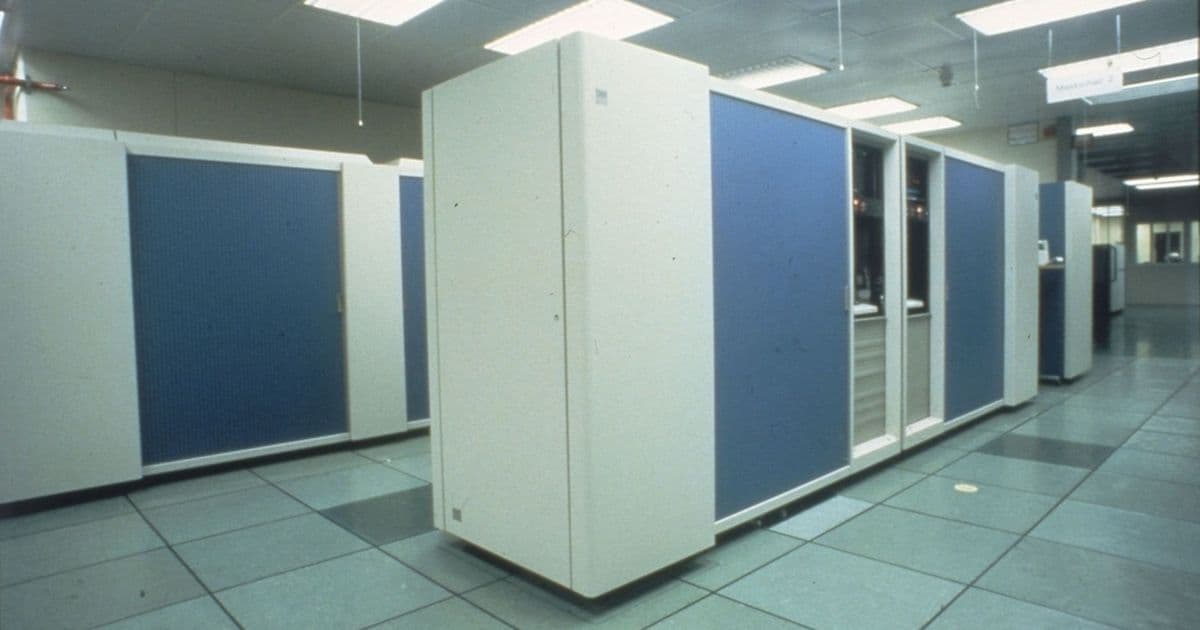
Forty years ago, IBM introduced 1-megabit DRAM chips in its 3090 mainframe, marking a pivotal moment in semiconductor history and temporarily halting Japan's dominance in the memory market.
Forty years ago today, IBM made history by becoming the first computer company to implement 1-megabit memory chips in its mainframe computers, ushering in the megabit memory era and temporarily halting Japan's seemingly unstoppable dominance of the semiconductor memory market.
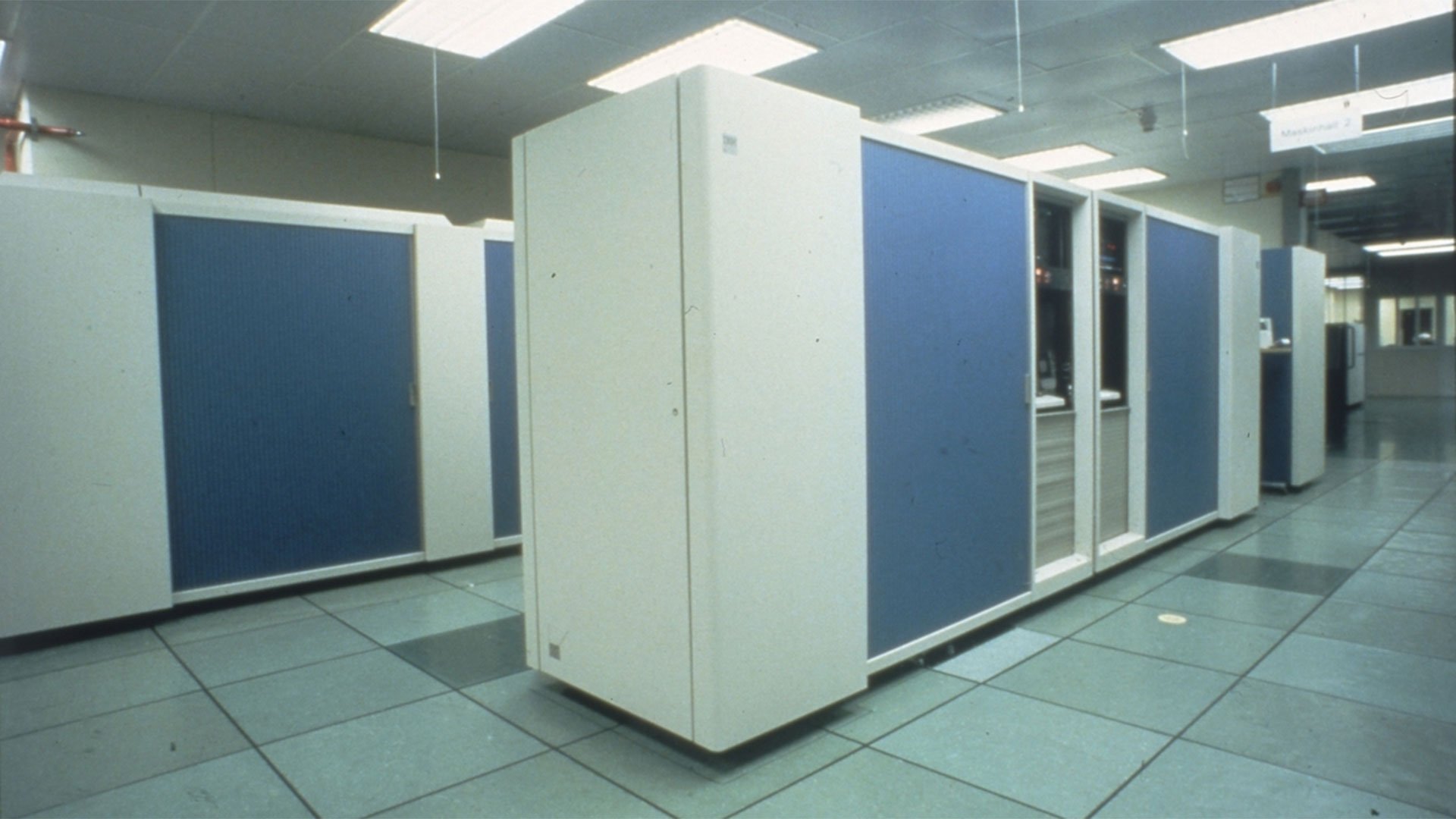
(Image credit: Norsk Telemuseum CC)
The milestone came with IBM's 3090 (Sierra series) mainframe computers, which were the first to adopt this new high-density memory technology. At the time, most computing devices still relied on 64-kilobit memory chips, while the state-of-the-art Japanese memory technology was producing 256-kilobit chips. IBM's leap to 1-megabit chips, fabricated on a 1.2-micron process, represented a significant advance in both density and efficiency.
IBM's senior vice president, Jack D. Kuehler, celebrated the achievement as "a signal of our semiconductor technology leadership," emphasizing that these DRAM chips were built in the USA. The company had developed the technology at its Vermont fabrication facility, marking a rare moment of American leadership in an industry increasingly dominated by Japanese manufacturers.
The New York Times, however, viewed the occasion with skepticism, calling it "a rare, if fleeting, moment of glory." The newspaper's cynicism stemmed from the fact that Japanese giants like Fujitsu, Hitachi, Mitsubishi, NEC, and Toshiba were already sampling their own 1-megabit DRAM chips and expected to move them to mass production soon, potentially reclaiming their dominant market position.
This technological leap had immediate practical implications for the computing industry. The arrival of 1-megabit memory chips enabled memory manufacturers to produce 30-pin SIMMs with 1MB RAM capacity using eight to nine chips in a single-side configuration. These SIMMs would become ubiquitous in personal computers throughout the late 1980s and early 1990s.
The new memory density also found applications beyond main system memory. Graphics cards like the Tseng ET3000/ET4000, Trident TVGA 8800/8900, and Cirrus Logic GD542x series could utilize these SIMMs, as could printers and sound cards. This versatility helped accelerate the adoption of higher memory capacities across various computing peripherals.
At the time of IBM's announcement, Japanese companies controlled approximately 75% of the global memory market. The introduction of 1-megabit DRAM chips represented more than just a technical achievement—it was a strategic move to maintain competitiveness in a market where American companies were increasingly losing ground to their Asian counterparts.
The development also highlighted the ongoing technological race in semiconductor manufacturing. While IBM's 1.2-micron process was impressive for the time, it underscored the rapid pace of innovation required to stay competitive in the memory market. The company's ability to leapfrog from 64-kilobit to 1-megabit chips demonstrated the kind of breakthrough thinking that would be necessary to challenge established market leaders.
This moment in semiconductor history serves as a reminder of how quickly the competitive landscape can shift in the technology industry. IBM's achievement, though temporary in its impact on market dynamics, represented a significant technical milestone that would influence memory technology development for years to come.
The megabit memory era that began with IBM's breakthrough would eventually give way to even higher-density memory solutions, but the 1-megabit DRAM chips represented a crucial transition point in computing history. They enabled new capabilities in personal computing while demonstrating that American semiconductor manufacturers could still compete at the cutting edge of memory technology development.
Today, as we look back 40 years, IBM's achievement stands as a testament to the importance of sustained investment in semiconductor research and development, and the impact that technological breakthroughs can have on global market dynamics.
Comments
Please log in or register to join the discussion