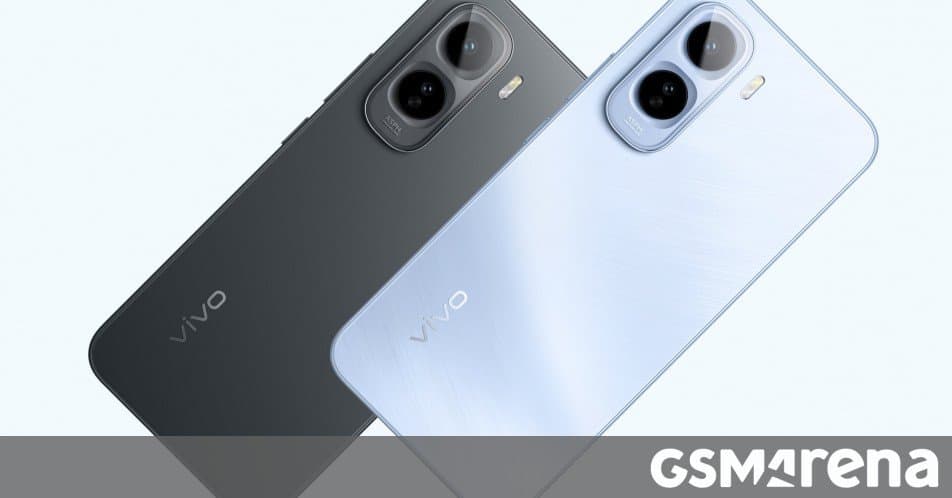
India's smartphone market contracted 3% in Q1 2026, marking its worst performance in six years, as rising memory costs and weak entry-level demand create a challenging environment for manufacturers.
India's smartphone market experienced its most challenging quarter in six years during the first three months of 2026, with shipments declining 3% year-over-year, according to new data from Counterpoint Research. This downturn reflects broader economic pressures affecting consumer electronics globally, with specific challenges unique to the world's second-largest smartphone market.
Market Leaders Hold Ground Amid Overall Decline
Despite the overall contraction, vivo maintained its position at the top of the Indian smartphone market, capturing 20.8% market share. The Chinese manufacturer's continued dominance comes as no surprise given its aggressive pricing strategies and extensive distribution network across India's diverse geography. Samsung followed closely with 17.4% share, while Oppo secured 13.6% of the market.
Apple's presence in the Indian market continues to grow, with the Cupertino giant achieving 9% market share in Q1 2026. This represents a significant achievement for Apple in a market traditionally dominated by Android devices, particularly in the mid-range and budget segments where most Indian consumers shop.
The remaining top players included Realme at 8.9%, Xiaomi at 7.9%, Poco at 4.2%, iQOO at 2.6%, and OnePlus at 1.8%. Notably, Oppo emerged as the fastest-growing brand among the top five, achieving 8% year-over-year growth driven by strong performance from its A and K series smartphones, along with solid sales of mid-range Reno models.
Premium Segment Shows Unexpected Growth
One of the most interesting developments in Q1 2026 was the performance of premium smartphones. Google emerged as the fastest-growing brand in the premium segment (devices priced above INR 45,000), achieving an impressive 39% growth rate. This surge suggests that despite economic headwinds, there remains demand for high-end devices among certain consumer segments in India.
However, neither Google nor the emerging brand Nothing (which saw 47% growth including its CMF sub-brand) managed to break into the top five rankings. This highlights the challenge new entrants face in gaining significant market share in India's competitive smartphone landscape, even when experiencing rapid growth rates.
Economic Factors Driving Market Contraction
The broader market decline can be attributed to several interconnected factors. Counterpoint Research points to elevated memory prices as a primary driver, which has increased production costs across the industry. These higher costs have been passed on to consumers, making smartphones less affordable at a time when economic uncertainty is already causing consumers to delay purchases.
Entry-level demand has been particularly weak, reflecting the economic challenges faced by price-sensitive consumers who typically drive volume in the Indian market. Xiaomi's performance in the INR 10,000-20,000 price segment, which showed double-digit growth, suggests that mid-range devices continue to find buyers even as the entry-level market struggles.
Challenging Outlook for 2026
Looking ahead, the forecast for India's smartphone market remains subdued. Counterpoint Research predicts a double-digit sales decline in Q2 2026 compared to the same period in 2025, citing continued pressure from high memory prices and weak entry-level demand. For the full year, the market is projected to decline by 10% compared to 2025.
This projected decline would represent one of the most significant contractions in recent Indian smartphone market history. The lengthening of replacement cycles, as consumers hold onto their devices longer due to affordability concerns, compounds the challenge for manufacturers and retailers alike.
Strategic Implications for Manufacturers
The current market conditions are forcing smartphone manufacturers to reassess their strategies in India. Companies are likely to focus on:
- Value proposition enhancement: Emphasizing features and specifications that justify price points in a cost-conscious market
- Supply chain optimization: Working to mitigate the impact of high memory prices through alternative sourcing or component redesign
- Segment targeting: Shifting focus toward segments showing resilience, such as the mid-range market where Xiaomi found success
- Financing options: Expanding EMI and other payment plans to make devices more accessible to budget-conscious consumers
The Path Forward
India's smartphone market has historically shown remarkable resilience, bouncing back from previous slowdowns. However, the current challenges appear more structural than cyclical, with memory prices remaining elevated and economic pressures persisting.
The success of brands like Nothing and Google in achieving high growth rates, even from small bases, suggests that innovation and strong value propositions can still drive consumer interest. As the market evolves, manufacturers that can balance feature innovation with affordability while navigating supply chain challenges will be best positioned to weather the current downturn and emerge stronger when market conditions improve.
For consumers, the current environment may present opportunities to find better value as manufacturers compete more aggressively for a shrinking pool of buyers. However, the overall trend toward longer replacement cycles could have lasting implications for how frequently new technologies reach the mass market in India.
The Indian smartphone market's performance in 2026 will be closely watched as an indicator of broader consumer electronics trends in emerging markets, where similar economic pressures and supply chain challenges are likely to play out in the coming quarters.
Comments
Please log in or register to join the discussion