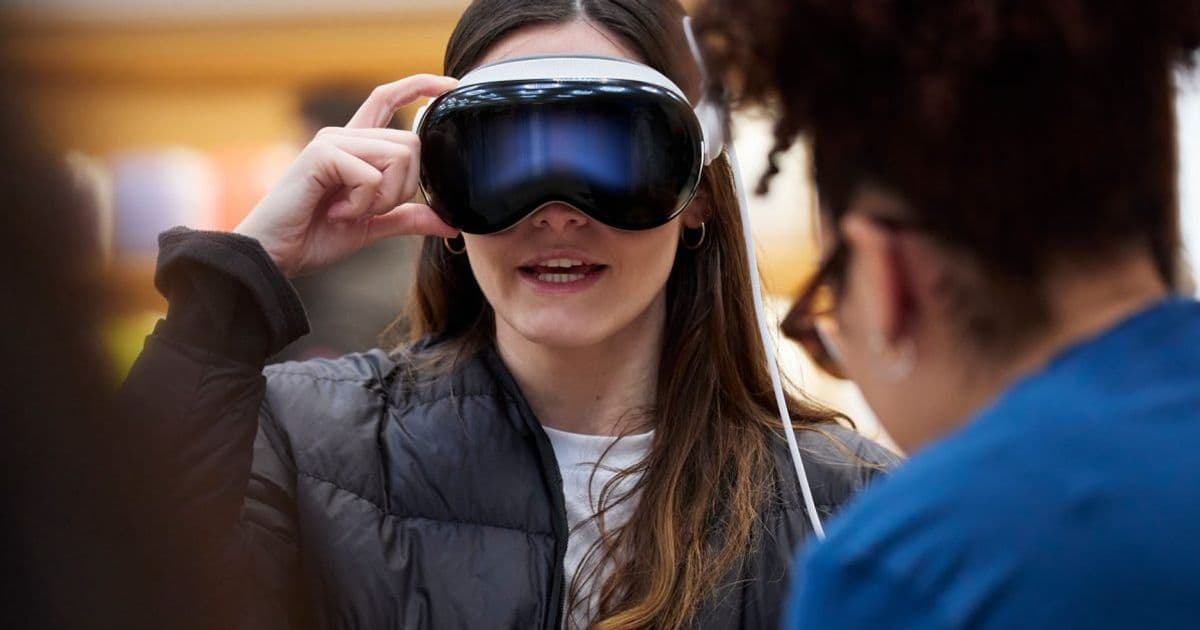
A new report reveals how understaffing and rushed training undermined the Vision Pro launch, exposing deeper issues with Apple's retail strategy.
When Apple launched the Vision Pro in early 2024, the company had ambitious plans to showcase its first new product category in years. The strategy seemed solid on paper: fly hundreds of retail employees to Cupertino for multi-day hands-on training, then have them return to their stores to lead four-hour workshops for other staff. But according to a new report from Wired, what actually happened in stores across the country was far from the polished Apple experience customers have come to expect.
The Reality Behind the Curtain
The Vision Pro launch quickly devolved into what store employees described as "a fiasco" in many locations. Staff members were given just one hour to rehearse a complicated demo and memorize a script that spanned over a dozen screens. Even by official standards, employees had only two chances to practice among colleagues before conducting their first real-life demo with paying customers.
But the situation was even worse than that. Many employees reported not even getting those two practice sessions. "I got a 20-minute demo. I got maybe 30 minutes to review the script, did a demo on one person who had went to Cupertino, and was thrown from the nest," said Sam Hernandez, a longtime salesperson at a flagship Apple Store in Chicago.
Staffing Shortages Run Deep
The problems ran far deeper than just rushed training. Since Steve Jobs' era, Apple has gradually reduced its retail workforce while maintaining the same customer service expectations. By the time of the Vision Pro launch, many Apple salespeople had only recently become permanent employees after being brought on as temporary workers in the fall. They had little experience with Apple product launches.
"It was the first time a lot of people had to learn a script," explained Kevin Gallagher, a longtime Apple Store employee from Towson, Maryland. "They didn't have the capability of doing it."
This staffing crisis was compounded by the fact that stores were severely understaffed. With too few employees to cover shifts, many workers simply didn't get the training and practice time that Apple corporate had intended for them.
The Erosion of Apple's Retail Philosophy
Steve Jobs had always understood that well-staffed stores with carefully trained employees were crucial to Apple's retail success. In his day, approximately half of the staff were dedicated to helping customers use their devices through training sessions and one-on-one appointments with Creatives.
Over the years, this ratio has been gradually reduced. The small hands-on workshops and one-to-one sessions with Creatives never returned after the pandemic, replaced instead by Today at Apple sessions that are far less in-depth and more geared toward promoting Apple products rather than providing substantive training.
This shift represents a fundamental change in Apple's retail philosophy. Where customers once had access to free, in-person help with software like Final Cut Pro through excellent one-on-one sessions, they now receive more generic group experiences that prioritize product awareness over skill development.
The Broader Implications
The Vision Pro launch issues serve as a microcosm of larger problems within Apple's retail strategy. For more than a decade, we've seen the dilution of Steve's original concept for Apple Store staffing. The company needs not just more retail staff but more Apple stores to reduce the horrendous crowding and unacceptable delays in getting support.
The challenges with Vision Pro certainly run deeper than the demo sessions, but issues with these wouldn't have helped. When customers are spending thousands of dollars on a new technology category, they expect and deserve knowledgeable, well-prepared staff who can guide them through the experience.
What This Means for Apple's Future
The Vision Pro launch fiasco raises serious questions about Apple's ability to successfully introduce new product categories in the future. If the company struggles to properly train staff for a high-profile launch like this, how will it handle future innovations?
More fundamentally, it suggests that Apple may need to reevaluate its entire approach to retail staffing. The cost savings achieved through reduced staffing and simplified training programs may be coming at the expense of the customer experience that has long been Apple's competitive advantage.
As Apple continues to push into new product categories and technologies, the quality of its retail experience will be crucial to adoption and success. The Vision Pro launch serves as a warning that cutting corners on staffing and training could have significant consequences for the company's reputation and customer satisfaction.
The question now is whether Apple will recognize these issues and take steps to restore the high-touch retail experience that made its stores famous, or whether the company will continue down the path of cost-cutting at the expense of customer service quality.
Comments
Please log in or register to join the discussion