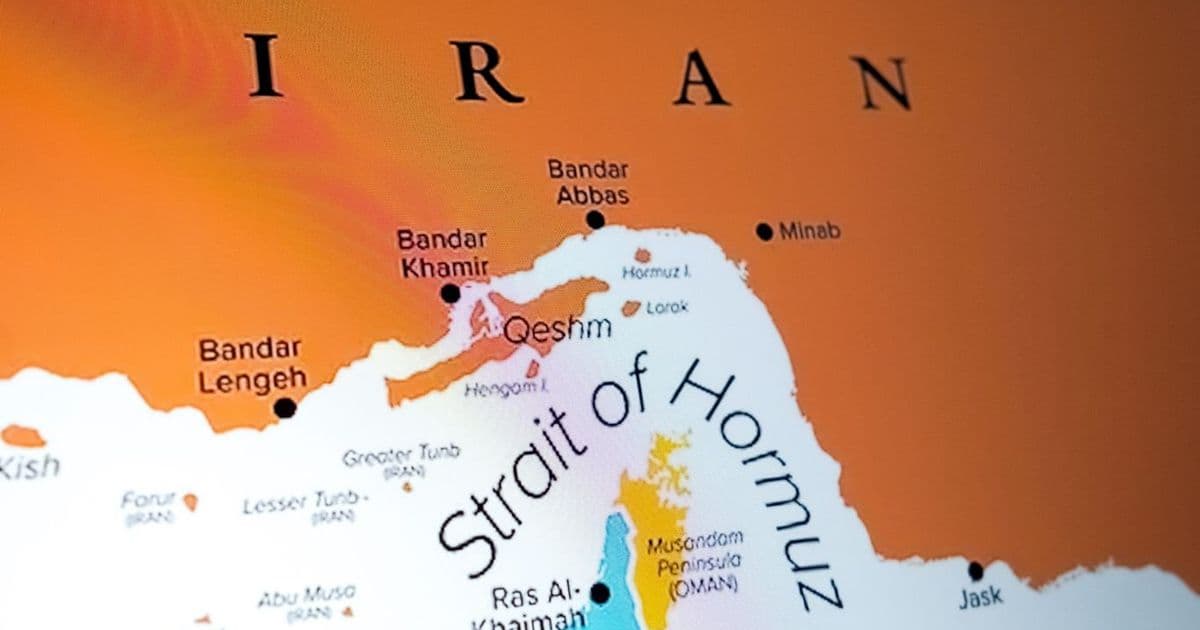
Iran's threat to close the Strait of Hormuz could trigger a global economic crisis, with oil prices potentially doubling and supply chains grinding to a halt.
The Strait of Hormuz, a narrow waterway between Iran and Oman, has become the world's most dangerous economic chokepoint as tensions escalate in the Middle East. This 21-mile-wide channel handles approximately 20% of global oil shipments and 25% of global liquefied natural gas (LNG) trade, making it the jugular vein of the world economy.
Economic Impact Would Be Immediate and Severe
If Iran were to block the strait, energy markets would face an unprecedented shock. Brent crude oil prices could surge from current levels around $80 per barrel to over $150 per barrel within days, according to energy analysts at Goldman Sachs. The International Energy Agency estimates that a complete closure could remove 21 million barrels per day from global markets - more than the entire oil consumption of the United States.
This price spike would cascade through every sector of the global economy. Transportation costs would skyrocket, affecting everything from airline tickets to grocery prices. Industries dependent on petroleum-based inputs, including plastics, chemicals, and pharmaceuticals, would face severe cost pressures. The economic fallout would likely push many countries into recession, with emerging markets particularly vulnerable due to their limited ability to absorb energy price shocks.
Global Supply Chains Would Grind to a Halt
Beyond energy markets, the disruption would devastate global supply chains. Container ships carrying everything from electronics to automobiles would need to reroute around Africa's Cape of Good Hope, adding 10-14 days to transit times and significantly increasing shipping costs. Maersk, the world's largest container shipping company, estimates that rerouting would add $1 million in fuel costs per voyage.
The semiconductor industry would face particular challenges, as Taiwan - responsible for 92% of the world's most advanced chip manufacturing - relies heavily on Middle Eastern oil to power its manufacturing facilities. Any disruption to chip supplies would cascade through the entire technology sector, affecting everything from smartphones to automobiles.
US Economy Would Face Dual Shocks
While the United States has reduced its dependence on Middle Eastern oil through domestic shale production, it would still face severe economic consequences. The US imports approximately 3 million barrels per day through the Gulf, and American allies in Europe and Asia would demand increased US oil exports, straining domestic supplies.
More critically, the US economy would suffer from the global economic slowdown that would inevitably follow. American companies derive roughly 40% of their revenue from international markets, and a global recession would devastate corporate profits. The stock market would likely experience a severe correction, with the S&P 500 potentially losing 15-20% of its value in the initial shock.
The Federal Reserve would face an impossible dilemma: combat inflation caused by energy prices while trying to support a weakening economy. This "stagflation" scenario - combining high inflation with economic stagnation - would be particularly challenging to address through monetary policy.
Geopolitical Ramifications
The closure would force the United States and its allies to respond militarily, potentially escalating into a broader regional conflict. The US Fifth Fleet, based in Bahrain, would likely attempt to clear the strait through a combination of naval operations and cyber attacks on Iranian military infrastructure.
However, Iran has spent years developing asymmetric capabilities specifically designed to threaten the strait. These include sophisticated naval mines, anti-ship missiles, and unmanned aerial vehicles. Iranian forces have also practiced swarming tactics using fast attack boats, which could overwhelm larger US vessels despite their superior firepower.
Alternative Supply Routes Would Prove Inadequate
While other oil-producing regions could partially offset the loss of Middle Eastern supply, the global oil market's limited spare capacity means prices would remain elevated even if the strait were reopened quickly. Saudi Arabia and the United Arab Emirates maintain pipelines that bypass the strait, but these have a combined capacity of only 6.5 million barrels per day - less than one-third of the strait's normal flow.
Strategic petroleum reserves held by the US and other countries could provide temporary relief, but these reserves total only about 1.5 billion barrels - enough to replace strait shipments for approximately 70 days at current consumption rates.
Long-term Economic Restructuring
A prolonged closure would accelerate the global transition away from fossil fuels, as countries seek to reduce their vulnerability to Middle Eastern supply disruptions. However, this transition would take years, and in the short term, the economic pain would be severe.
Renewable energy sources, while growing rapidly, cannot immediately replace oil in transportation and industrial applications. Electric vehicles represent only about 15% of the global car fleet, and aviation, shipping, and heavy industry remain almost entirely dependent on petroleum.
The crisis would also likely spur massive investments in energy infrastructure, including liquefied natural gas terminals, renewable energy projects, and strategic petroleum reserves. Countries would reassess their energy security strategies, potentially leading to a more fragmented and less efficient global energy market.
The Human Cost
Beyond the economic statistics lies a human toll that would affect billions of people. Higher energy prices would reduce disposable income for households worldwide, forcing difficult choices between necessities. Developing countries would face the prospect of fuel shortages and rolling blackouts, as they lack the financial resources to compete in a constrained energy market.
Food security would become a pressing concern, as modern agriculture depends heavily on petroleum-based fertilizers and diesel fuel for machinery and transportation. A sustained price shock could trigger food price inflation in regions already struggling with hunger and malnutrition.
The Strait of Hormuz represents far more than a maritime passage - it's the pressure point where global energy security, economic stability, and geopolitical tensions converge. Any conflict that disrupts this critical waterway would send shockwaves through the entire global economy, demonstrating how interconnected and vulnerable our modern economic system has become to regional conflicts in energy-producing regions.
Comments
Please log in or register to join the discussion