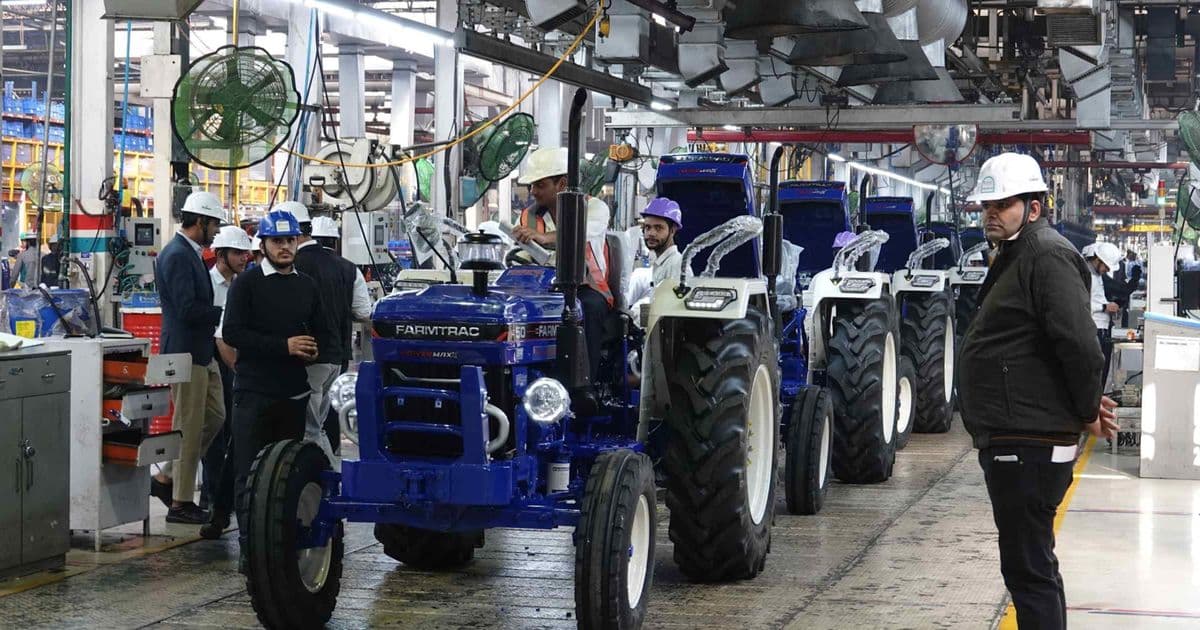
Japan's Kubota will build a fifth Indian production site for tractors and construction machinery, aiming to double its output in the country by 2030 and turn India into a launchpad for exports to Africa and beyond. The move reflects a broader recalibration by Japanese manufacturers shifting capacity toward lower-cost bases as tariffs and supply chain risks reshape where machinery gets built.
Kubota, the Osaka-based maker of tractors and construction equipment, plans to build a fifth production site in northern India, deepening a bet that the South Asian market can serve as both a high-volume demand center and a low-cost export base. According to Nikkei Asia, the new factory will produce tractors and construction machinery, with the company targeting a doubling of its Indian output by 2030 and expanded shipments to Africa and other emerging markets.
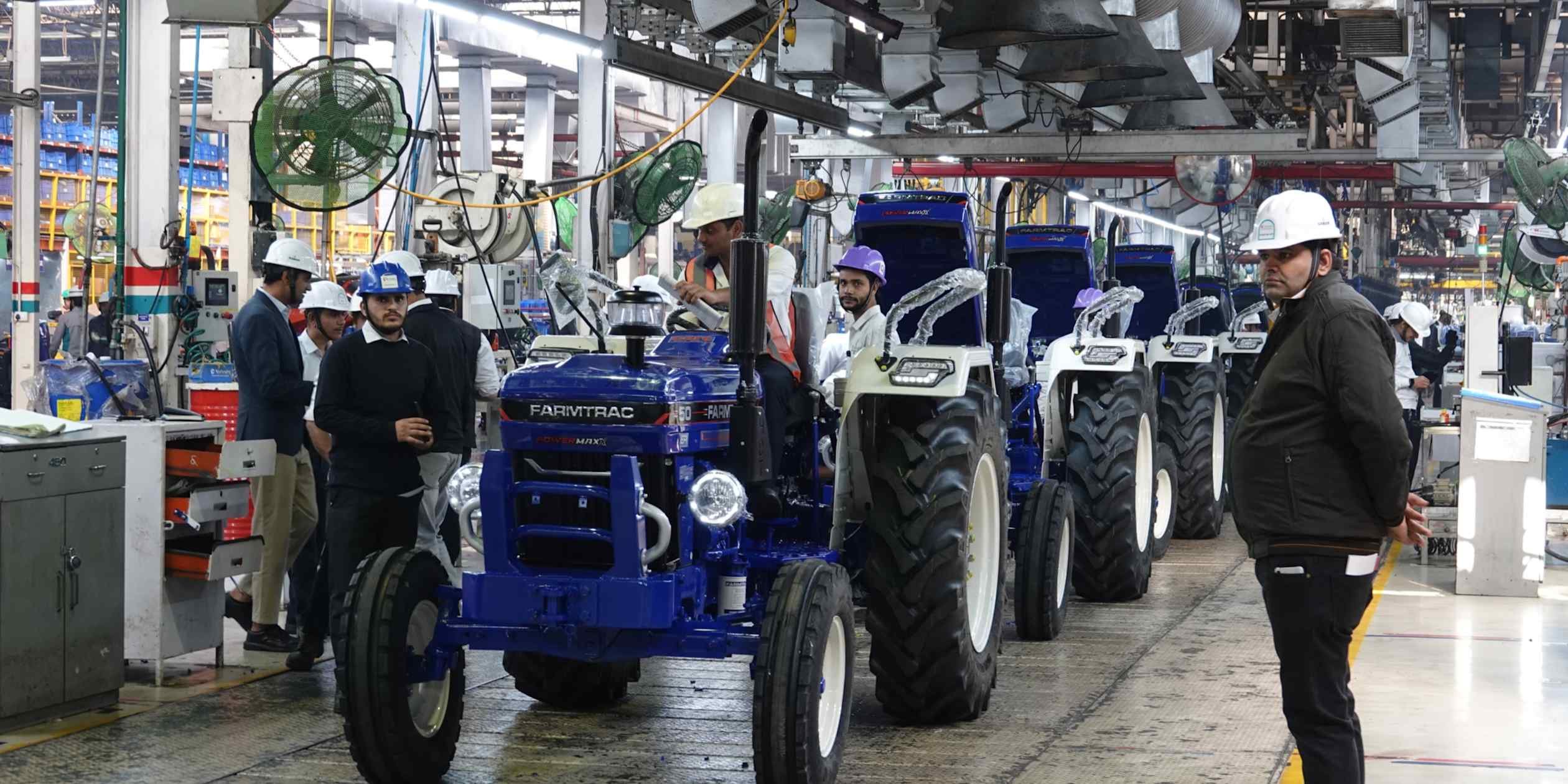
The decision adds physical capacity to a footprint Kubota has been assembling for years through Escorts Kubota, the listed Indian entity that produces inexpensive base-model tractors. India is the world's largest tractor market by unit volume, driven by millions of small and mid-size farms that favor affordable, durable machines over the high-horsepower equipment that dominates North America and Europe. For a manufacturer, that scale matters: building in India lets Kubota amortize fixed costs across enormous volumes while keeping unit prices low enough to compete against domestic leaders Mahindra & Mahindra and Tractors and Farmers Equipment.
The export logic
What distinguishes this expansion from a simple capacity addition is the export orientation. Kubota is explicitly positioning India as a manufacturing origin for Africa, where mechanization rates remain low and demand for entry-level tractors is rising as governments push to modernize agriculture. Producing in India rather than Japan compresses labor and component costs, and it places output closer to the growth markets Kubota wants to reach. Shipping a base-model tractor from a Chennai-area or northern Indian plant to East Africa is cheaper and faster than routing it from Japanese factories built for premium, domestically oriented lines.
The timing also reflects pressure on Japanese exporters from the US trade environment. Rivals Komatsu and Hitachi Construction Machinery have stuck with price increases despite an unfavorable US tariff ruling, signaling that the cost of selling Japan-built machinery into key markets is climbing. Diversifying production geography is one of the few structural levers manufacturers have to blunt that pressure. India offers lower input costs, a large engineering workforce, and a government actively courting industrial investment through public spending on rails, ports, and manufacturing infrastructure.
A wider repositioning at Kubota
The factory plan arrives during a period of internal change. Kubota recently reorganized its farm and construction machinery teams under new leadership, and the company has been re-evaluating its materials supply chains, including shipping routes that would avoid the Strait of Hormuz amid renewed instability in the region. Those moves point to a management team treating geography as a strategic variable rather than a fixed constraint, hedging against both trade barriers and logistics chokepoints.
For investors, the India push is a margin story as much as a growth story. Construction machinery and agricultural equipment are cyclical and capital-intensive businesses where cost position determines who survives downturns. By concentrating base-model production in India, Kubota can defend share in price-sensitive segments while reserving Japanese and other facilities for higher-margin specialized equipment. The risk is execution: a fifth plant adds complexity to a manufacturing network that must now coordinate output across multiple Indian sites, manage local supplier quality, and time capacity additions to demand that can swing sharply with monsoon cycles and commodity prices.
What it means
The expansion fits a pattern playing out across Japanese heavy industry. As the domestic market stagnates and trade frictions raise the cost of exporting finished goods from Japan, manufacturers are relocating volume production to large, lower-cost economies that double as demand centers. India, with its scale, policy support, and proximity to African and Middle Eastern growth markets, is increasingly the destination of choice. Kubota's fifth factory is a concrete data point in that shift, and the 2030 target gives the market a clear yardstick to measure whether the strategy delivers. If output doubles and African exports scale as planned, Kubota will have converted India from a low-cost assembly location into a genuine global supply hub, a transition that could reshape its cost structure well beyond the current decade.
Comments
Please log in or register to join the discussion