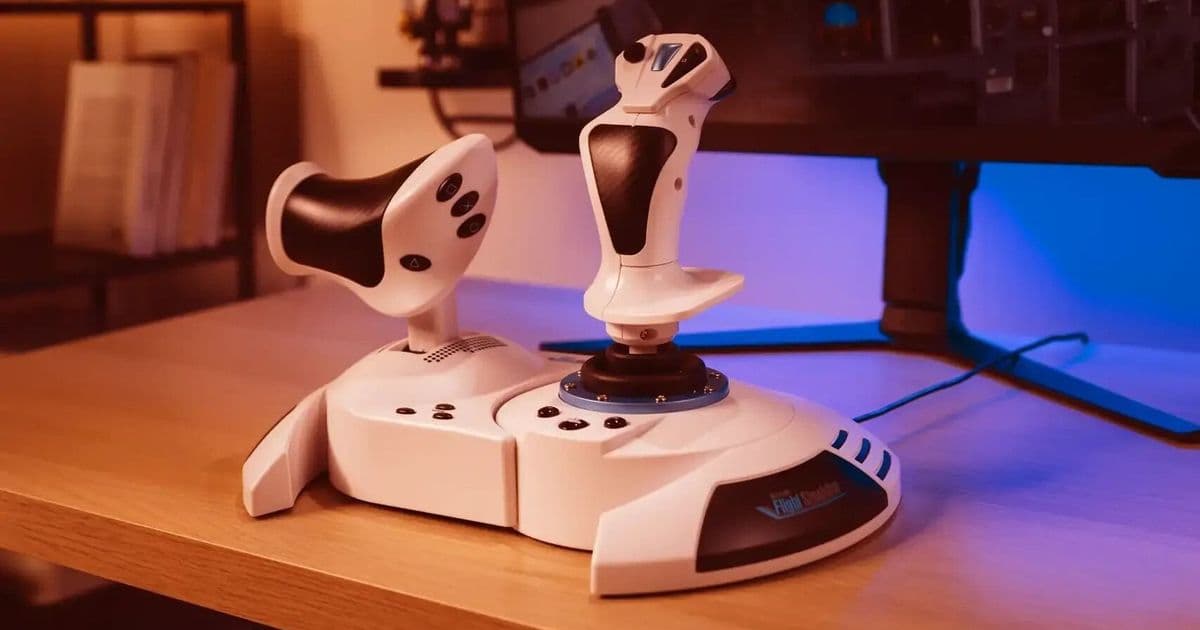
Thrustmaster's latest HOTAS keeps the familiar chassis but swaps the old 10-bit position sensor for a 16-bit unit, pushing resolution from 1,024 to 65,536 discrete steps. At $109.99 across PS5, PS4, and PC, it undercuts the outgoing Hotas 4 by $10 while adding two buttons and a dual-rudder system.
Thrustmaster has refreshed its entry-level flight stick lineup with the T.Flight Hotas 5 Microsoft Flight Simulator Edition, a Hands on Throttle and Stick controller priced at $109.99 on Amazon and available for PS5, PS4, and PC. The headline number here is not the price, though that matters, but the sensor resolution: Thrustmaster has moved from a 10-bit position sensor to a 16-bit unit, a jump that changes how the hardware reads your inputs at a fundamental level.
What changed under the shell
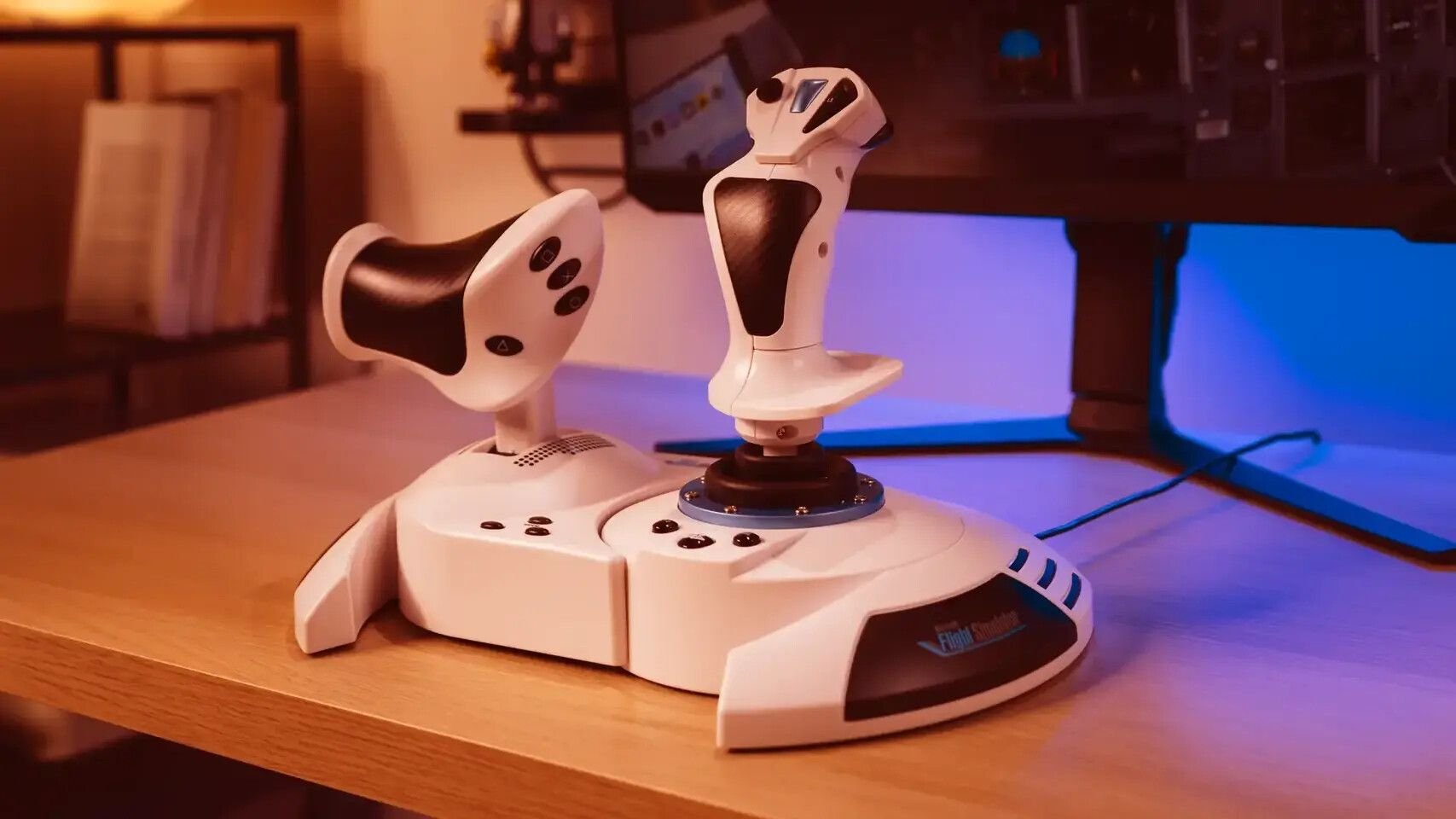
The chassis tells you almost nothing. Line up the Hotas X, Hotas 4, Hotas One, and the new Hotas 5 and they are effectively the same molded plastic. The meaningful change is the analog-to-digital pipeline. A 10-bit sensor encodes each axis into 2^10 values, or 1,024 distinct steps across the full travel of the stick. The 16-bit sensor in the Hotas 5 encodes 2^16 values, or 65,536 steps. That is a 64x increase in addressable positions per axis.
In practice, resolution determines the smallest input change the hardware can register before it rounds to the nearest step. On a 10-bit stick, fine control surfaces in a flight sim, trimming for level cruise, holding a glideslope, feeding in a few degrees of aileron, all snap to one of those 1,024 buckets. The result is the "notchy" feel that owners of older Thrustmaster sticks describe, where small wrist movements produce stepped rather than continuous output. Pushing to 65,536 steps shrinks each bucket by roughly 98%, which is why Thrustmaster is leaning on micro-adjustment responsiveness as the selling point.
Whether you perceive the full 16 bits is a separate question. Mechanical deadzones, spring centering tolerance, and the game's own input curve all sit between the sensor and your eyes. Realistically the upgrade buys headroom and a smoother ramp rather than 64x more usable precision, but the floor is unambiguously higher than the 10-bit generation.
Axes, buttons, and the dual-rudder setup
The Hotas 5 carries 5-axis control: pitch, roll, throttle, and two separate methods for yaw and rudder. The dual-rudder system gives you a choice of inputs. You can twist the joystick physically, the classic rudder-on-stick approach, or use a rocker paddle built into the back grip of the throttle handle. Both feed the same yaw axis, so flyers who dislike twisting a stick under load have a built-in alternative without buying extra hardware.
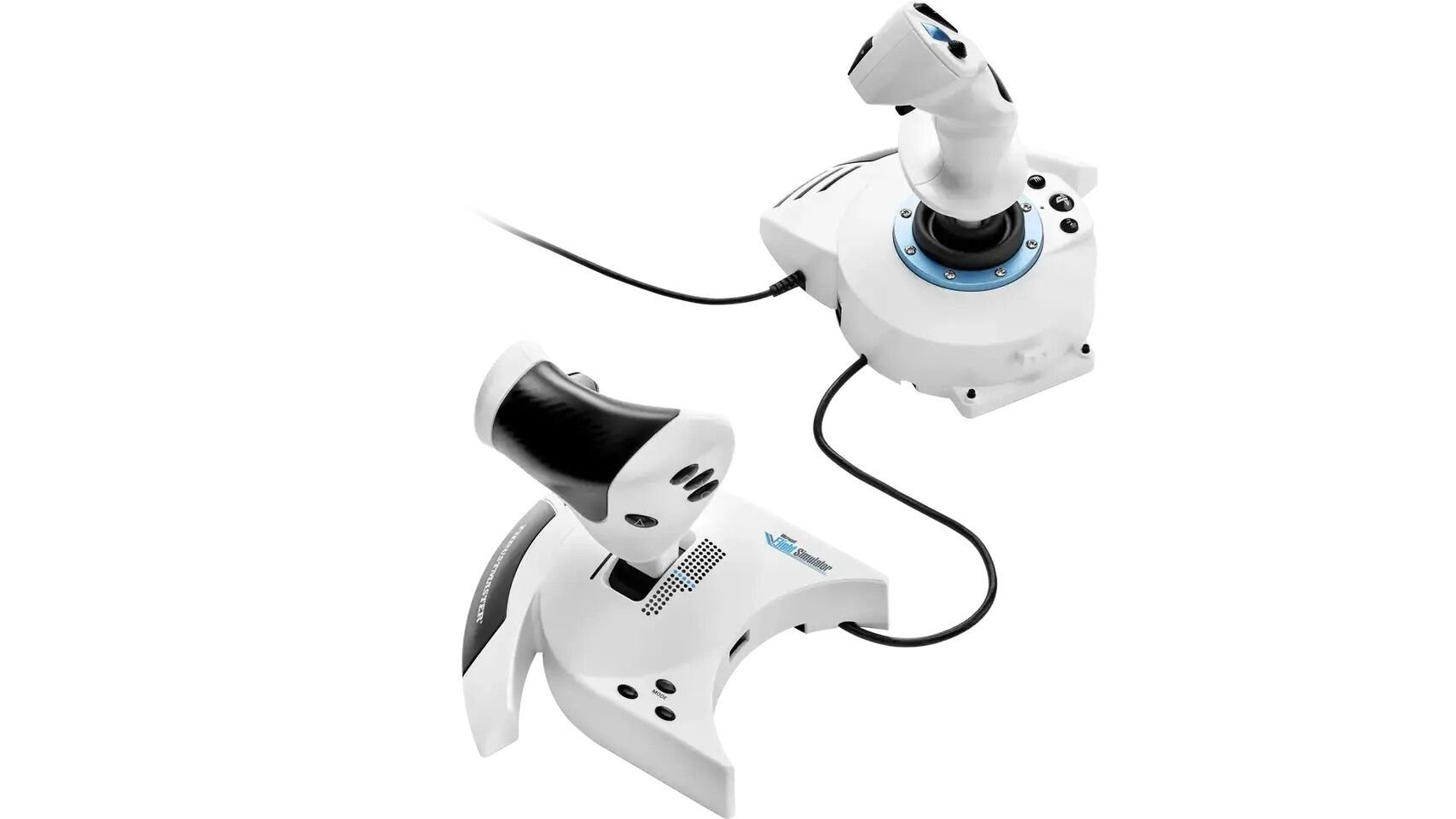
Button count rises to 14, up two from the prior model. Because the unit speaks to PlayStation consoles natively, those additional buttons map to DualShock and DualSense functions like Share, rather than being generic programmable inputs. The throttle and stick still detach into two separate modules connected by a cable, letting you space them across a desk or cockpit frame.
The stick ships with a pre-configured Microsoft Flight Simulator profile for plug-and-play setup, but every input remains fully remappable. That flexibility matters across aircraft types, since a glider, a helicopter collective, and a twin-engine turboprop each want different axis assignments and sensitivity curves. For users who want proper rudder authority, the Hotas 5 is compatible with Thrustmaster's separate T.Flight Rudder Pedals.
Pricing and where it sits
At $109.99 the Hotas 5 matches the Hotas One and comes in $10 below the outgoing Hotas 4. That positioning is the interesting part of the supply story. Thrustmaster is delivering a higher-bit sensor and two extra buttons while holding or cutting the price against the model it replaces, which suggests the 16-bit sensor and surrounding electronics have come down in cost enough to absorb at this tier. Sixteen-bit position sensors were once reserved for higher-end sticks; seeing one land in a sub-$110 console-friendly unit reflects how cheap precision analog sensing has become across the consumer peripheral market.
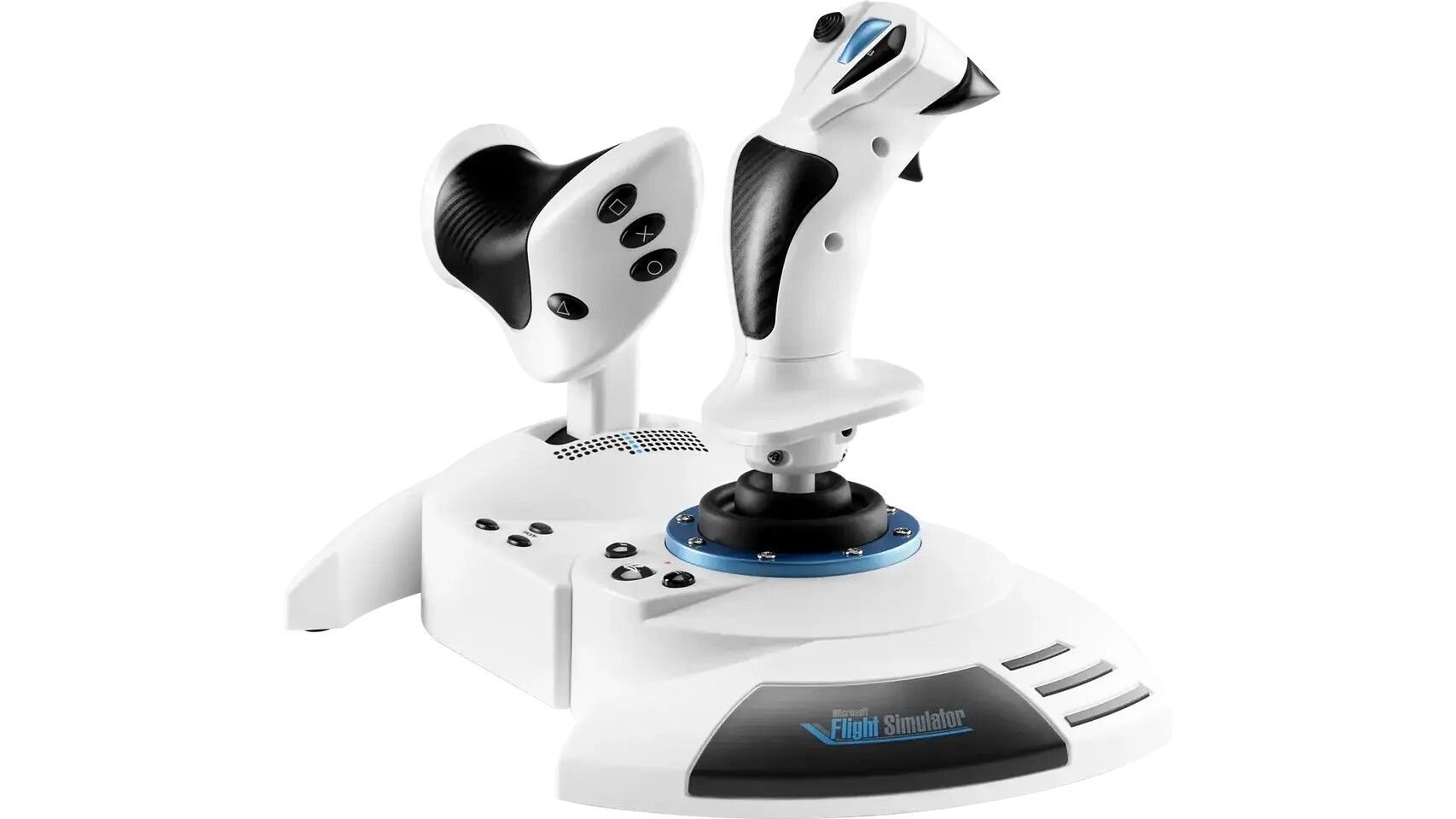
The cosmetic side is straightforward licensing. The Microsoft Flight Simulator logo replaces the usual Thrustmaster branding on the sides, and the black, white, and blue color scheme is tuned to sit next to a PS5. None of that affects performance, but it does signal who this is aimed at: console flight sim players and PC newcomers who want a working setup out of the box rather than a modular high-investment rig.
For anyone weighing an upgrade from a 10-bit Thrustmaster stick, the case rests almost entirely on the sensor. The shape, the detachable design, and the general feature set carry over, so the question is whether smoother analog input and two more buttons justify the swap. At a price that undercuts the model it replaces, the math is easier than it usually is for an incremental hardware refresh.
Comments
Please log in or register to join the discussion