Former Amazon Principal Engineer Steve Huynh shares insights from nearly 1,000 interviews, revealing how behavioral performance often outweighs technical skills in hiring decisions. Learn the four dimensions companies use to determine your level and how to prepare effectively.
Learnings from Conducting ~1,000 Interviews at Amazon: The Hidden Power of Behavioral Interviews
In the high-stakes world of tech hiring, candidates often spend 95% of their preparation time on technical skills while neglecting the behavioral aspects that frequently determine hiring outcomes. After conducting nearly 1,000 interviews at Amazon—including 600 as a Bar Raiser—former Principal Engineer Steve Huynh observed a consistent pattern: technically strong candidates often get rejected because of how they present themselves, not because of their technical capabilities.
What is a Bar Raiser?
At Amazon, a Bar Raiser is a specially trained interviewer whose job is to ensure that every hire raises the company's average talent level. Bar Raisers have veto power over candidates and conduct interviews across all levels, from interns to Principal Engineers. This unique position gave Huynh a comprehensive view of Amazon's hiring process and the patterns that emerged across thousands of interviews.
"The candidates who didn't get offers seldom failed because they lacked technical skill," Huynh explains. "They failed because of how they presented themselves."
The Three Key Learnings from ~1,000 Interviews
Learning #1: You're Over-Prepared for One Interview and Unprepared for the Other
Most candidates allocate their interview preparation time asymmetrically—95% to technical skills and 5% to behavioral aspects. This imbalance creates a significant blind spot because hiring decisions are often made in behavioral rounds, not technical ones.
Technical preparation follows a clear input/output relationship: more practice problems lead to better performance. Even if you encounter unfamiliar questions during an interview, a competent engineer can reason through them with the hints provided by interviewers.
Behavioral interviews work differently. When asked to "Tell me about a time something went wrong on a project and how you handled it," there are no hints to guide you. You either have a prepared story or you don't. The inability to articulate experiences clearly has led to countless rejections, even for technically strong candidates.
"The technical bar was met, but the hiring decision was made in the behavioral round," Huynh notes.
What to do:
- Reallocate your interview preparation time. If you plan to spend 80 hours preparing, move 10 hours from technical to behavioral preparation.
- Focus on developing clear, concise stories that demonstrate your capabilities and working style.
- Recognize that the returns on story preparation are exponential because most candidates neglect this area.
Learning #2: How You Deliver the Story Matters as Much as the Story Itself
Having impressive accomplishments is only half the battle. The other half is delivering them effectively. Huynh frequently observed what he calls the "ramble and stumble" phenomenon, where candidates start talking without a clear structure, backtrack to add forgotten details, and lose the interviewer by the time they reach the outcome.
This contrasts sharply with how professionals prepare for high-stakes presentations at work—spending hours on structure, flow, and key points, then rehearsing multiple times. Yet when it comes to interviews, where the stakes are arguably higher, many candidates wing it entirely.
"Most people hate watching themselves on camera. Do it anyway," Huynh advises. "Thirty minutes of this will up-level your interview performance much more than 20 hours of coding exercises could ever do."
What to do:
- Start with the two most common interview questions: "Tell me about yourself" and "Why do you want to work here?"
- Write down your answers, record yourself delivering them, and watch the recordings.
- Identify where you ramble, use filler words, or appear nervous.
- Repeat until your delivery sounds confident and clear.
- Apply this process to key stories from your career.
Learning #3: The Interview is an Audition for What It's Like to Work With You
Most candidates approach interviews as exams—trying to provide "correct" answers that will pass the test. This misunderstanding leads to polished, rehearsed answers with no rough edges and perfect endings where everything worked out.
Interviewers, however, aren't looking for correct answers. They're forming impressions of what it would be like to work with you daily. When Huynh asked candidates to describe how they handled conflicts, he wasn't waiting for the right answer—he was picturing them in Amazon's next planning meeting.
"The candidates who treated it like a test tried to figure out what I wanted to hear and then gave me that answer," Huynh recalls. "That's exactly the wrong approach."
What to do:
- Stop trying to determine what the interviewer wants to hear.
- Instead, think about what you'd want to hear from someone interviewing to join your team.
- Be honest and share how you actually think, including the parts that were difficult and the decisions that were close.
- Give your interviewer a preview of what it would be like to work with you on a tough problem.
What Companies Are Looking For During Behavioral Interviews
Companies use behavioral interviews to answer two critical questions:
- Do you fit with both the role and the company?
- If you do fit, at what level will you be most effective?
Understanding these dimensions helps you select appropriate stories and signal the right level.
Understanding Fit: Role and Company
Role Fit: Can you handle the specific challenges and working conditions of this position? Different roles require different capabilities. A backend role at a fast-growing startup demands different skills than a similar role at an established enterprise.
Company Fit: Will you thrive in the organization's environment? This goes beyond surface-level culture to assess whether your working style, decision-making approach, and values match how the company operates.
Companies detect fit through signals in your stories:
- Role Fit signals emerge from how you describe handling situations similar to what the role requires.
- Company Fit signals come from the choices you made and how you describe them.
The same story can send different signals to different companies. Spending three weeks perfecting a solution might demonstrate attention to quality at one company but analysis paralysis at another.
The Four Dimensions That Determine Your Level
Companies assess your level through four dimensions that appear in every story you tell:
Scope (Dimension #1)
Scope measures the number of people affected by your actions.
- Entry Level: Your work affects your own productivity and helps a few team members.
- Mid Level: Your work affects aspects of the team and shapes how it operates.
- Senior Level: Your work directly impacts your entire team and begins to influence at least one other team.
- Staff Level: Your work directly impacts at least two teams and begins to influence the broader organization.
- Principal Level: Your work affects many teams or changes how large parts of the organization operate.
Contribution (Dimension #2)
Contribution captures what you did, not what happened around you.
- Entry Level: You execute assigned work and take ownership of small pieces.
- Mid Level: You own complete solutions from problem to implementation while guiding others.
- Senior Level: You lead initiatives requiring coordination, especially when requirements are unclear.
- Staff Level: You lead cross-team initiatives and establish technical direction in ambiguous situations.
- Principal Level: You create organizational capabilities and establish new ways of working in highly ambiguous environments.
Impact (Dimension #3)
Impact shows what changed for the better as a result of your work.
- Entry Level: You improve your personal productivity and help the team work better.
- Mid Level: You improve team effectiveness in specific areas and influence team-wide practices.
- Senior Level: You transform how your entire team works and begin to impact beyond your team.
- Staff Level: You improve how multiple teams operate and drive organizational improvements.
- Principal Level: You create organizational capabilities and drive strategic changes measured in business outcomes.
Difficulty (Dimension #4)
Difficulty reflects the complexity of problems you've tackled, constraints faced, and trade-offs managed.
- Entry Level: You work on straightforward problems within established patterns.
- Mid Level: You work through challenges with more moving parts and less obvious solutions.
- Senior Level: You manage constraints and make technical decisions with team-level architectural implications.
- Staff Level: You manage competing trade-offs across multiple teams with significant technical and organizational complexity.
- Principal Level: You handle fundamental trade-offs between competing organizational needs or solve problems where no clear solution exists.
Researching What Companies Really Value
You'll never have perfect information about what a specific company values, but focused research reveals insights most candidates miss.
Start with your recruiter: Recruiters want you to succeed because their performance is based on accepted offers. They have insider information about interview formats, focus areas, and priorities. Ask directly:
- "What should I know about this company's current challenges?"
- "What competencies matter most for this role?"
- "Can you share any interview prep materials?"
Mine publicly available information:
- Engineering blogs: How do they describe their wins and problems?
- Tech talks and conferences: What topics do their engineers present?
- Open source contributions: What they choose to open source reveals priorities.
- Technical documentation: The existence and quality of public documentation shows their commitment to supporting users and teams.
- Status pages and postmortems: Companies that publish detailed postmortems demonstrate a culture of learning from failure.
Look for patterns in discussions: On platforms like Glassdoor, Blind, and Reddit, look for consistent themes across multiple posts. Individual rants are less valuable than patterns that reveal what behaviors the company rewards or discourages.
Talk to current employees: If you know someone at the company, ask specific questions:
- "When someone gets promoted here, what do they do to earn it?"
- "What behaviors get negative feedback?"
- "How does the team make decisions when there's disagreement?"
- "What surprised you most about working here?"
Putting It All Together
The goal isn't just to get any offer—it's to get the right offer at the right level at the right company. Understanding fit helps you know which of your experiences will connect most with what the company values. Understanding level helps you position your stories appropriately.
The same project can demonstrate entry-level execution, mid-level ownership, or senior-level leadership depending on your actual contribution and how you frame it. Get this wrong and you'll either get rejected for overreaching or down-leveled for not properly communicating your capabilities.
The Hidden Power of Behavioral Interviews
After conducting nearly 1,000 interviews, Huynh's lesson is simple: "The people who get hired are the ones who can walk into a room and tell a clear story. This story is about their work and their capabilities, and makes the interviewer think, 'I want to work with that person.'"
Being able to tell this story is a skill that improves with practice. Most people never practice it because they don't think of it as something you can prepare for, but you can. And a little preparation here goes further than almost anything else you can do for your career.
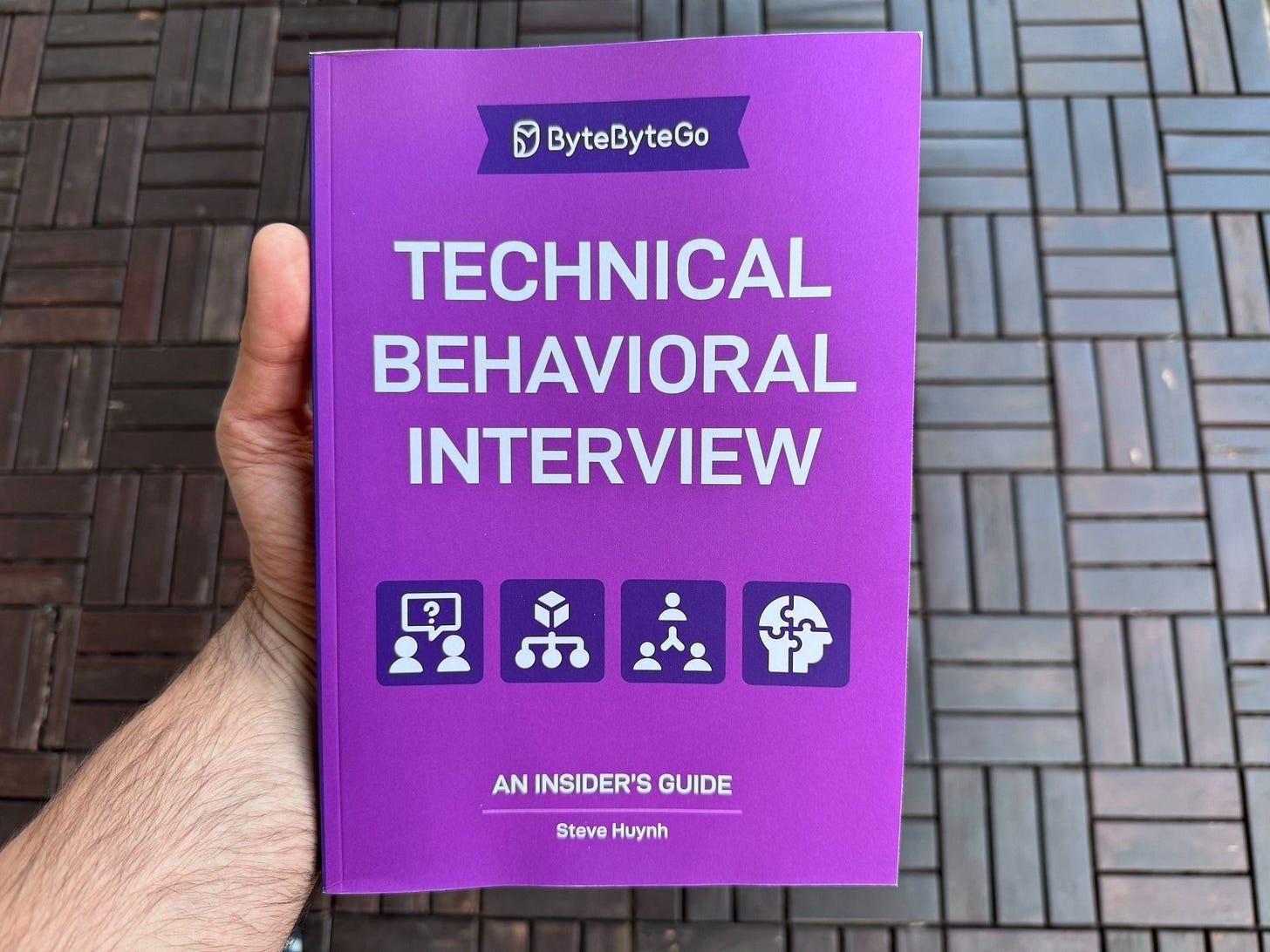
For those looking to dive deeper into these concepts, Huynh's book "Technical Behavioral Interview: An Insider's Guide" provides comprehensive coverage of high-signal storytelling, key competencies, and what interviewers typically see as signals, yellow flags, and red flags.
As hiring processes continue to evolve, especially with the emergence of AI-assisted interviews, the behavioral component remains crucial. Companies need to assess not just what you can do, but how you work, think, and collaborate. Mastering the art of behavioral interviews gives you a significant advantage in a competitive job market.
Comments
Please log in or register to join the discussion