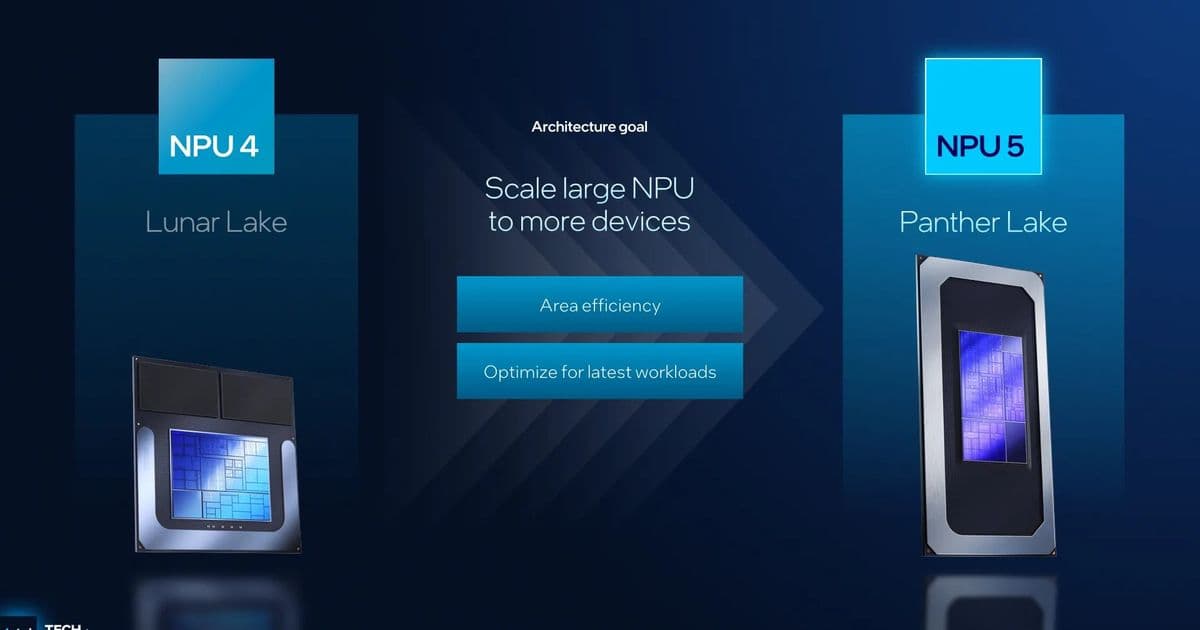
Linux 7.1 will introduce resource limits for Intel NPUs to prevent single programs from monopolizing AI acceleration hardware.
Linux 7.1 will introduce resource limits for Intel NPUs to prevent single programs from monopolizing AI acceleration hardware. The Intel IVPU accelerator driver is implementing safeguards that restrict non-root user-space programs to half the available NPU resources, while root programs retain full access.
The IVPU driver will limit non-root applications to 64 contexts and 127 doorbells, compared to the full 128 contexts and 255 doorbells available to root programs. This change addresses potential denial-of-service scenarios where a single application could consume all NPU resources, preventing other programs or users from accessing Intel's neural processing units.
According to the developer notes, the primary motivation is to ensure fair resource allocation across multiple applications and users. Without these limits, a single program could theoretically occupy all 128 available contexts and 255 doorbells, effectively blocking other software from utilizing the AI acceleration capabilities of Intel NPUs.
Currently, Intel NPU usage under Linux remains limited, with OpenVINO being the primary known user of these accelerators. The developer notes that broader software support for Intel NPUs on Linux is still developing, and there isn't yet widespread adoption of these AI acceleration features.
However, the IVPU driver is being prepared for future scenarios where multiple applications and users will want to leverage NPU resources simultaneously. This forward-looking approach ensures that when NPU usage becomes more common - whether through Intel NPUs or AMD Ryzen AI NPUs - the system will have built-in protections against resource monopolization.
The resource limit implementation was submitted through the drm-misc-next pull request, which includes new DRM and accelerator driver changes being prepared for the Linux 7.1 merge window scheduled for next month.
This change reflects a broader trend in kernel development where hardware accelerators are being treated with the same resource management considerations as traditional computing resources. As AI acceleration becomes more prevalent in consumer and enterprise hardware, ensuring fair access to these specialized processors will become increasingly important for system stability and multi-user environments.
The distinction between root and non-root access also highlights the ongoing balance between system flexibility and security. By maintaining full NPU access for root programs while limiting non-privileged applications, the kernel provides administrators with the ability to run intensive AI workloads while protecting regular users from resource starvation.
For developers working with Intel NPUs, this change means that applications running without root privileges will need to be designed with resource sharing in mind. The 50% resource cap for non-root programs may require optimization strategies or fallback mechanisms for applications that previously assumed exclusive access to NPU hardware.
As Linux continues to evolve as a platform for AI and machine learning workloads, these kinds of resource management features will likely become more sophisticated, potentially including dynamic allocation, priority-based scheduling, and more granular control over accelerator resources.
Comments
Please log in or register to join the discussion