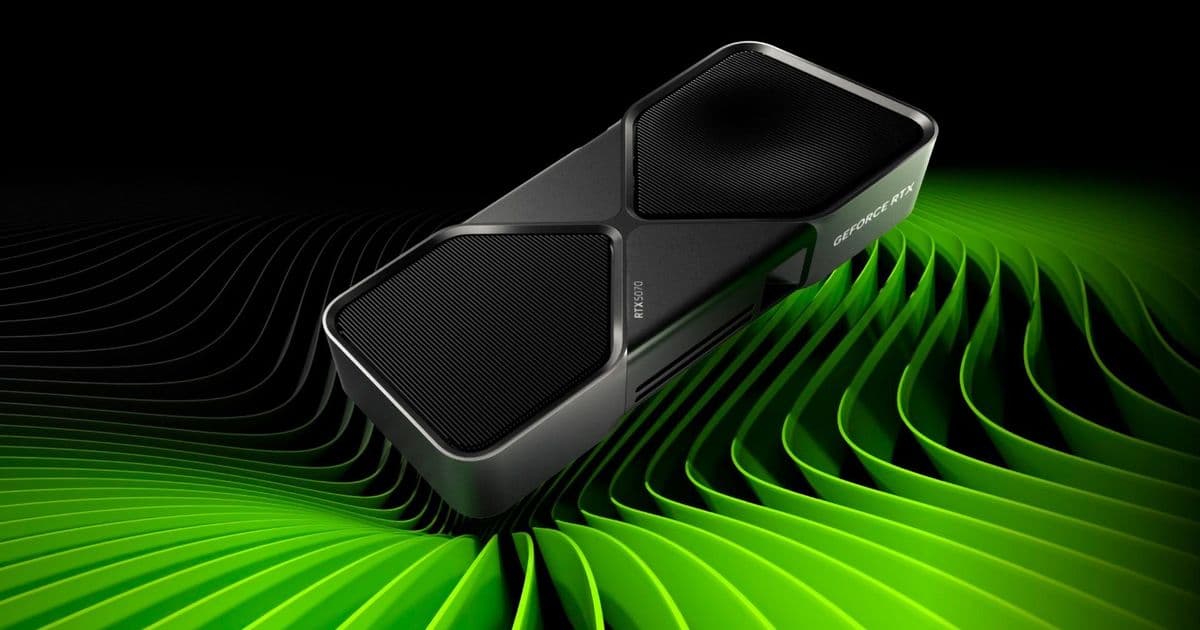
Nvidia reportedly developing unconventional RTX 5050 with 9GB GDDR7 on 96-bit bus and RTX 5060 using cut-down GB205 GPU as memory shortages force creative solutions.
The global semiconductor shortage has reached a critical point where even industry leaders are forced to make unconventional decisions. According to reliable leaker @Zed__Wang, Nvidia is reportedly working on two unusual GPU configurations that highlight the severity of current supply chain constraints: an RTX 5050 with 9GB of GDDR7 memory on a 96-bit bus, and an RTX 5060 featuring a cut-down GB205 GPU.
The RTX 5050's Unusual Configuration
The most surprising revelation is the RTX 5050's memory configuration. Instead of following the traditional path of using 128-bit interfaces with 12GB VRAM, Nvidia appears to be opting for a 96-bit bus with 9GB of GDDR7 memory running at 28 Gbps.
This decision represents a significant departure from conventional GPU design. The leaker notes that Nvidia "could give you a 5050/5060 128-bit 12G with the new 3G GDDR7 dies," but has chosen not to pursue this more straightforward approach.
Technical Analysis:
- Current RTX 5050: 8GB GDDR6 at 20 Gbps on 128-bit bus = 320 GB/s bandwidth
- Rumored RTX 5050: 9GB GDDR7 at 28 Gbps on 96-bit bus = 336 GB/s bandwidth
The 5% bandwidth increase might seem modest, but the real story is about component availability rather than performance gains. The move to GDDR7 represents a generational upgrade, while the 96-bit bus width is a curious choice that hasn't been seen in desktop Nvidia GPUs since the RTX 3050 in 2024.
The RTX 5060's GPU Repurposing
Equally interesting is the RTX 5060's reported configuration. Due to a shortage of GB206 dies (which power the RTX 5060 Ti), Nvidia appears to be repurposing defective GB205 dies from the RTX 5070 production line.
Configuration Breakdown:
- Base RTX 5070: GB205 GPU with 6,144 CUDA cores, 192-bit bus
- Rumored RTX 5060: Cut-down GB205 with 3,840 CUDA cores, 128-bit bus
The leaker suggests that AIB partners will need to design new PCBs to accommodate the GB205 GPU, which typically requires an 8-pin power connector. This represents a significant engineering effort for what amounts to a stopgap solution.
Market Context and Implications
The timing of these revelations is particularly telling. The RTX 5050 has been one of the few GPUs maintaining price stability in recent months, with only a $10 increase. The RTX 5060 has shown similar stability, suggesting that Nvidia is already managing supply constraints in the mid-range segment.
These unconventional configurations point to a broader industry challenge. When one of the world's largest semiconductor companies is forced to:
- Use non-standard bus widths
- Repurpose defective dies
- Create unusual memory configurations
It indicates that the component shortage is affecting even the most resourceful manufacturers.
Technical Considerations
The 96-bit bus width on the RTX 5050 is particularly noteworthy. While it provides adequate bandwidth for 1080p gaming, it represents a compromise that could limit the card's performance in memory-bandwidth-intensive scenarios. However, the move to GDDR7 helps mitigate some of these limitations.
For the RTX 5060, using a cut-down GB205 raises questions about binning efficiency and yield rates. If Nvidia is resorting to using defective dies, it suggests that either the RTX 5070 is selling exceptionally well (consuming most good dies) or that overall GPU production is facing significant constraints.
Industry-Wide Impact
These developments have several implications for the broader GPU market:
- Supply Chain Fragility: Even major players like Nvidia are vulnerable to component shortages
- Product Strategy Shifts: Traditional product segmentation may become less rigid
- AIB Partner Challenges: Custom PCB designs increase costs and complexity for board partners
- Consumer Impact: Potential for unusual product offerings that may not align with traditional performance expectations
Looking Ahead
The semiconductor industry has been warning about supply chain vulnerabilities for years, but these RTX 5050 and 5060 configurations represent tangible evidence of those warnings becoming reality. As one of the companies that contributed to the current component shortage through massive AI GPU orders, Nvidia now finds itself subject to the same constraints affecting the broader market.
Whether these configurations will actually reach production remains to be seen, but their very consideration speaks volumes about the current state of the semiconductor industry. The days of predictable product launches and straightforward component sourcing appear to be giving way to a new era of creative engineering solutions driven by necessity rather than innovation.
For gamers and PC builders, this means being prepared for more unconventional product offerings and potentially limited availability of traditional configurations. The GPU market is entering uncharted territory, where supply constraints may dictate product design as much as performance requirements.
Comments
Please log in or register to join the discussion