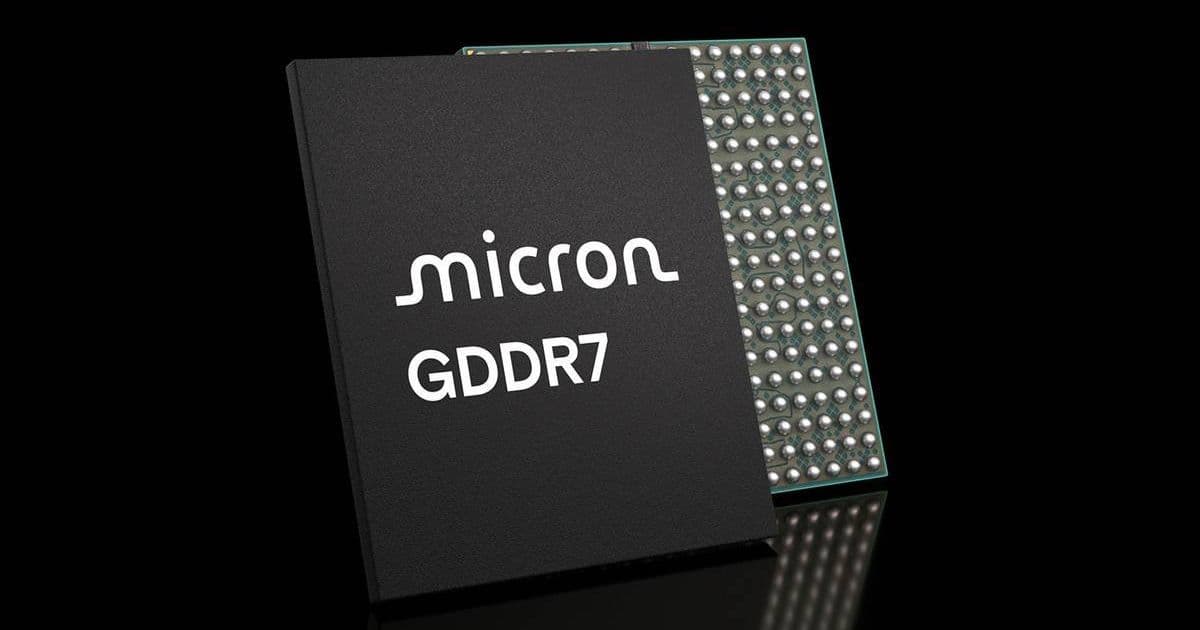
Micron has exited the consumer memory market but is now heavily promoting GDDR7 RAM's importance for gaming and AI workloads.
Micron, once a major player in consumer memory modules, has officially exited the retail RAM market. The company now focuses exclusively on B2B and specialized components, including its latest GDDR7 graphics memory technology. This strategic pivot marks a significant shift in the memory industry landscape, as one of the "Big Four" memory manufacturers redirects its resources toward high-performance computing applications.
The End of Micron's Consumer Memory Era
For years, Micron was a household name among PC builders and upgraders, offering Crucial-branded DDR4 and DDR5 modules that competed with products from Kingston, Corsair, and G.Skill. However, the economics of commodity DRAM manufacturing proved challenging. The razor-thin margins on consumer memory, combined with intense price competition and the capital-intensive nature of semiconductor fabrication, made this segment less attractive for a company of Micron's scale.
The decision to exit consumer memory wasn't sudden. Industry observers noted Micron gradually reducing its retail presence over the past two years, eventually discontinuing its consumer DDR5 product lines entirely. This move aligns with similar strategic shifts by other major manufacturers who are increasingly focusing on specialized, high-margin memory solutions rather than competing in the saturated consumer market.
GDDR7: The New Focus
With consumer memory behind it, Micron is now heavily promoting GDDR7 as the future of graphics memory. This next-generation technology offers several key advantages over its predecessor, GDDR6:
- Higher Bandwidth: GDDR7 supports data rates up to 32 Gbps per pin, compared to GDDR6's 18-20 Gbps
- Improved Efficiency: Better power efficiency per bit transferred
- Enhanced Cooling: Optimized for the thermal demands of modern GPUs
- AI Acceleration: Designed to handle the massive data throughput requirements of machine learning workloads
The timing is strategic. As gaming PCs push toward 4K and even 8K resolutions, and as AI applications become more demanding, the need for faster, more efficient memory has never been greater. GDDR7 positions Micron to capture a significant share of the high-performance graphics and AI accelerator markets.
Why This Matters for Gamers and Developers
For PC gamers, the shift to GDDR7 means future graphics cards will be able to handle more complex scenes, higher resolutions, and more demanding ray-tracing effects. The increased memory bandwidth directly translates to better gaming performance, particularly at higher resolutions where memory bandwidth becomes a bottleneck.
Game developers will also benefit from GDDR7's capabilities. The technology enables more detailed textures, larger game worlds, and more sophisticated physics simulations. As games continue to evolve toward photorealistic graphics and complex simulations, the underlying memory technology becomes increasingly critical.
The Broader Industry Impact
Micron's pivot reflects broader trends in the semiconductor industry. The memory market is bifurcating into commodity DRAM for mainstream applications and high-performance memory for specialized uses. Companies are choosing where to compete based on their manufacturing capabilities and market opportunities.
This shift also highlights the growing importance of graphics memory in the overall computing ecosystem. While traditional DDR memory serves general-purpose computing needs, graphics memory like GDDR7 is becoming essential for the most demanding applications, from gaming to professional visualization to AI training.
What's Next for Micron
The company's focus on GDDR7 and other specialized memory technologies suggests a long-term strategy centered on high-value segments. This includes not just graphics memory but also HBM (High Bandwidth Memory) for AI accelerators, automotive memory solutions, and enterprise storage products.
For consumers, this means fewer options in the retail RAM market but potentially better performance in the devices that do use Micron's memory. The company's exit from consumer memory also opens opportunities for other manufacturers to expand their retail presence, potentially leading to increased competition in that segment.
Looking Ahead
As GDDR7 begins appearing in next-generation graphics cards and AI accelerators, Micron's strategic pivot will be put to the test. The success of this technology in the market will determine whether the company's bet on specialized memory over commodity DRAM was the right move.
For now, Micron is positioning itself as a key enabler of the next generation of computing experiences, from immersive gaming to advanced AI applications. Whether this strategy pays off remains to be seen, but one thing is clear: the company that once made memory for everyone is now focused on making memory for the most demanding applications in tech.
The transition from consumer memory to specialized graphics memory represents more than just a product line change—it's a fundamental shift in how Micron views its role in the technology ecosystem. As computing continues to evolve toward more specialized, performance-intensive applications, this kind of strategic focus may become increasingly common among semiconductor manufacturers.
Comments
Please log in or register to join the discussion