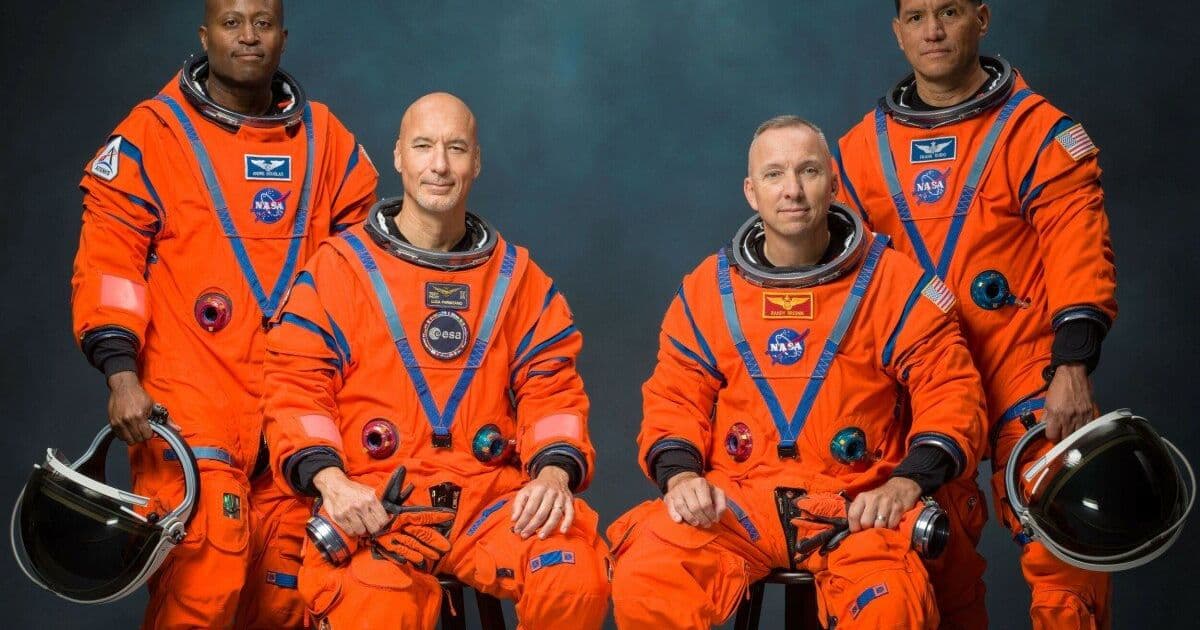
NASA has assigned four astronauts to Artemis III, a mission that no longer goes to the Moon and may not have working landers by its late-2027 target. The crew announcement lands as Blue Origin rebuilds from a launchpad explosion and SpaceX still hasn't reached orbit.
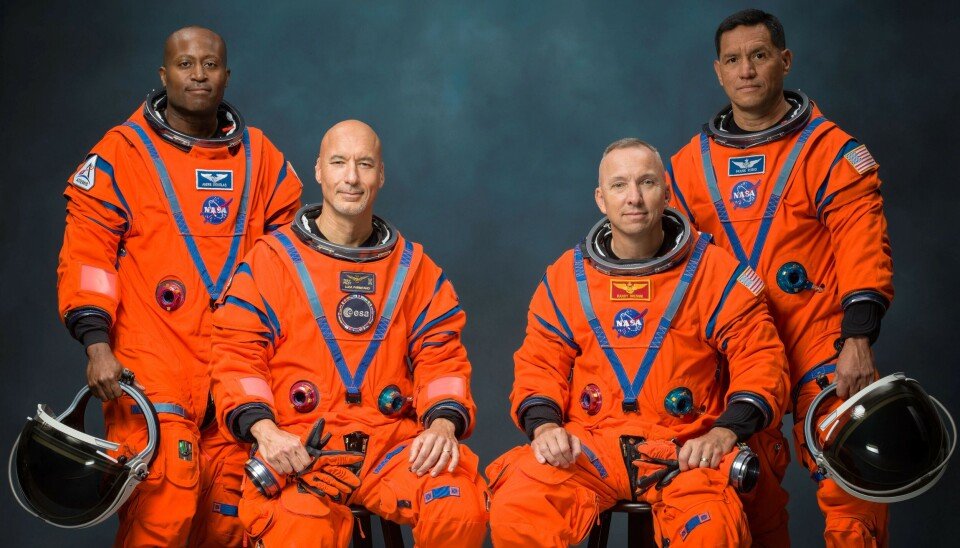
NASA put names to the Artemis III mission this week, and the most interesting thing about the announcement was everything it left unresolved. The agency assigned Space Shuttle veteran Randy Bresnik as commander, the European Space Agency's Luca Parmitano alongside him, and NASA astronauts Frank Rubio and Andre Douglas as mission specialists, with Bob Hines on backup. A crew is a tangible thing. The spacecraft they are supposed to fly is not, at least not yet.
The pattern here is worth tracing, because Artemis III has quietly become a different mission than the one originally sold. It was meant to land humans on the lunar surface for the first time since Apollo 17. It is now a low Earth orbit rehearsal for human landing technology from Blue Origin and SpaceX, closer in spirit to Apollo 9's shakedown of the lunar module than to a Moon landing. NASA's Artemis program pages still frame this as forward progress, and in a narrow sense it is. But the repurposing also solves a politically uncomfortable problem: Orion and the Space Launch System may actually be readier than the landers they were built to carry. Reframe the mission around testing landers in Earth orbit and the schedule mismatch stops being an embarrassment and starts being the plan.
What the mission profile actually asks for
The official line is that Artemis III will test "one or both" commercial landers, and NASA walked through a profile that leans on both providers. The crew would first rendezvous with Blue Origin's Blue Moon pathfinder, which according to NASA's Jeremy Parsons can loiter in orbit for as long as 90 days. Blue Origin's John Coulouris described docking, opening the hatch, astronauts entering the vehicle, and possibly a trial run at donning lunar spacesuits. Docked operations would run roughly two days.
After that, Orion detaches and waits for SpaceX's test article: a Starship fitted with the docking hardware intended for the lunar lander variant. That docking is expected to last about a day. On paper it is a clean demonstration of both architectures in a single flight.
The paper and the hardware are not in the same place. SpaceX has yet to put a Starship into orbit, and on the specific question of Artemis III lander readiness it appears to be behind Blue Origin. That is a striking inversion for anyone who has followed the program's public narrative, where Starship's HLS contract was the headline and Blue Origin the late entrant. The Starship development updates continue to show rapid iteration on flight tests, but iteration on a suborbital test campaign is not the same as a crew-rated orbital docking target.
The counter-evidence is loud right now
Blue Origin's position carries its own asterisk. Its New Glenn rocket, the vehicle needed to launch the Blue Moon lander, exploded on the launchpad in recent weeks. CEO Dave Limp insisted the company "will fly again before the end of this year," which is the expected thing for a CEO to say after losing a vehicle. Returning a rocket to flight after a pad anomaly is rarely a matter of months, and Artemis III is targeting the second half of 2027. Parsons told reporters NASA is "confident that New Glenn will be ready," while also confirming that alternatives are under consideration. Those two statements coexisting in the same briefing tells you more than either does alone.
The alternatives illustrate how constrained the options are. The lander needs a heavy-lift rocket. Falcon Heavy can lift heavy payloads, but Blue Origin's BE-7 engines burn liquid hydrogen, and adapting Falcon Heavy's plumbing for that propellant is not a weekend swap. By NASA's own framing, the modifications could take about as long as simply returning New Glenn to flight. When your backup plan costs roughly what your primary plan costs to fix, you do not really have a backup plan. You have two versions of the same wait.
Why naming a crew now is a signal, not a guarantee
There is a sentiment among longtime space watchers that crew announcements function partly as commitment devices. Putting four named human beings on a mission patch creates institutional and public pressure to keep the schedule alive, even when the underlying hardware timelines are soft. That is not cynicism so much as observation. The Artemis II crew was named well ahead of its flight for similar reasons, and the broader Artemis II mission overview has anchored a lot of program messaging since.
The more skeptical read is that NASA is sequencing announcements to maintain momentum during a stretch where the contractors are the variable it cannot control. Orion and SLS are government-managed and relatively predictable. The landers are commercial, fixed-price, and currently the riskiest items on the board. Naming a crew is something NASA can do entirely on its own schedule. Building a Starship that reaches orbit or a New Glenn that survives ignition is not.
None of this means Artemis III is doomed, and the orbital-rehearsal framing is arguably the honest version of where the program is. Testing lander docking and crew procedures in Earth orbit before risking a lunar descent is sound engineering, the same logic that made Apollo 9 worth flying. The open question is whether a mission designed around two commercial landers can hold its late-2027 date when one provider just lost its launch vehicle and the other has not yet flown to orbit. NASA named the people. The schedule still belongs to the rockets, and the rockets are not answering.
Comments
Please log in or register to join the discussion