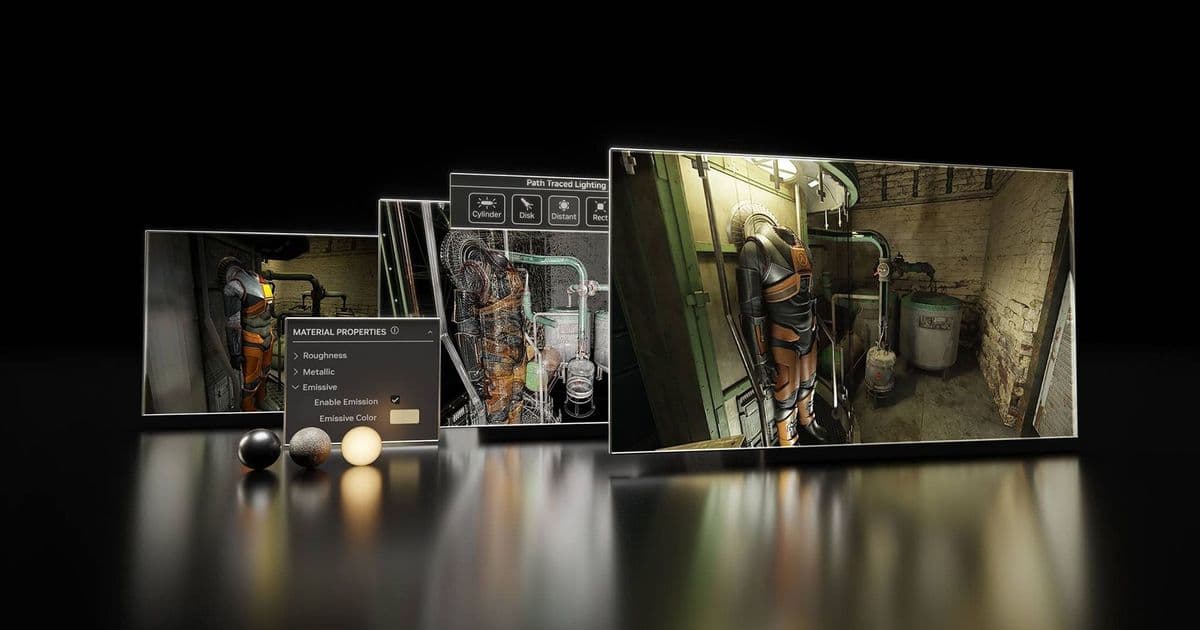
Nvidia cut the Half-Life 2 RTX demo from 80GB to 50GB and gave modders new tools for geometry cleanup and agent-assisted remastering.
Nvidia released RTX Remix 1.5, adding RTX IO compression, Smooth Normals, and agent instruction files that shorten asset packaging work for path-traced game remasters.
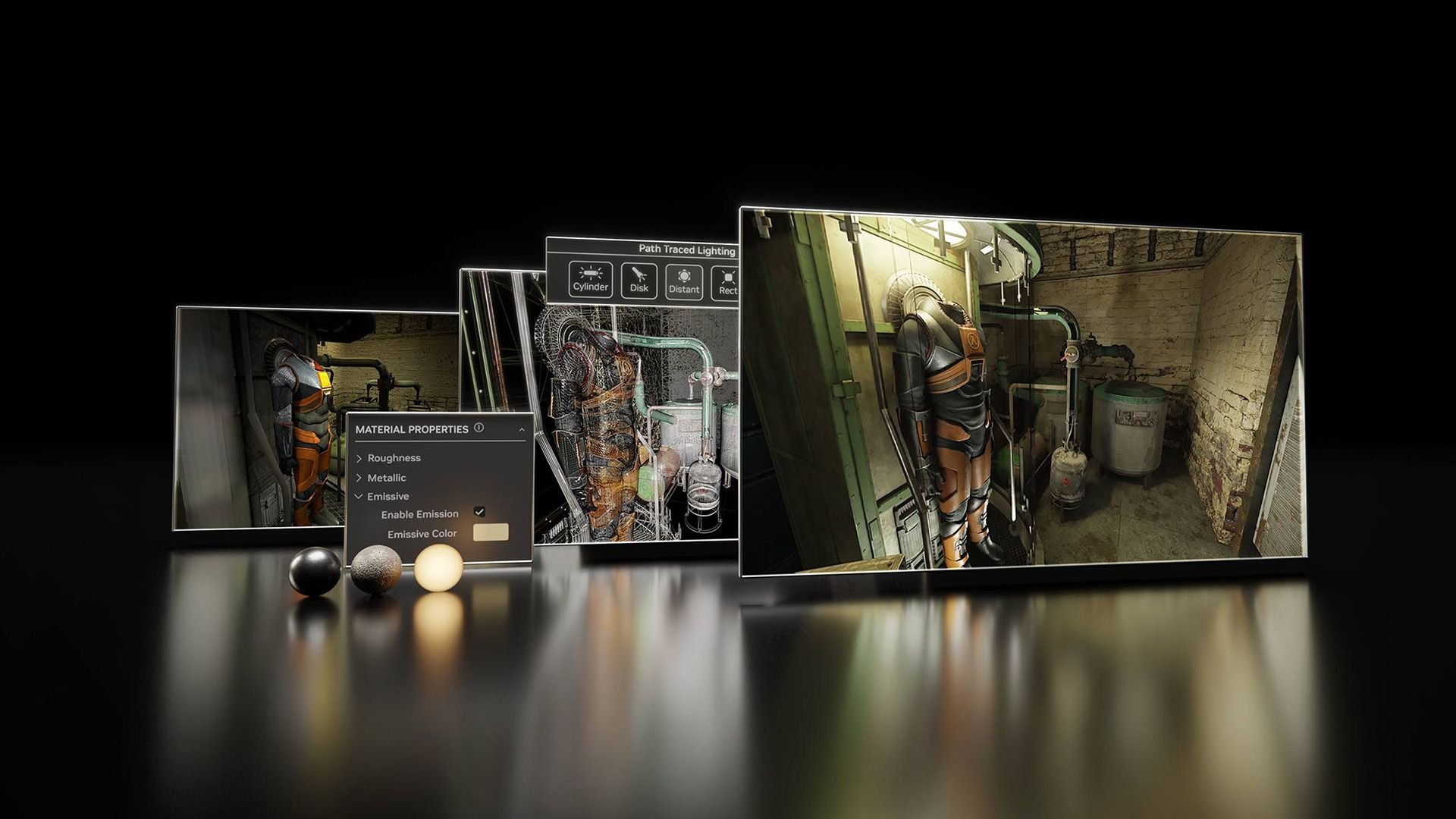
The update targets a core problem in RTX Remix projects: file size. Modders who rebuild older DirectX 8 and DirectX 9 games with path tracing, higher-resolution textures, and new materials often ship large asset packs because RTX Remix keeps the original game files in place. The runtime captures the scene, suppresses legacy assets, and layers the remastered replacements during play.
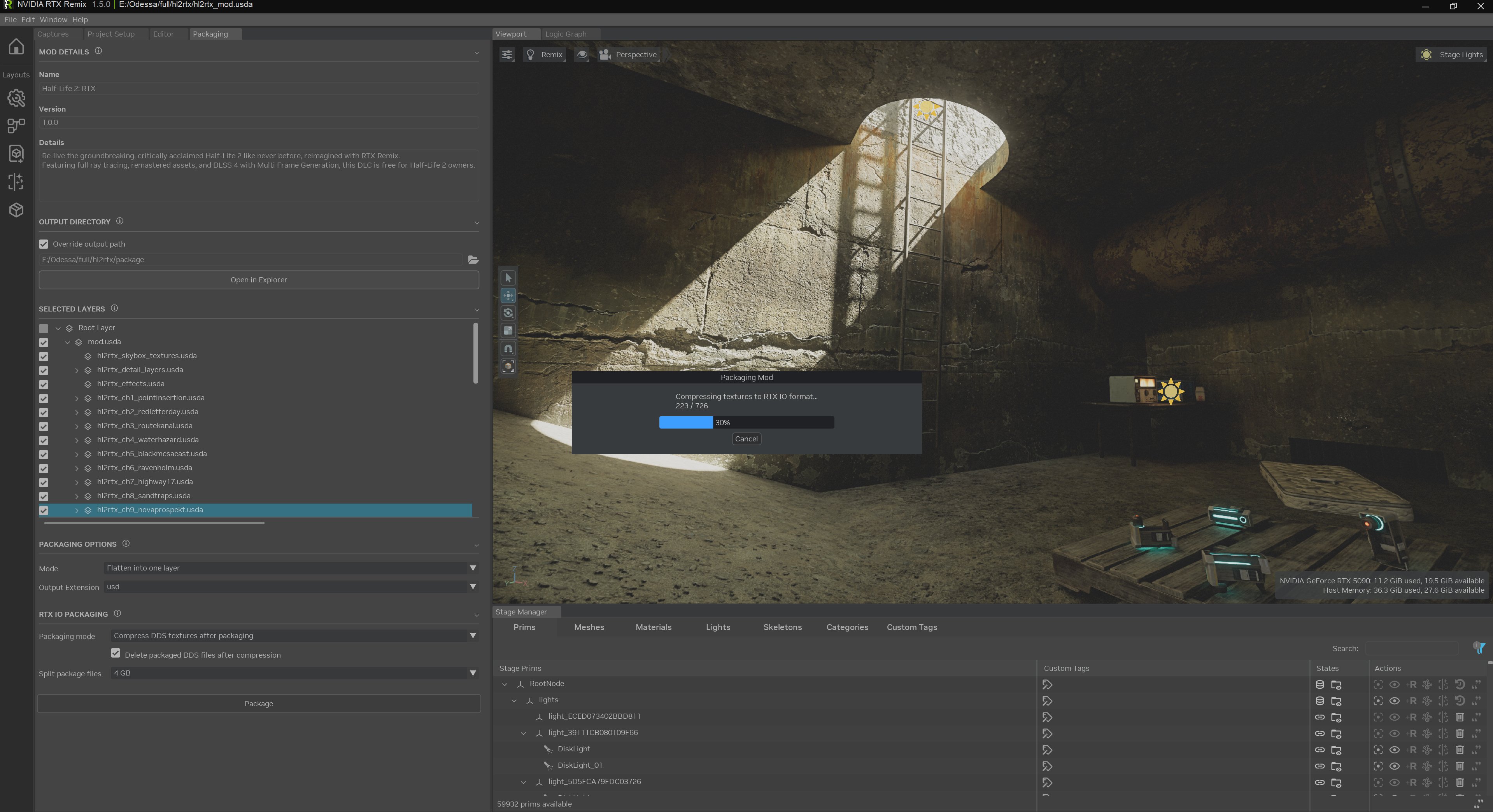
Nvidia says the new packaging workflow uses RTX IO compression to shrink those replacement assets. The RTX Remix platform now brings that storage path into the modding pipeline, four years after Nvidia introduced RTX IO with the GeForce RTX 30 series.
The headline figure comes from the Half-Life 2 RTX demo. Nvidia cut the package from 80GB to 50GB, a 37.5% reduction. Portal with RTX fell from 27GB to 17GB, a 37% cut. Portal: Prelude RTX also supports the new compression path.
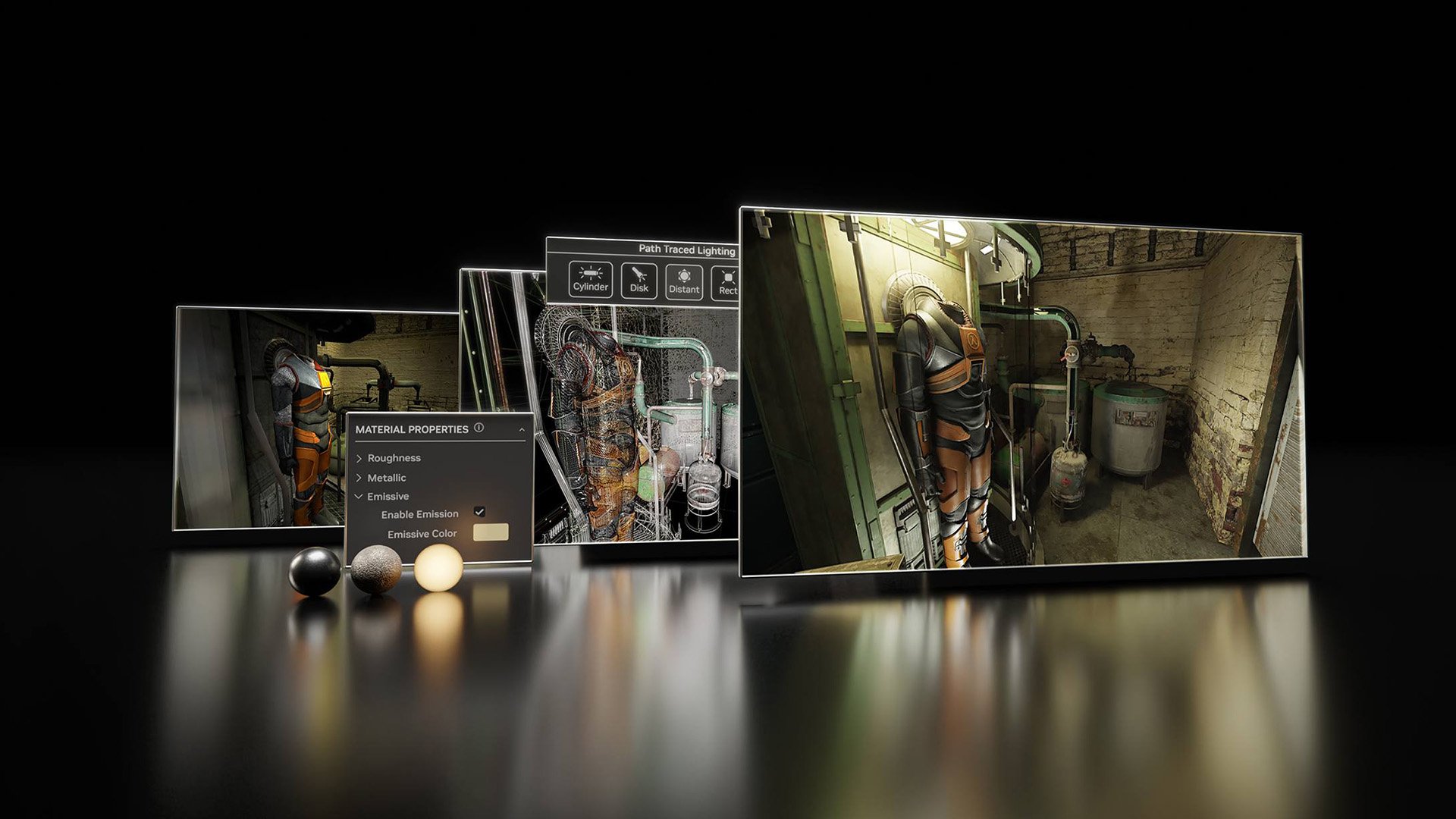
That storage change matters because RTX Remix projects multiply asset demand. A classic game may ship with low-resolution textures, simple geometry, and fixed-function lighting. A Remix project adds physically based materials, path-traced lighting, denser textures, and capture metadata. Players then download both the original game and the new mod payload.
RTX IO attacks the download and install burden rather than the artistic workload. Mod teams still need to capture scenes, replace materials, tune lights, and test frame pacing. The compression step helps distribution, bandwidth, and storage, which can decide whether players try a large remaster or skip it.
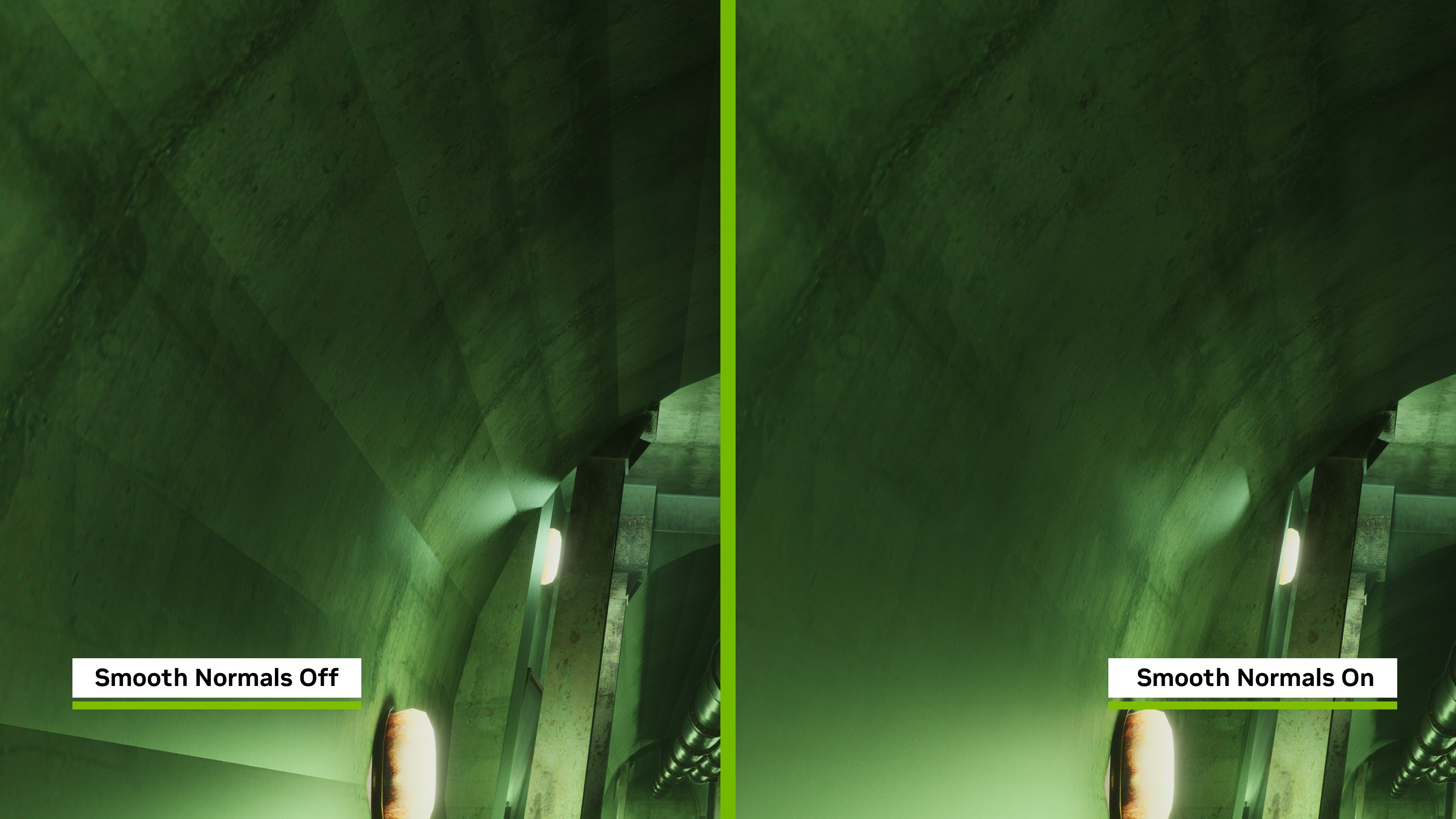
Nvidia also added Smooth Normals, a tool aimed at older geometry that looks faceted after modders add modern lighting. Classic games often hide coarse models with baked lighting, low detail, or fast camera motion. Path tracing exposes those surfaces. A crate, pipe, or wall trim can look blocky once new reflections and shadows reveal the original mesh.
Smooth Normals gives modders a faster way to soften those surfaces. Artists have handled that task by hand in 3D tools, but RTX Remix 1.5 can generate smoother normals in the toolkit. The feature does not add polygons. It changes how the renderer shades the surface, so low-detail geometry can look more natural without a full model replacement.
The trade-off comes down to control. Hand-authored normals give artists more precision on hero assets. Generated normals suit background objects, repeated props, and large capture sets where manual cleanup would slow the project. That split fits RTX Remix's role as a bridge between automated capture and artist-directed remastering.
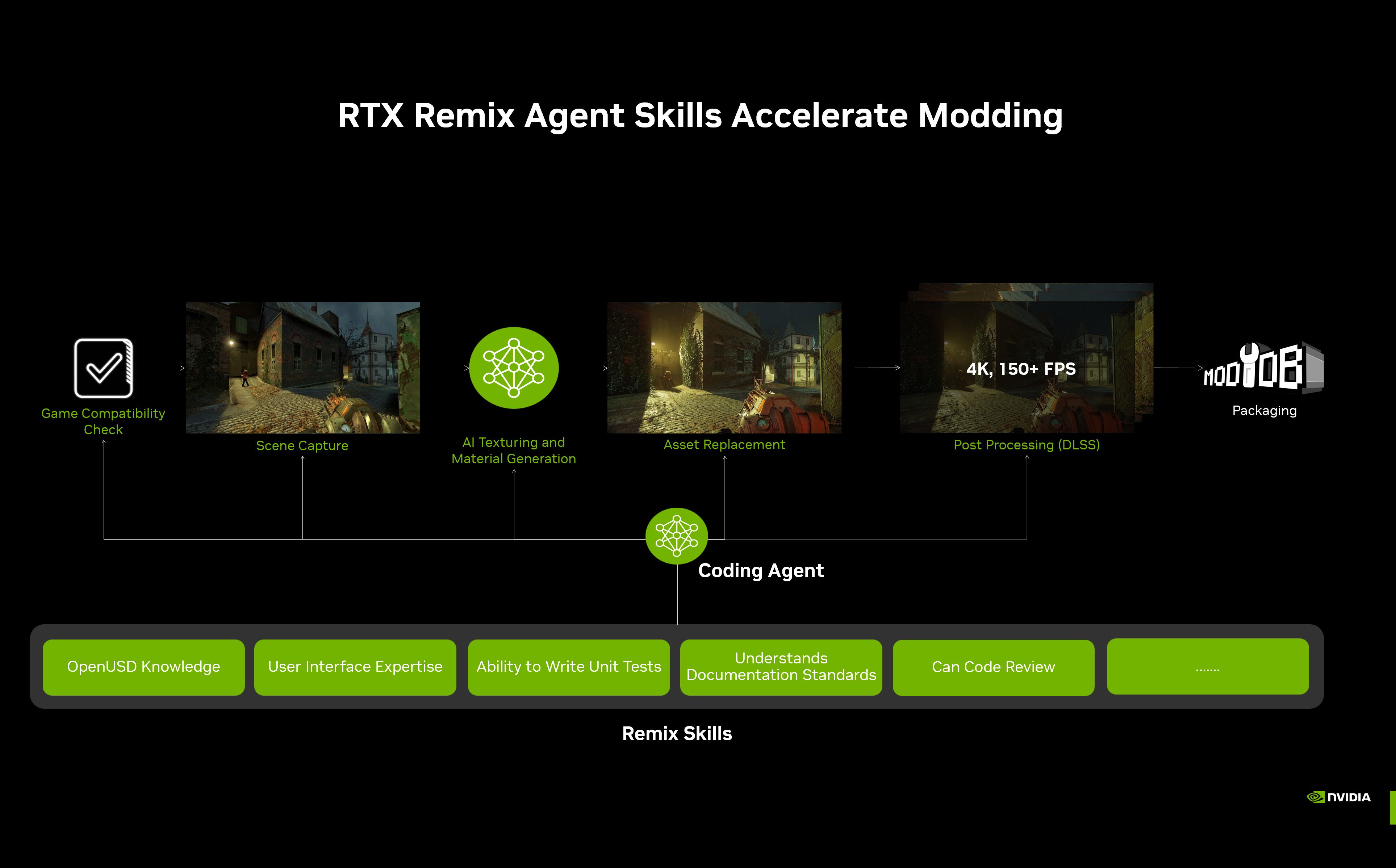
Nvidia's third addition, RTX Remix Skills, brings agent instruction files into the workflow. Nvidia pitches the feature as a way for modders to use coding agents for project tasks, including setup, asset handling, and modernization work. The company hosts the combined runtime and toolkit in the NVIDIAGameWorks RTX Remix GitHub repository, and developers can use the repo as the source point for toolchain work.
The agent piece signals a broader shift in game modding tools. Nvidia wants RTX Remix to serve artists who know classic games and visual direction but lack engine access or low-level rendering experience. Agents can help translate that intent into scripts, configuration changes, and repeatable steps inside the Remix pipeline.
Dark Souls, Dragon Age: Origins, and Titanfall 2 show the direction Nvidia wants to push. Those games demand more than texture swaps. Modders need to identify rendering paths, isolate assets, tune lighting behavior, and work around engine assumptions. Agent instructions cannot replace visual judgment, but they can reduce setup time and make complex projects less dependent on one technical specialist.
The market impact sits in the middle of gaming, creator tools, and GPU demand. Nvidia benefits when older PC games gain ray-traced remasters that show off RTX hardware. Modders gain a platform that handles capture, replacement, and path-traced rendering without source-code access. Players gain remasters that sit between community texture packs and full commercial rebuilds.
RTX Remix still carries hardware limits. Players can run completed Remix mods without building them, but mod creators need Nvidia RTX hardware for development. Heavy path tracing also favors newer GPUs with stronger ray-tracing throughput and DLSS support. That keeps the audience tied to the RTX installed base, even though Nvidia has opened the platform source.
Compression helps that installed base grow in practice. A 50GB demo still asks a lot from players, but it asks less than an 80GB download. A 17GB Portal with RTX package fits into a smaller storage budget than the old 27GB build. Those cuts reduce friction for mod distribution sites, mirrors, and users with bandwidth caps.
RTX Remix 1.5 does not change the core economics of remastering. Artists still spend time on materials, lighting, and QA. The update gives them better leverage: smaller packages, faster normal cleanup, and agent-readable workflows. For a platform built around classic PC games, that leverage can decide which projects ship and which stall in a capture folder.
Comments
Please log in or register to join the discussion