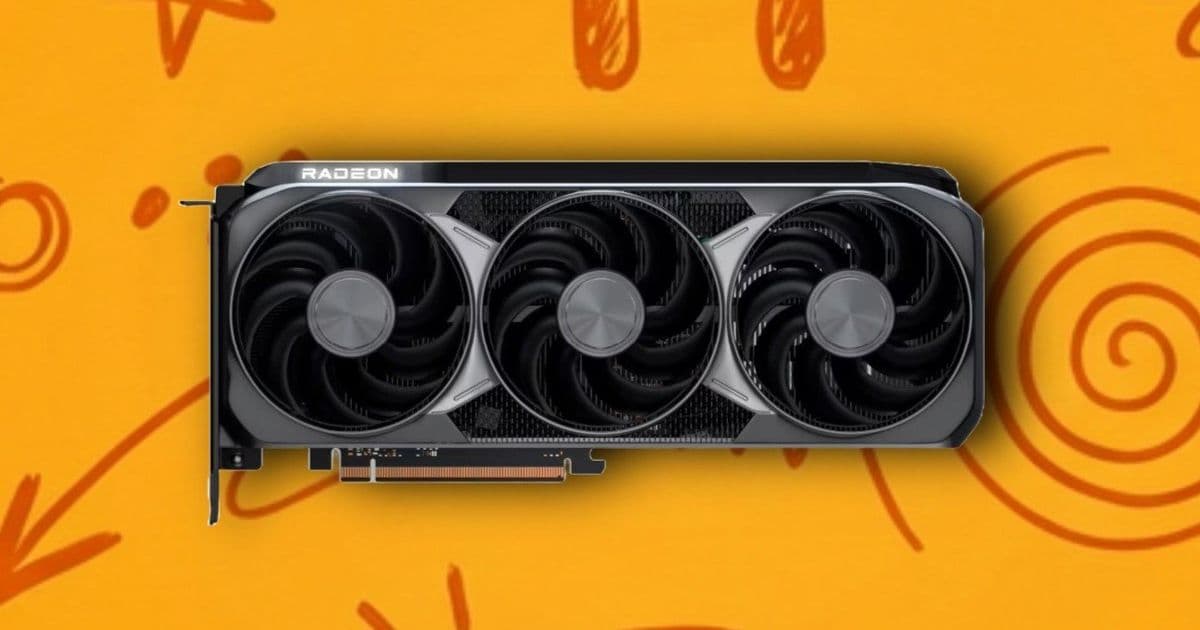
AMD can challenge Nvidia’s RTX 50 Super refresh with cheaper GDDR6 cards instead of a costly 32 GB GDDR7 flagship.

AMD may shelve the rumored Radeon RX 9080 XT because GDDR7 memory prices would weaken one of Radeon’s best arguments against Nvidia: board cost.
Moore’s Law Is Dead said AMD has weighed a higher-end RDNA 4 card with 32 GB of GDDR7 memory, but the leaker now expects AMD to favor a refreshed RX 9070 XT with more GDDR6 memory and higher clocks. AMD has not confirmed the RX 9080 XT, and buyers should treat the card as rumor.
The memory choice matters. Nvidia’s GeForce RTX 50 series uses GDDR7, which gives those cards more bandwidth but adds cost. AMD’s Radeon RX 9000 series uses GDDR6, which costs less and may fall further in price.
That price gap gives AMD a clean path against Nvidia’s current cards and the rumored RTX 50 Super refresh. Notebookcheck cited Amazon pricing that put the RTX 5070 Ti with 16 GB of GDDR7 at $900 or more, while the RX 9070 XT could sell below $700. That spread gives AMD room to compete on frames per dollar without building a new premium board.
A 32 GB RX 9080 XT would change that equation. AMD would need a larger GPU, pricier memory, a stronger board design and a cooler that can handle higher power. Those choices would push Radeon closer to GeForce pricing, where Nvidia holds stronger mind share and better ray tracing support.
A faster RX 9070 XT refresh makes more sense for many buyers. AMD could keep GDDR6, raise clocks, add memory capacity and aim at the RTX 5080 class with a lower street price. That card would appeal to gamers who care about raster performance, VRAM capacity and total system cost more than top-end ray tracing.
Nvidia still has clear advantages. DLSS, frame generation, creator software support and ray tracing performance give GeForce cards value beyond raw memory bandwidth. Buyers who use Blender, CUDA apps or heavy ray tracing workloads may accept higher prices for those features.
AMD’s opening sits in a different part of the market. A Radeon card with strong 1440p and 4K raster performance, more VRAM and a lower price can pressure Nvidia without matching every feature. GDDR6 helps AMD hold that line.
The RX 9080 XT rumor now looks less like a sure RTX 50 Super counter and more like a test of AMD’s strategy. AMD can chase Nvidia at the high end, or it can force Nvidia to defend higher prices with cards that cost more to build. For buyers, the better outcome would come from AMD shipping a faster RX 9070 XT-class card at a price that keeps Nvidia honest.
Comments
Please log in or register to join the discussion