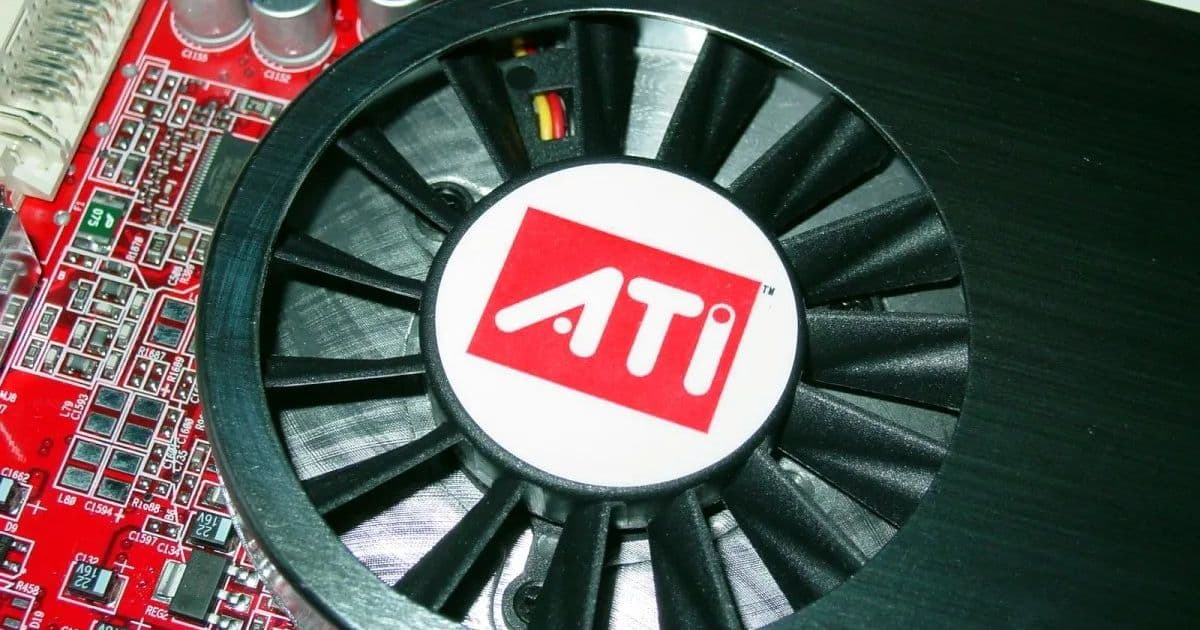
The 24-year-old Radeon R300 series graphics hardware continues to receive open-source driver improvements, with a new fix for occlusion query support in the Mesa 26.1 release.
The Radeon R300 series, which turns 24 years old this year, continues to defy expectations by receiving active development in the open-source community. Despite being hardware from the early 2000s, the reverse-engineered ATI R300 Gallium3D driver is still seeing improvements, with the latest fix addressing occlusion query support for R300 through R500 class ATI GPUs.
Independent open-source developer Pavel Ondračkar has successfully implemented a solution that landed overnight in Mesa 26.1-devel. The fix addresses a long-standing issue with occlusion queries that had previously been attempted in 2012 by Marek Olsak (@mareko), but was later reverted due to breaking HyperZ functionality. Pavel's approach takes a less invasive route by using a dummy z buffer only when there is an active query, minimizing the impact on other driver functionality.
In his merge request, Pavel explained: "This is my attempt to fix the occlusion queries. There was a previous one by @mareko in 2012 which was however later reverted since it broke HyperZ. This approach should hopefully be much less invasive (the dummy z buffer is used only when there is active query), and the tests seem happy. I've done also some usual app testing: Unigine, Lightsmark, some wined3d and all seems fine, but more real-world testing would be appreciated OFC."
Occlusion queries are an important feature for optimizing rendering performance by allowing applications to determine whether objects are visible before spending resources drawing them. For users still running legacy R300 hardware, this fix could provide meaningful performance improvements in certain applications and games that utilize this feature.
The fix has proven stable enough through testing with various applications including Unigine benchmarks, Lightsmark, and Wined3D that it has been merged for the upcoming Mesa 26.1 release, scheduled for next quarter. This demonstrates the ongoing commitment of the open-source graphics community to maintaining support for even the oldest hardware, ensuring that users with legacy systems can continue to benefit from driver improvements.
Pavel isn't stopping with just the occlusion query fix. He's also working on resolving other R300 driver issues, including a pending merge request to fix HyperZ functionality for large surfaces. HyperZ is ATI's early form of hierarchical Z-buffer optimization that helps improve rendering performance by culling pixels that would be occluded anyway.
The continued development of the R300 driver is a testament to the power of open-source software and the dedication of independent developers. While most users have long since upgraded to modern hardware, there remains a niche community of enthusiasts, retro gamers, and users with older systems who benefit from these ongoing improvements. The fact that a 24-year-old graphics architecture is still receiving active development highlights the longevity that open-source drivers can provide compared to proprietary alternatives.
For those interested in testing the new occlusion query support, it's available now in the Mesa 26.1-devel branch, with the stable release expected in the coming months. Users running legacy ATI hardware can look forward to improved compatibility and performance in applications that leverage occlusion queries.
Comments
Please log in or register to join the discussion