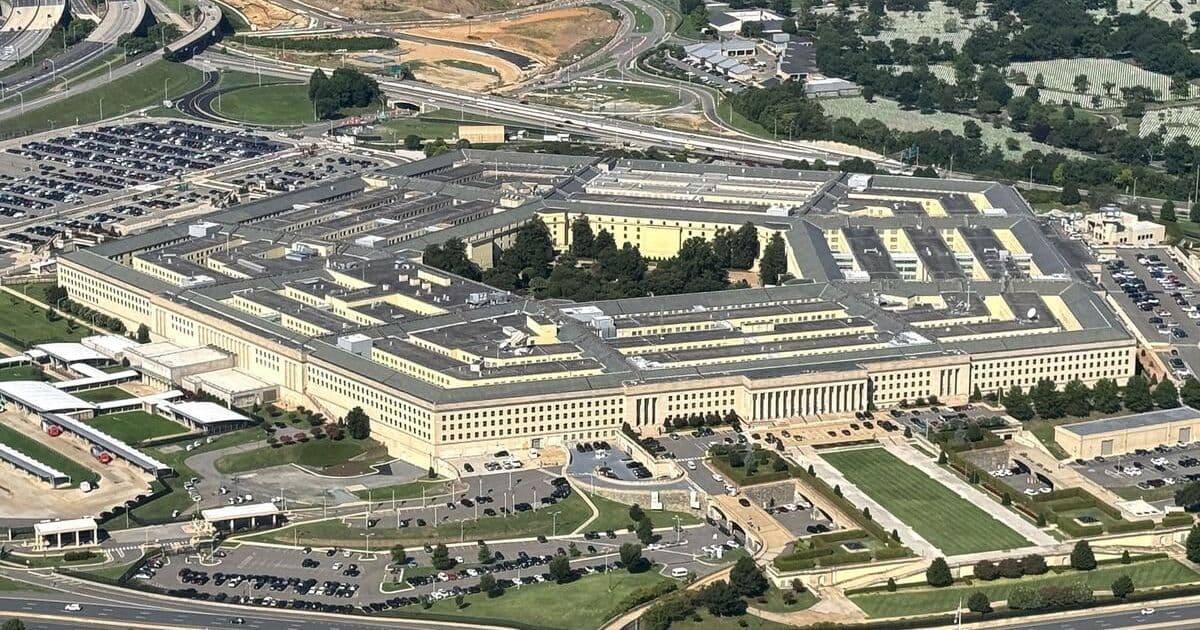
The Pentagon has formally notified Anthropic that it and its products are considered a supply chain risk, following OpenAI's controversial military contract and escalating tensions between AI companies over government partnerships.
The US Department of Defense has formally notified Anthropic that the company and its AI products are considered a supply chain risk, according to Bloomberg. This designation marks a significant escalation in the growing tensions between AI companies over government contracts and military partnerships.
The Pentagon's decision comes amid a broader controversy surrounding OpenAI's recent agreement to provide AI services to the Department of Defense. Anthropic CEO Dario Amodei has publicly criticized OpenAI's military deal as "safety theater," arguing that it undermines responsible AI development. Internal communications obtained by The Information reveal that Amodei told employees the Department of Defense dislikes Anthropic partly because the company hasn't "given dictator-style praise to Trump."
This conflict highlights the complex landscape of AI companies navigating government relationships. While OpenAI has moved forward with military contracts, Anthropic has taken a more cautious approach, emphasizing safety and ethical considerations in its development practices. The Pentagon's supply chain risk designation could significantly impact Anthropic's ability to secure government contracts and may force the company to reconsider its stance on military partnerships.
OpenAI's Military Expansion Continues
Meanwhile, OpenAI is expanding its government footprint. The company recently launched GPT-5.4, its "most capable and efficient frontier model for professional work," which includes native computer use capabilities. This new model is available in Pro and Thinking versions, with improved tool calling and support for context windows up to 1 million tokens.
OpenAI's military ambitions extend beyond the Pentagon. The company has been holding talks with the Department of Defense's Emil Michael to establish a framework for military access to Anthropic's models, though Anthropic has not yet agreed to any such arrangement. This aggressive pursuit of government contracts has created friction within the AI industry, with some companies viewing OpenAI's approach as prioritizing growth over safety.
The Broader AI Defense Landscape
The Pentagon's actions against Anthropic occur against a backdrop of increasing AI integration into military operations. US Central Command has confirmed that American forces are using a range of AI tools to quickly verify and analyze enormous amounts of data for operations against Iran. This deployment of AI in active military contexts raises questions about the technology's reliability and the potential consequences of errors in high-stakes environments.
Nvidia, whose AI chips power much of the industry, is also feeling the effects of shifting government priorities. The company has reallocated manufacturing capacity at TSMC away from making H200 chips intended for the Chinese market to its next-generation Vera Rubin products. This reallocation reflects the growing importance of US government contracts in the AI chip market and the strategic considerations driving hardware development.
Industry Reactions and Implications
The AI industry is closely watching these developments. Anthropic's supply chain risk designation could set a precedent for how the government evaluates and regulates AI companies, particularly those that resist military partnerships. Other AI companies may face pressure to choose between maintaining ethical stances and securing lucrative government contracts.
Financial markets are also responding to these tensions. Oracle is reportedly planning thousands of job cuts as part of moves to handle a cash crunch from massive AI data center expansion efforts. Meanwhile, OpenAI has reportedly hit $25 billion in annualized revenue, up from $21.4 billion at the end of 2025, demonstrating the financial stakes involved in securing government contracts.
The Safety Debate Intensifies
The conflict between Anthropic and OpenAI over military partnerships has reignited debates about AI safety and responsible development. Anthropic has built its brand around safety-first AI development, while OpenAI has pursued a more aggressive growth strategy that includes government contracts. The Pentagon's actions suggest that companies prioritizing safety over military partnerships may face consequences in the form of restricted access to government markets.
This situation raises fundamental questions about the role of AI companies in national security and the balance between innovation, safety, and ethical considerations. As AI becomes increasingly integrated into military operations and government functions, the industry may need to grapple with how to maintain ethical standards while competing for lucrative government contracts.
The coming months will likely reveal whether Anthropic will modify its approach to government partnerships in response to the Pentagon's designation, or whether the company will maintain its current stance despite the potential business consequences. This conflict represents a critical test case for how the AI industry will navigate the complex intersection of technology, ethics, and national security.
Comments
Please log in or register to join the discussion