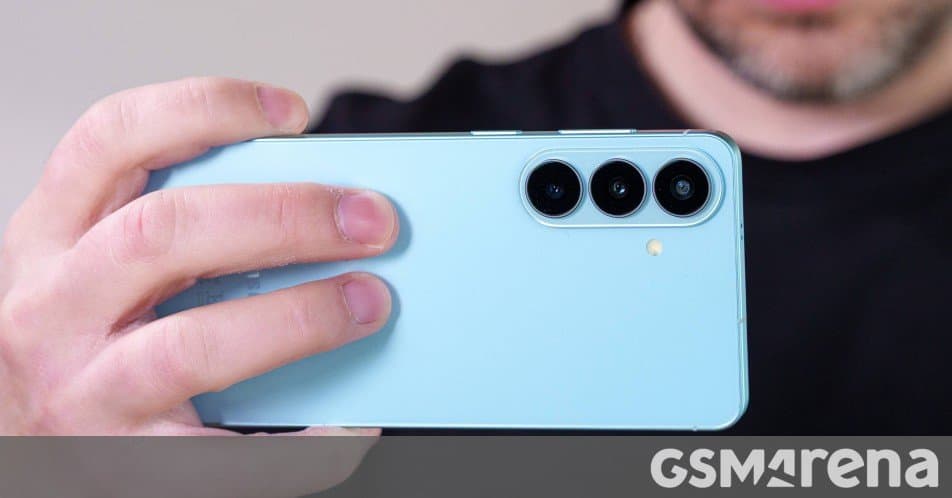
Samsung's Galaxy S26+ offers minimal upgrades over its predecessor, with the same design, camera system, and battery, but adds a new 2nm Exynos 2600 chipset and faster charging.
Samsung's updated Galaxy S26 series is now available, and we've got the non-Ultra models in for review, so let's take a look. We're starting with the Galaxy S26+, though the unboxing is the same across all three models - you get a USB-C cable, a SIM tool, and the phone.
The Galaxy S26+ starts from €1,250 for the 256GB model, but as part of the pre-order, you're getting double the storage for the same base price. Unlike the smaller S26, the Plus model has faster-than-25W charging - 45W to be precise. But you'd need to supply your own charger if you haven't got one already. Ours is the Sky Blue S26+, but you've got a choice of Cobalt Blue, White, and Black.
Very little has changed with this year's Plus model. It has a matching camera island bump, which does little more than make the phone very unstable on a flat surface. Otherwise, the Galaxy S26+ looks and feels just like its predecessor. That could be a positive for some, but this editor thinks some change once in a while isn't bad.
Here's all that's new on the Galaxy S26+. You get the 2nm Exynos 2600 SoC with 12GB of RAM, you've got faster 20W wireless charging, you've got the new Horizon Lock stabilization mode for video, and that's about it. That means that you have the same 6.7-inch 1440p 120Hz AMOLED, the same camera system, and the same 4,900mAh battery. Not very upgrade-worthy.
Here's a look at the Galaxy S26+ next to the Galaxy S26. There was some speculation that Samsung would forgo making a small S unit in 2026, but luckily, that's not the case. The Galaxy S26 has improved in more ways over its predecessor than the Plus model, so we'll look at that next.
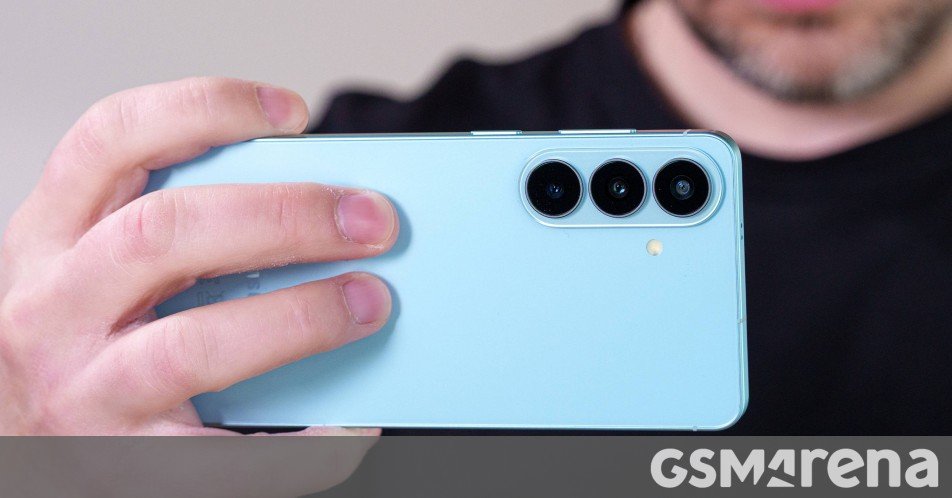

The Galaxy S26+ represents a conservative update that may disappoint fans expecting meaningful improvements. With the same 4,900mAh battery, identical camera hardware, and unchanged display, the only substantial changes are internal - the new 2nm Exynos 2600 processor and slightly enhanced charging capabilities. For users coming from older models, the performance boost might be noticeable, but those with recent Galaxy S devices may find little reason to upgrade.
This approach mirrors a broader trend in the smartphone industry where annual updates bring diminishing returns, focusing on incremental refinements rather than revolutionary changes. Whether this strategy satisfies consumers remains to be seen, especially given the €1,250 starting price for what is essentially a spec bump with a new coat of paint.
Comments
Please log in or register to join the discussion