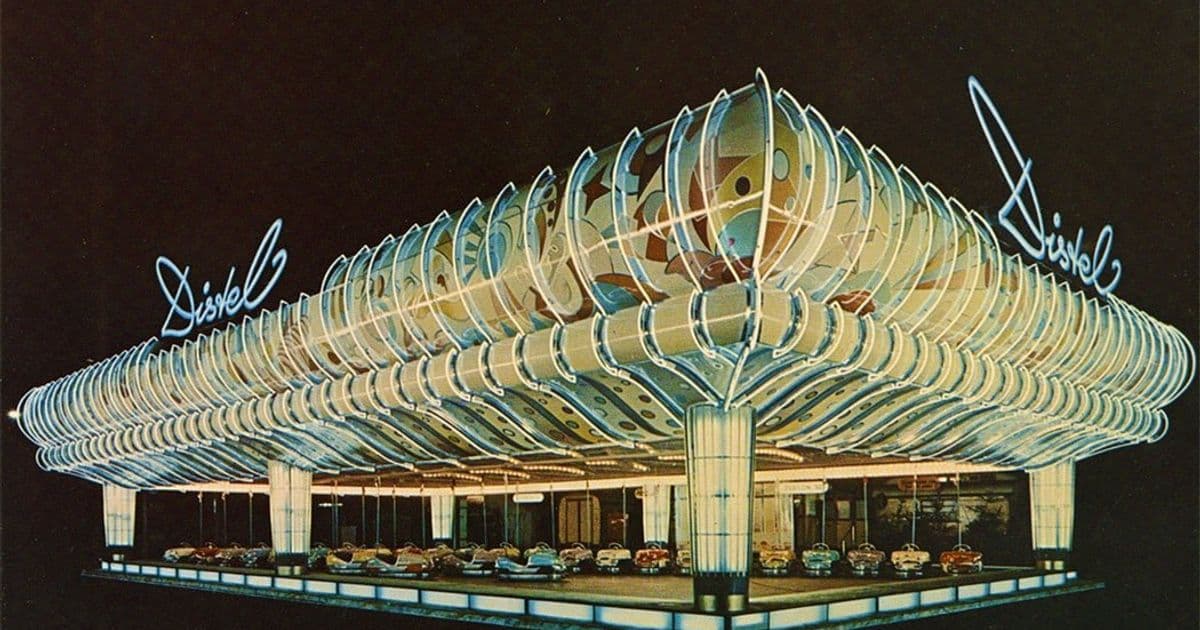
In 1964, Huntsville, Alabama, launched an ambitious $5 million theme park called Space City USA, complete with a seven-story volcano, lunar attractions, and futuristic rides. Despite perfect timing with the Space Race, the project collapsed before opening, leaving only concrete remnants and unanswered questions about what went wrong.
In 1964, Huntsville, Alabama, was riding high on the Space Race boom. Just 15 years after being called a "ghost town" with 16,000 residents, the city had transformed into "Space City," a thriving metropolis of 123,000 people that had annexed 46 square miles to accommodate workers at NASA's George Marshall Space Flight Center. The local Lions Club, auto dealerships, flying clubs, and even department stores selling "Space City satellites" (plastic frisbees) all embraced the cosmic branding.
But one entrepreneur saw an opportunity that went beyond merchandise and slogans. Hubert Mitchell, a serial businessman who had already tried his hand at restaurants, drive-in theaters, furniture manufacturing, and automobile production, announced Space City USA in January 1964 with $5 million in backing (equivalent to about $53 million today).
A Theme Park That Would Take You to the Moon
The ambitious project planned to transform 200 acres along Highway 20 near Lady Ann Lake into a recreation center that would "transport visitors into the world of the past, fantasy and future." According to documents preserved by the University of Alabama in Huntsville, the park promised experiences that seemed straight out of science fiction: "If you would like to hurtle through space in a flying saucer, stop off at Mars and have lunch on the moon, you may not have to wait much longer."
Visitors would enter through a "Time Machine" that would transport them to different themed areas:
- The Lost World: A prehistoric landscape dominated by a seven-story walk-through plaster volcano
- Land of Oz: Home to the Jack and the Beanstalk slide
- The Old South: Featuring a stern-wheeler boat ride and a "Gay Nineties" saloon
- Moon City: The futuristic centerpiece of the park
The promotional materials featured a rocket ship and a playful cartoon astronaut, perfectly capturing the Space Age optimism of the era. Even before completion, the property would be open for fishing, camping, picnicking, and skydiving.
The Dream That Never Launched
Construction began in early 1964 with high hopes for a spring 1965 opening. But the project quickly ran into trouble. Just before the scheduled opening, newspaper photos showed only a railroad track, a few Southern-style buildings, and the timber frame of a would-be volcano. The futuristic vision remained unrealized.
By 1965, Mitchell had resigned from the project. By 1966, Space City USA faced numerous lawsuits for unpaid bills. As America inched closer to the moon, Mitchell's theme park rotted away. A Huntsville Times reporter wrote in 1967 that "only occasionally curiosity seekers are in evidence at the property plus a supply of cans and rubbish—obviously the result of more than a few beer parties."
Today, the only evidence of Mitchell's moonshot is a few concrete remnants incorporated into an upscale housing development on Lady Ann Lake.
What Went Wrong?
Local historians have debated the causes of Space City USA's failure for decades. Some blame the unseasonably cold and wet winter of 1964. Others point to competition from NASA-sanctioned attractions or mismanagement. The Huntsville Times estimated the failure cost $2 million and called it "an ill-fated venture from its conception."
But perhaps the most intriguing aspect of this story is what happened next door. At the same time Mitchell was announcing Space City USA, Walt Disney was considering another futuristic theme park on the outskirts of Orlando, Florida, near another growing Southern city with a NASA presence. That park was, of course, Disney World, now the most visited theme park on Earth.
The Legacy of a Lost Dream
The story of Space City USA serves as a fascinating "what if" in American entertainment history. It represents a moment when the Space Race fever was so intense that a small Southern city believed it could compete with the likes of Disney. The project's failure reminds us that timing, execution, and perhaps a bit of magic are all crucial ingredients in turning ambitious dreams into reality.
As we look back from our era of commercial space travel and renewed interest in lunar exploration, Space City USA stands as a monument to 1960s optimism—a time when anything seemed possible, even a theme park that would take you to the moon.
Comments
Please log in or register to join the discussion